
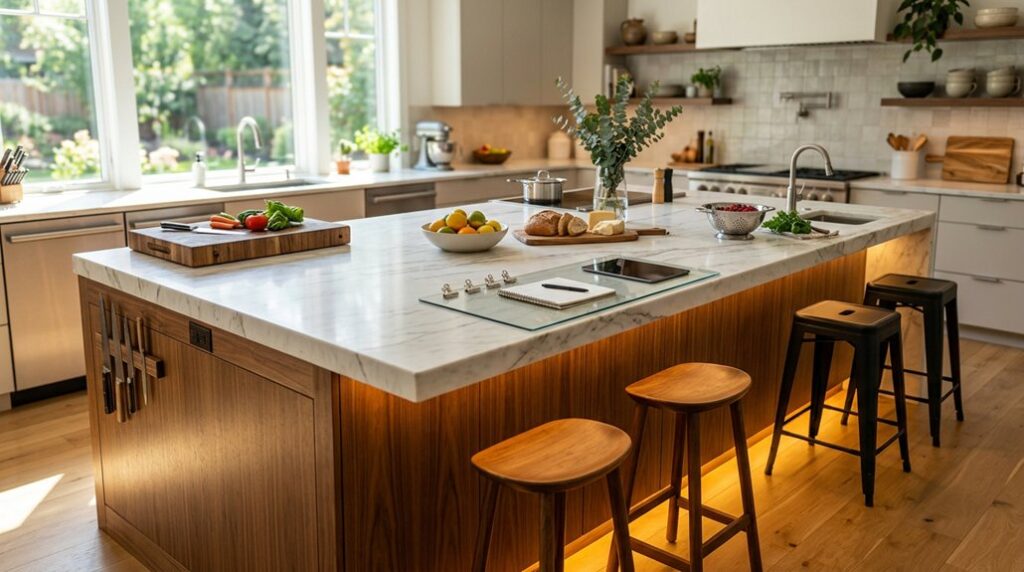
Did you know your kitchen island can actually shrink your cooking time? Most homeowners treat islands as afterthoughts, but they’re really the heart of efficient kitchen design.
I’m going to show you how strategic seating, smart appliance placement, and layered lighting turn a basic island into something that works as hard as you do and looks great while doing it.
Island Seating: Build-In Breakfast Bars for Engagement
Why settle for a kitchen island that only stores your cookware? I’d argue that island seating creates a gathering hub where your family actually wants to congregate.
Built-in breakfast bars create natural dining areas perfect for casual meals and morning coffee. You’ll boost engagement simply by incorporating integrated seating into your kitchen island’s design. The beauty here: your seating capacity depends entirely on your island’s dimensions. Larger rectangular islands comfortably seat up to eight people.
Consider tucked-in stools that hide within the base, maintaining clean lines in open layouts. This approach preserves circulation around your workspace while maximizing functionality. Whether you’re choosing traditional stools or seamlessly integrated seating, you’re creating inviting spaces where people linger, connect, and belong.
Contrast Countertops and Cabinets for Visual Impact
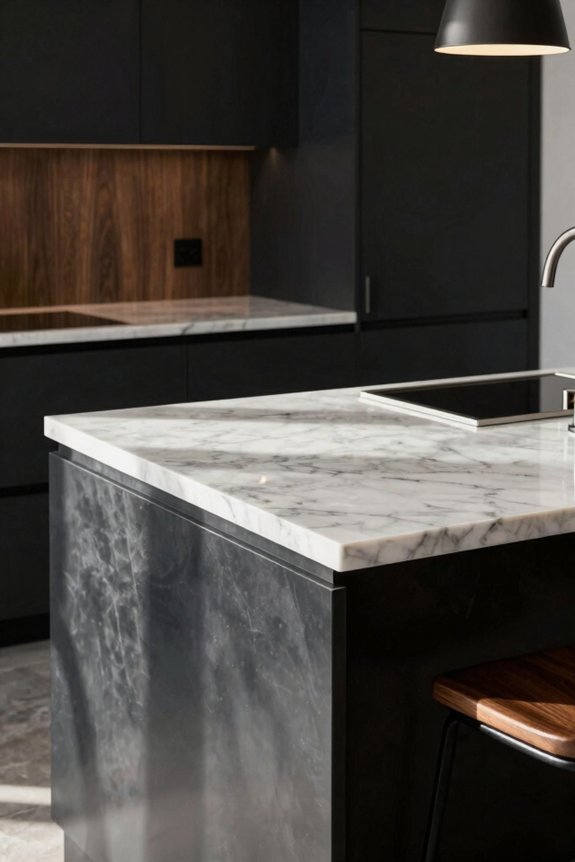
How do you make your kitchen island the room’s center point? I’d argue that contrasting cabinetry and island countertops create the visual impact that shapes your entire kitchen design.
Consider these powerful contrast strategies:
- Deep island against light cabinetry anchors the space with sophistication and drama
- Bright island colors inject playfulness into subdued kitchens effortlessly
- Waterfall edge details emphasize material contrast for bold statements
- Two-shade color harmony blends or differentiates elements subtly and intentionally
- Moisture-resistant materials protect your focal point while maintaining beauty
A waterfall edge on marble or quartz creates striking visual drama. Coordinating finishes across countertops enhances kitchen design balance, while strategic color contrast establishes your island as the true center point.
Material contrast isn’t just aesthetics; it’s smart design that tells your kitchen’s story while serving your everyday needs.
Appliances and Sinks: Plan Your Island’s Workflow
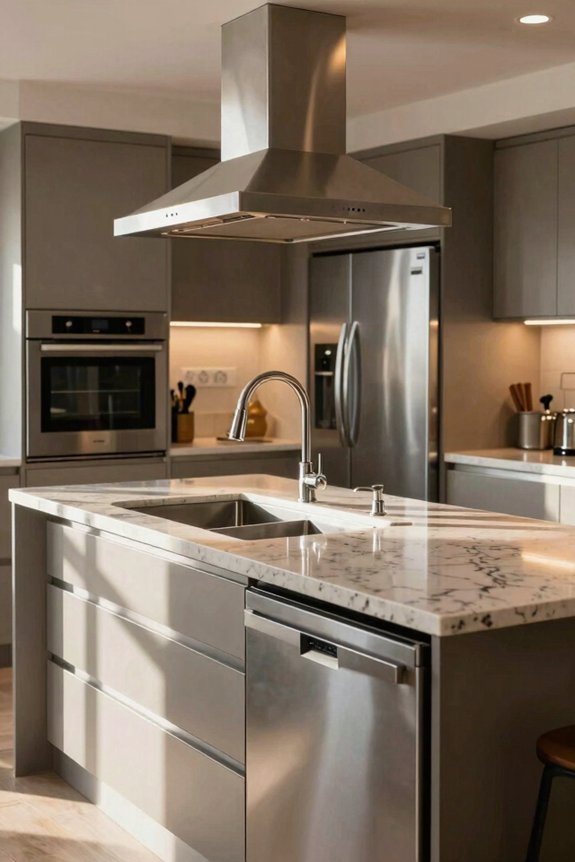
Your island’s functionality hinges on thoughtful appliance and sink placement. This is where your kitchen’s workflow truly comes alive. I recommend positioning a prep sink near your range, creating an efficient triangle that keeps raw food prep separate from cleanup.
Built-in appliances like cooktops and dishwashers make your island a genuine work hub. However, here’s what matters most: plan electrical and plumbing routes early. You’ll need proper ventilation for cooktops in open-layout design, preventing mold while maintaining air quality. Code compliance is important too; water supply and power routing require professional installation.
After accounting for plumbing beneath the bowl, make sure adequate cabinet storage remains. When you strategically layer these elements, your island becomes an inclusive gathering space where multiple cooks collaborate seamlessly.
Island Lighting: Task and Ambiance Layers
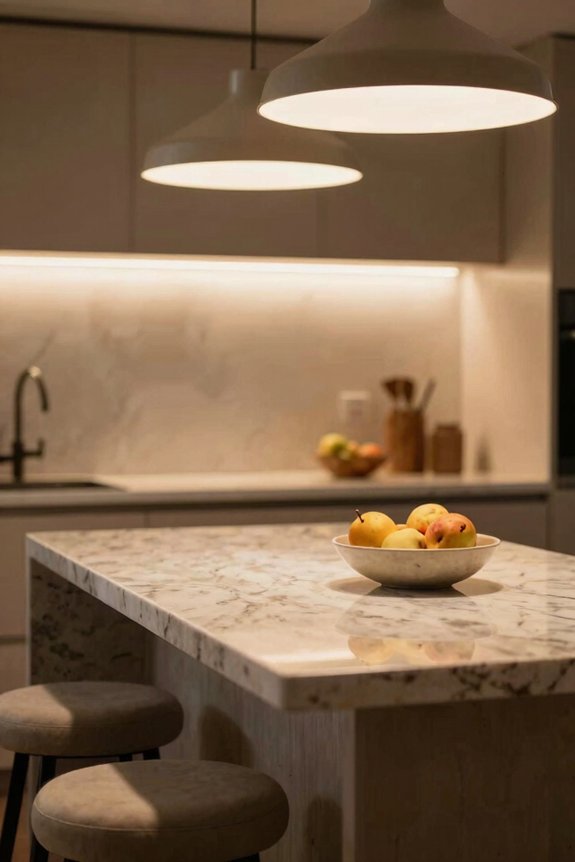
Once you’ve nailed down your island’s appliances and workflow, lighting becomes your next critical design layer, and honestly, it’s where many kitchens miss their mark.
I’ve found that layering your island lighting creates both function and atmosphere. Here’s what makes an island into your kitchen’s true gathering place:
- Pendant lighting as your focal point, anchoring the island visually
- Task lighting for prep work without shadows or strain
- Ambient lighting through under-counter and toe-kick fixtures for evening warmth
- Dimmer controls letting you shift from bright workspace to cozy social hub
- Multiple lighting zones that support different activities throughout your day
The best results happen when these elements work together. Your pendant choice reinforces your design style while functional task lighting keeps prep surfaces illuminated. Add dimmers, and you’ve created a focal point that invites people in, because your island isn’t just functional; it’s where your kitchen becomes a gathering space.
Open or Hidden Storage: Show Off or Stash Away
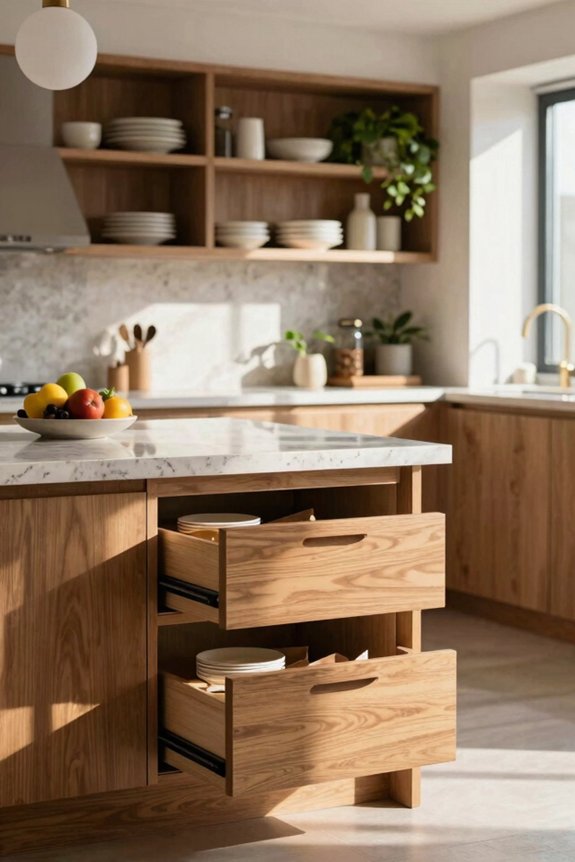
The storage question isn’t really about aesthetics; it’s about whether you want your island to whisper or shout. I’ve found that mixing both approaches works best. Open shelving and glass-front cabinets let you display beautiful dishware or cookbooks, creating visual interest while signaling that you’ve got it together. But here’s the truth: hidden storage keeps daily clutter at bay.
Vertical dividers, pullouts for concealed trash and recycling, and deeper drawers stash pots, pans, and appliances where they won’t distract. The sweet spot is pairing integrated storage with strategic shelving. This balance maintains a clutter-free look while showcasing what matters. Islands become functional work hubs, not visual chaos.