If your kitchen feels stuck between decades, a Hoosier cabinet might be the bridge you’ve been searching for. I’ve found that these iconic workstations offer more than nostalgic charm; they’re genuinely functional storage solutions.
But here’s where it gets interesting: styling one authentically requires balancing period-appropriate accessories with practical modern living. The seven ideas I’m sharing will show you exactly how to turn yours into a striking focal point that actually works.
Display Hoosier Cabinet Glass Canisters and Labeled Jars for Authentic Storage
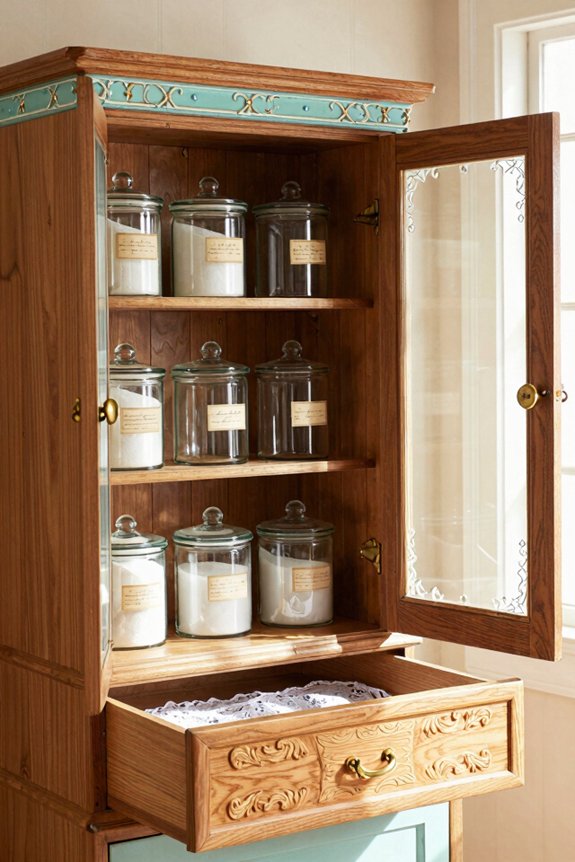
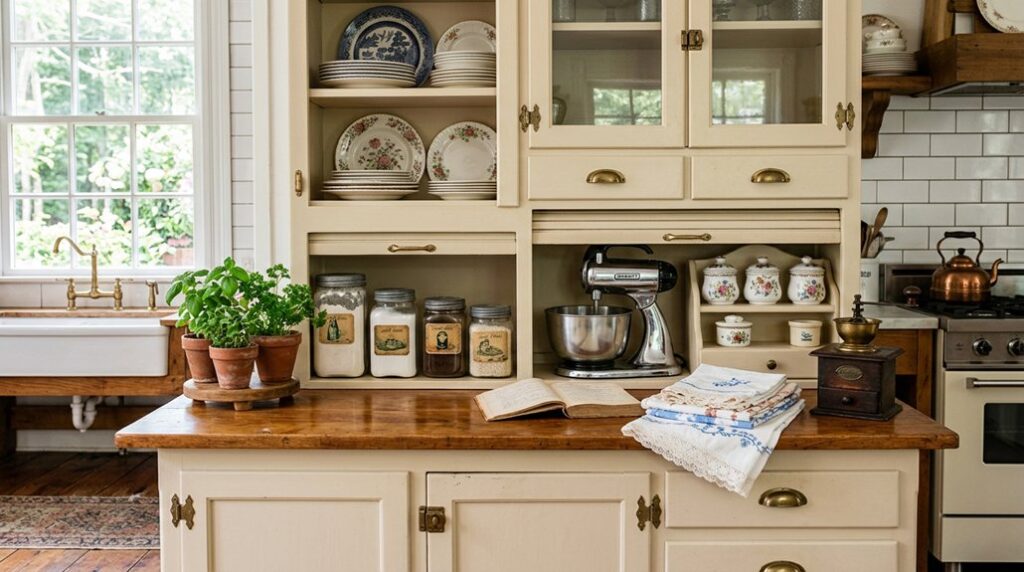
Display glass canisters and labeled jars in your Hoosier cabinet to showcase early 20th-century kitchen elegance. I arrange matching containers near the working surface to emphasize accessibility while preserving countertop space in my modern kitchen. Clear, legible labels for flour, sugar, oatmeal, and rice mirror authentic period baking practices beautifully.
I coordinate jar lids, whether glass or metal, to enhance the vintage aesthetic while maintaining readability. Pairing these canisters with labeled spice jars in nearby drawers recreates the functional organization typical of Hoosier-era kitchens.
This approach incorporates complementary decor: a flour bin, vintage scale, and herb garden vignette. By combining these elements, storage becomes purposeful design that celebrates both heritage and practicality.
Style Open Shelves With Period-Appropriate Cookware and Baking Tools
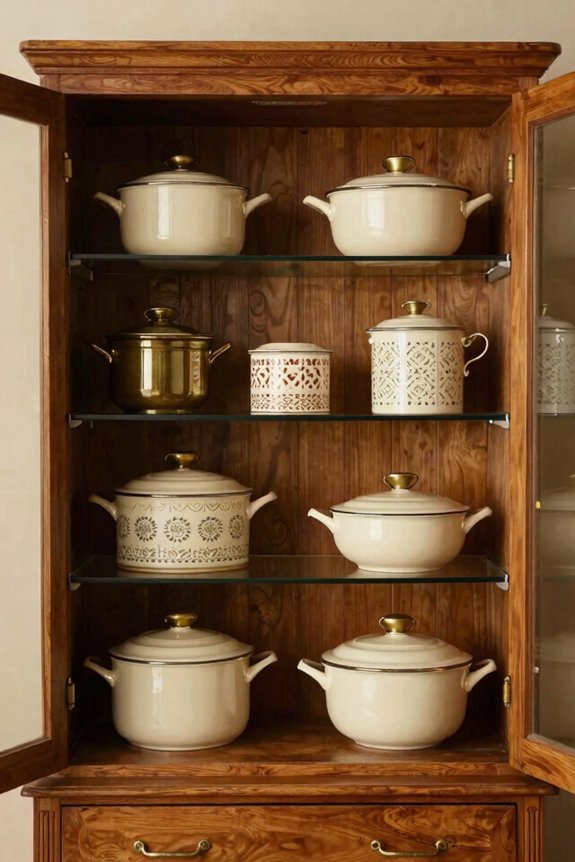
Open shelves on your Hoosier cabinet deserve cookware that tells a story. Blue enamelware, copper pots, and glass canisters create an authentic early 20th-century aesthetic that actually works in today’s kitchens.
I layer functional baking tools strategically: vintage flour sifters, wooden dough bowls, measuring cups, and an antique kitchen scale become both practical and visually compelling. This approach mirrors how our grandmothers organized their spaces, with everything serving double duty.
| Item | Why It Works | Visual Impact |
|---|---|---|
| Blue enamelware | Durable, historically accurate | Bold, cohesive color |
| Copper pots | Warm metallic accent | Reflects light beautifully |
| Wooden bowls | Tactile authenticity | Natural texture contrast |
| Vintage scale | Functional display piece | Nostalgic focal point |
When you display these pieces intentionally, you’re not just decorating. You’re honoring kitchen heritage while creating a space that genuinely functions for your cooking life.
Create a Functional Prep Station With Swing-Out Features
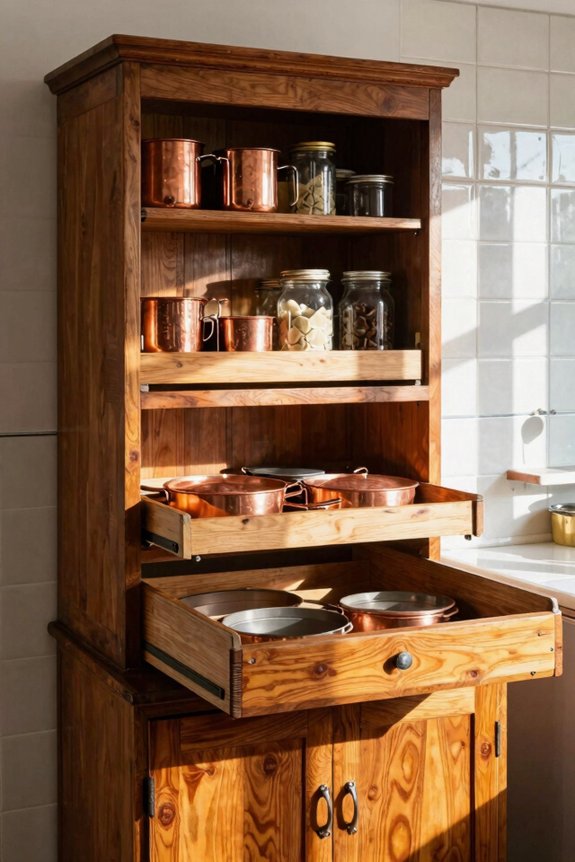
The design of a well-organized Hoosier cabinet lies in its swing-out features, which create distinct work zones on cramped countertops. You’ll discover that these ingenious compartments free up precious prep space while keeping essentials within arm’s reach.
Hoosier cabinets free up precious prep space through ingenious swing-out features that create distinct work zones on cramped countertops.
Consider incorporating these functional elements:
- Swing-out mixer shelf – Mount your stand mixer on a rotating tray that tucks away when you’re chopping vegetables or kneading dough
- Flour bin with integrated sifter – Access dry ingredients without cluttering your main surface, optimizing your baking workflow
- Pull-out bowl shelf and scale tray – Stack mixing bowls vertically and position your scale for precise measurements
Vintage Hoosier designs prove that thoughtful storage solutions support serious cooking. You’re not just decorating; you’re building a kitchen that works as beautifully as it looks.
This approach honors authentic design while solving modern kitchen challenges.
Mix Antique Finds With Modern Everyday Kitchen Items
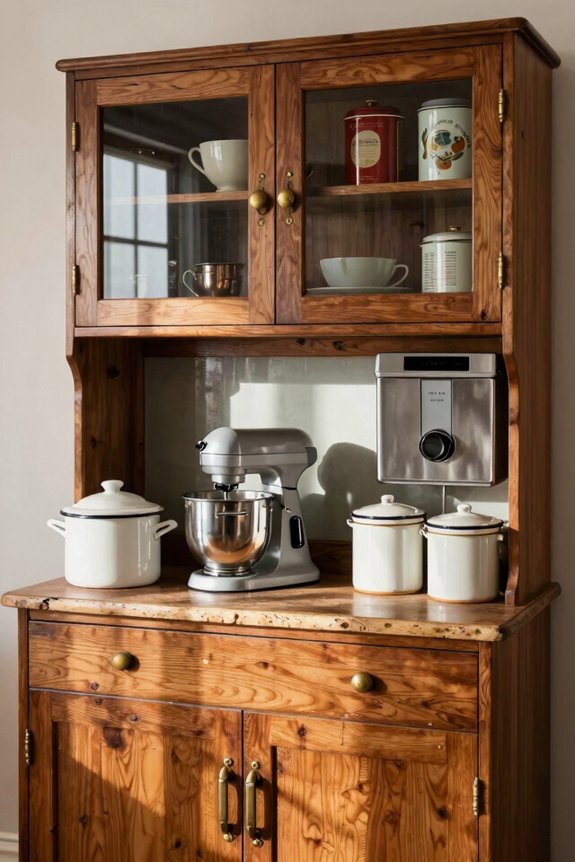
I’ve found that pairing vintage Hoosier accessories, like glass canisters and a worn kitchen scale, with contemporary items like a sleek modern mixer creates visual interest while keeping your workspace genuinely useful. You’re not choosing between periods; you’re strategically layering them so antique charm doesn’t sacrifice function or accessibility.
The best results happen when you display those classic purple and green flour bins on open shelves while tucking everyday pantry staples in lower drawers, letting each era do what it does best.
Blending Eras With Style
While vintage Hoosier cabinets boast charm that modern kitchens can’t replicate, they work best when paired thoughtfully with contemporary essentials. I’ve found that this blending approach creates functional beauty without compromising daily usability.
Consider these three strategies:
- Layer storage solutions – Pair antique canister jars and flour bins with modern stainless steel or plastic containers for practical organization.
- Highlight architectural features – Showcase the cabinet’s swing-out components and glass doors alongside everyday items you actually use.
- Create a dual-zone system – Display curated vintage pieces on your Hoosier while keeping essential daily items in an adjacent modern pantry.
This thoughtful mixing respects both eras. You’re not forcing everything into one aesthetic; instead, you’re celebrating what each period does best. Your kitchen becomes a space where nostalgia and efficiency coexist side by side.
Functional Storage Meets Display
Because Hoosier cabinets were built for both work and show, they’re naturally suited to mixing vintage charm with modern convenience. I’ve found that pairing era-appropriate purple or green flour bins with today’s sleek stand mixer creates visual interest while keeping essentials within arm’s reach. Glass spice jars showcase your collection beautifully, while modern gadgets remain accessible rather than hidden away.
You’ll want to arrange Longaberger baskets alongside cookbook stacks on visible shelves; this combination feels planned and inviting. Keep bulk ingredients stored below in practical compartments; display smaller items where guests can admire them.
This approach respects the cabinet’s original purpose as a working kitchen hub while celebrating its aesthetic appeal. You’re creating a space that’s both genuinely functional and genuinely beautiful.
Curating Vintage And Contemporary
How do you honor a cabinet built in 1900 while keeping it genuinely useful in today’s kitchen? You blend the old with the new, thoughtfully.
I’ve discovered that pairing antique finds with modern essentials creates authentic vintage style without sacrificing function. Here’s my approach:
- Glass canisters and flour bins (vintage charm) + stand mixer (contemporary workflow)
- Decorative kitchen scale (antique appeal) + small modern appliances (daily convenience)
- Rustic wood signs and lanterns (farmhouse accents) + metal swing-out shelves (original hardware)
This hybrid strategy works because it respects the cabinet’s heritage while acknowledging how we actually cook today. You’re not preserving a museum piece; you’re stewarding a functional heirloom.
Strategic lighting on those glass canisters and trailing ivy creates a display that feels purposeful and well-designed.
Pair Warm Wood With Soft Textiles and Trailing Greenery
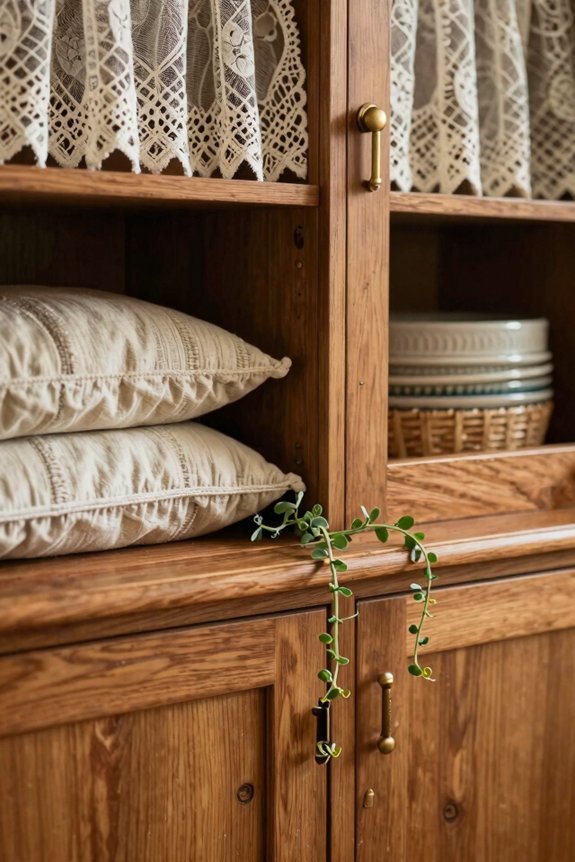
To build on your Hoosier cabinet’s vintage charm, you’ll want to soften its structured lines with tactile, natural elements. I find that pairing warm wood tones with soft linens—think cream linen towels or cotton dishcloths—creates an inviting contrast that celebrates the grain.
Soft linens and warm wood tones create an inviting contrast that softens your Hoosier cabinet’s structured lines while celebrating its natural grain.
Trailing greenery like ivy or eucalyptus garlands along the cabinet’s top works beautifully too. These living elements break up hard edges while enhancing that rustic farmhouse aesthetic we’re after.
For textiles throughout your kitchen, I’d stick with muted neutrals: beige, cream, taupe. They let your cabinet’s wood and glass details shine without competing for attention.
Finally, add subtle brass or antique bronze accents in hardware and nearby frames. These metallic touches echo vintage authenticity while maintaining restraint—the sweet spot between period-perfect and overdone.
Organize Base Drawers for Hidden Pantry Essentials
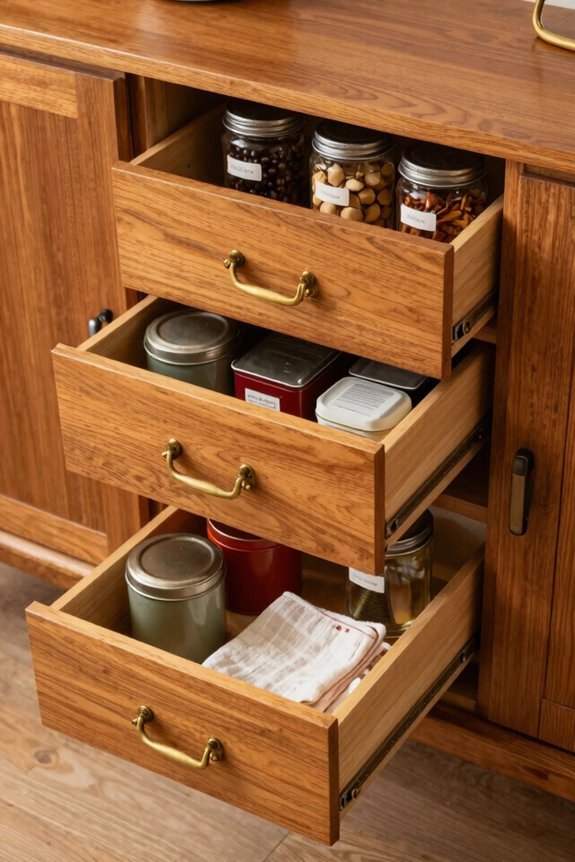
I’ve found that organizing your Hoosier’s base drawers creates a functional hidden pantry while preserving that charming vintage aesthetic. You’ll want to group similar staples—flour, sugar, rice, pasta—into labeled, stackable airtight canisters that maximize vertical space and keep ingredients fresh.
Strategic placement matters too: reserve easily accessible front drawers for everyday items, tuck seasonal ingredients deeper down, and install slide-out dividers for spices and small tools so everything you need is visible and within reach.
Maximizing Storage Space Efficiently
The base drawers of your Hoosier cabinet hold tremendous potential as a hidden pantry, and you’ll want to treat them like precious real estate. I’ve found that strategic organization creates functional storage that preserves your vintage aesthetic.
- Labeled airtight canisters for dry staples (flour, sugar, rice) keep ingredients fresh while maintaining that curated look
- Drawer dividers and small-bin organizers separate baking tools from everyday utensils, instantly freeing counter space for actual cooking
- Desiccant sachets placed strategically prevent moisture damage to bulk goods; a practical solution for vintage cabinets in humid climates
Pull-out wire baskets work beautifully in lower drawers for onions and garlic. Position frequently used items front and center, reserving back space for occasional bakeware.
You’re essentially creating an invisible pantry that respects your cabinet’s timeless character while maximizing every inch.
Categorizing Pantry Items Strategically
Now that you’ve mapped out your storage zones, it’s time to get specific about what goes where. Strategic categorization can help turn your base drawers from a jumbled catch-all into a beautifully organized hidden pantry.
I organize mine into three purposeful zones: daily-use staples in one drawer, baking supplies in another, and canned goods in a third. Labeled dividers keep everything visible at a glance. A shallow drawer near the top holds tea bags, coffee filters, and spice sachets—items I reach for constantly.
Deeper drawers accommodate bulk ingredients like flour, sugar, rice, and beans in stackable canisters. Clear, re-sealable containers let you monitor inventory while protecting against pests. This approach keeps your practical essentials hidden while displaying seasonal items and decorative jars above. You’re creating function with style.
Accessibility And Daily Functionality
Once you’ve committed to a hidden pantry system, accessibility becomes your best friend, because a beautifully organized cabinet isn’t useful if you can’t quickly find what you need.
I’ve learned that strategic drawer placement is important. Here’s what works:
- Position frequently used essentials (salt, baking powder, spices) in top drawers where you’ll reach them naturally without bending
- Install pull-out shelves in deeper drawers so you’re not rummaging blindly for that bag of rice
- Use tiered dividers that let you see everything at once, eliminating the frustration of forgotten items
I keep my less-used bulk items lower, reserving premium real estate for daily staples. Adding a simple inventory checklist near your cabinet means you’ll always know what’s stored inside. This approach turns your Hoosier cabinet from decoration into your kitchen’s hardworking heart.
Preserve Patina and Original Finishes for Timeless Appeal
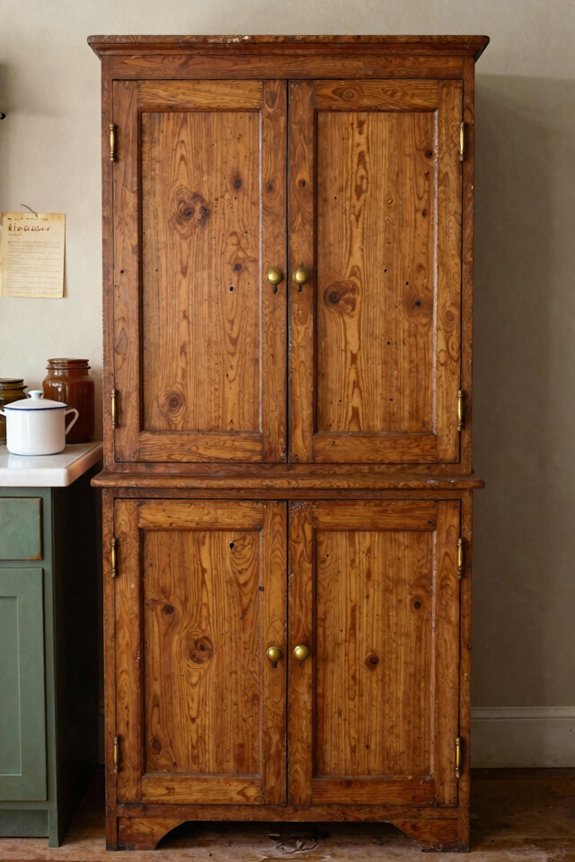
Why would anyone want to strip away the soul of a vintage Hoosier cabinet? That patina tells your cabinet’s story, and honestly, it’s what makes it genuinely beautiful.
I clean mine with mild soap and soft cloth only, steering clear of harsh chemicals that destroy original finishes. You’ll want to resist the urge to sand or re-stain; that aged character is irreplaceable.
Instead, I preserve the authentic hardware patina on hinges and tin liners, protecting against further corrosion while honoring honest wear. I enhance the wood’s natural luster with non-abrasive furniture oils designed for antiques. These respect the texture without creating that fake glossy film. Document your cabinet’s maker marks and era, and display that provenance proudly.
Your Hoosier’s timeless appeal comes from embracing exactly what it is: beautifully, authentically vintage.