
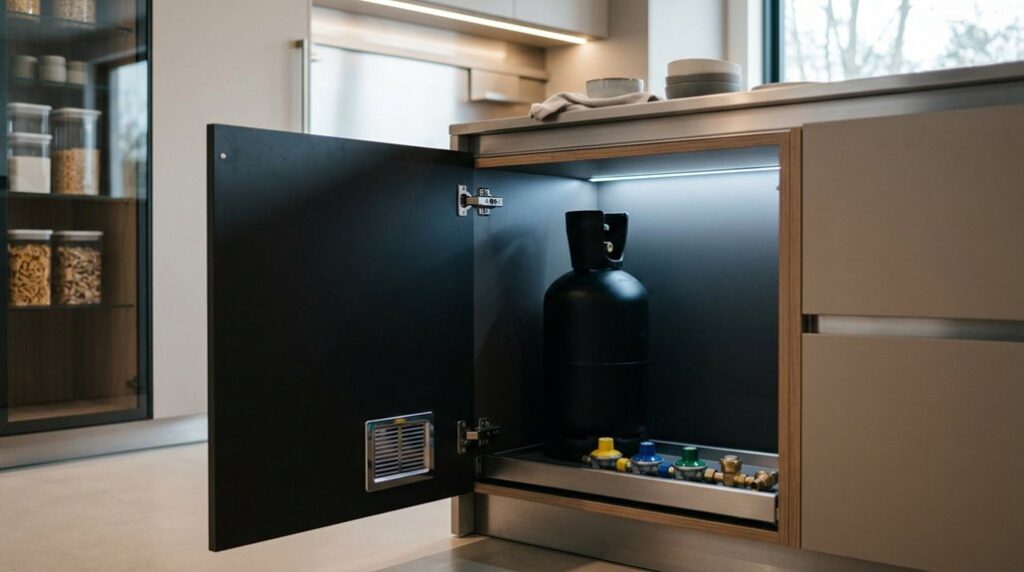
I’ve noticed most kitchens treat gas cylinder storage as an afterthought, tucked behind doors or crammed under sinks without real thought to safety or style.
Here’s the thing: you don’t have to choose between protecting your home and maintaining a modern aesthetic.
Smart storage solutions exist that do both, keeping cylinders secure and accessible while also complementing your kitchen’s design.
Let me show you how.
Safety First: Why Cylinder Ventilation and Placement Matter
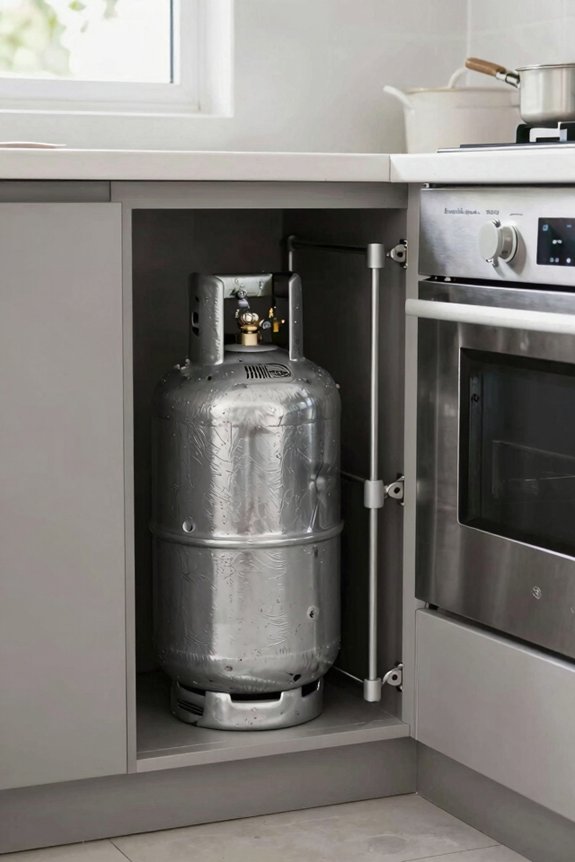
Because gas leaks can happen when you least expect them, proper ventilation in your cylinder storage area isn’t just a good idea—it’s essential. I’ve learned that sealed storage spaces invite dangerous gas accumulation, which isn’t something we want lurking in our kitchens.
Here’s what matters: make sure your storage area has consistent airflow and isn’t completely enclosed. This prevents hazardous buildup if a leak occurs. Additionally, position cylinders away from heat sources, flames, and ignition points.
This dual approach of ventilation plus strategic placement protects both your kitchen’s safety and cylinder integrity. Think of ventilation as your first line of defense. It’s straightforward yet powerful. When you prioritize these fundamentals, you’re joining a community of homeowners who’ve made their kitchens safer without sacrificing style or accessibility.
Under-Counter Cabinets With Ventilation and Soft-Close Doors
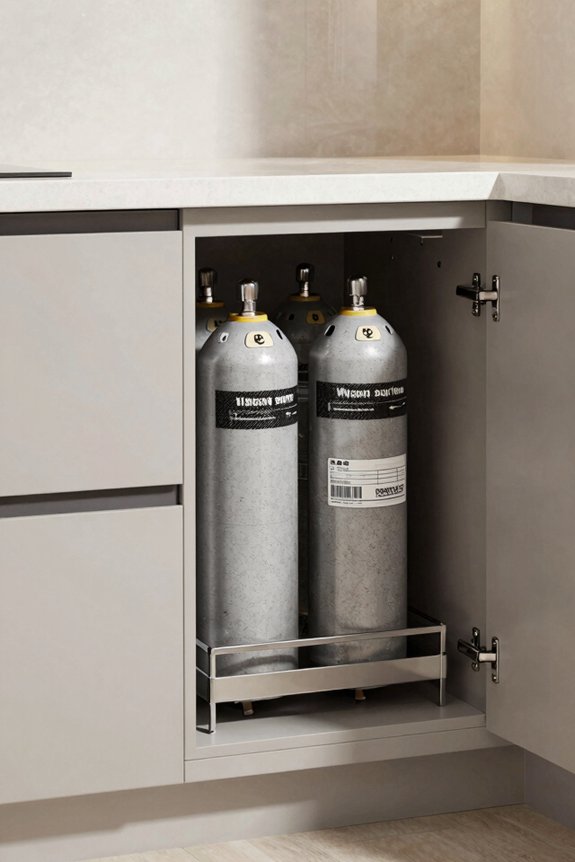
Now that you’ve secured proper ventilation and positioning, it’s time to house your cylinders stylishly. Under-counter cabinets with built-in ventilation do exactly that. I recommend selecting soft-close doors that prevent slamming while keeping everything concealed. These cabinets tuck cylinders beneath your countertop, maintaining that sleek, polished look.
Measure your space carefully, whether you’re using under-sink or toe-kick areas, to guarantee a perfect fit. Inside, custom compartments and dividers keep cylinders upright and accessible, preventing dangerous tipping. Pair your cabinet with non-slip bases for extra stability.
Consider sustainable materials like reclaimed wood or ethically sourced plywood. They align your kitchen with eco-conscious values while delivering durability. The built-in ventilation allows proper airflow, protecting your investment and your home. You’ve found the balance between function and design.
Wall-Mounted Racks for Easy Access Without Taking Counter Space
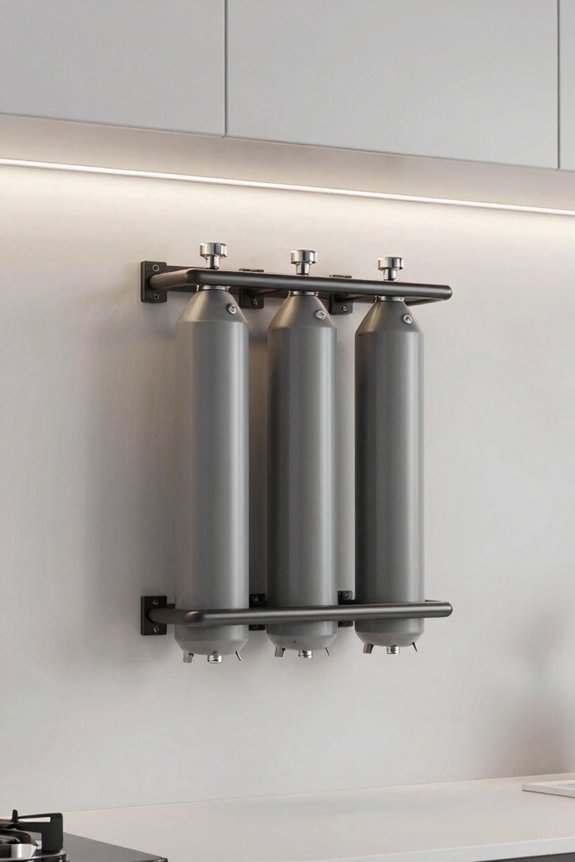
Wall-mounted racks keep gas cylinders accessible while preserving your counter space. I’ve found that stainless steel racks deliver durability, while reclaimed wood options add rustic charm—both work beautifully depending on your design vision.
The key is positioning them strategically. You’ll want cylinders within arm’s reach but safely away from heat sources and your main work zone. This placement keeps them visible for quick identification and handling without cluttering your cooking space.
I recommend pairing wall storage with adjacent pegboard or magnetic organizers. This combination maximizes vertical space and lets you hang frequently used utensils nearby, creating an efficient system that works well together.
The result is a kitchen that feels well-organized and reflects your personal style, where smart storage decisions enhance both safety and appearance.
Plastic Bins and Woven Baskets for Under-Sink Storage
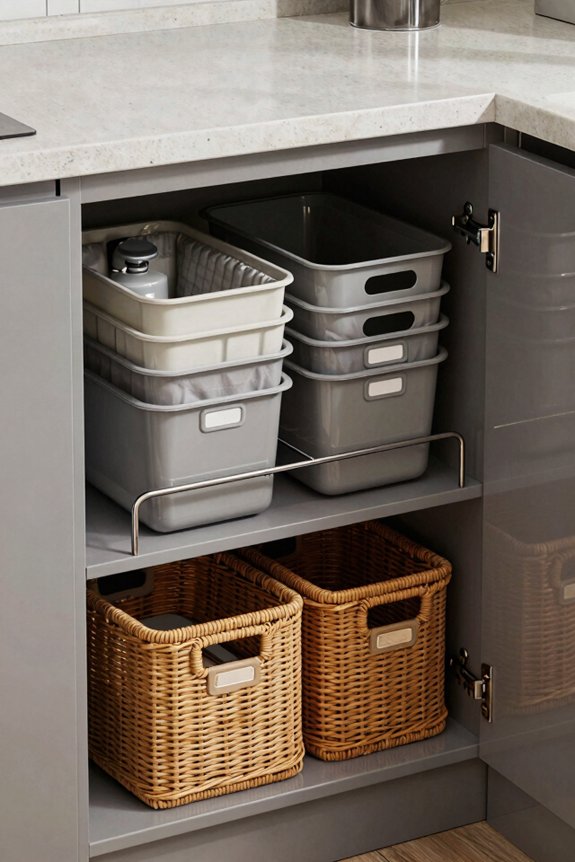
I’ve found that stackable plastic bins like IRIS USA’s 13 Qt containers organize my under-sink area so I can instantly locate what I need. Their design lets me maximize vertical space while keeping contents secure and visible; no more digging through cluttered cabinets.
Plus, both plastic bins and woven baskets wipe clean in seconds, which means I spend less time maintaining storage and more time cooking.
Stackable Design Benefits
Why settle for cramped, chaotic under-sink storage when stackable containers can reorganize that awkward space into an orderly system?
I’ve discovered that stackable design benefits extend far beyond mere convenience. Here’s what makes them effective for under-sink organization:
- Vertical space maximization: Stackable storage bins utilize height efficiently, turning wasted overhead space into functional compartments
- Flexible reconfiguration: You can easily adjust container arrangements as your needs evolve without replacing your entire system
- Secure accessibility: Properly stacked bins keep items protected while remaining within arm’s reach during cooking
The beauty of IRIS USA bins and Simple Houseware baskets lies in their modular approach. You’re not locked into one configuration; you adapt as circumstances change. This flexibility means your under-sink organization grows with your kitchen demands, supporting ordered storage while maintaining that polished, deliberate aesthetic.
Easy Cleaning And Maintenance
Maintaining your under-sink storage doesn’t require complicated routines or specialized equipment. I’ve found that ventilated baskets make a real difference here. They’re designed to breathe, preventing moisture buildup that could damage your gas cylinders or create safety hazards.
With Simple Houseware’s woven baskets and BPA-free IRIS USA bins, cleaning becomes straightforward. Both materials wipe down quickly with a damp cloth; no scrubbing needed. I appreciate how their smooth surfaces resist grime accumulation.
| Storage Type | Cleaning Method | Maintenance Frequency |
|---|---|---|
| Ventilated Baskets | Damp cloth wipe | Weekly |
| Plastic Bins | Soap and water | Bi-weekly |
| Woven Baskets | Dry brush first | Monthly deep clean |
Your under-sink organization stays fresher longer when air circulates properly. That’s why ventilation matters beyond mere aesthetics; it’s protective maintenance.
Rustic Wooden Crates: Eco-Friendly Storage That Adds Character
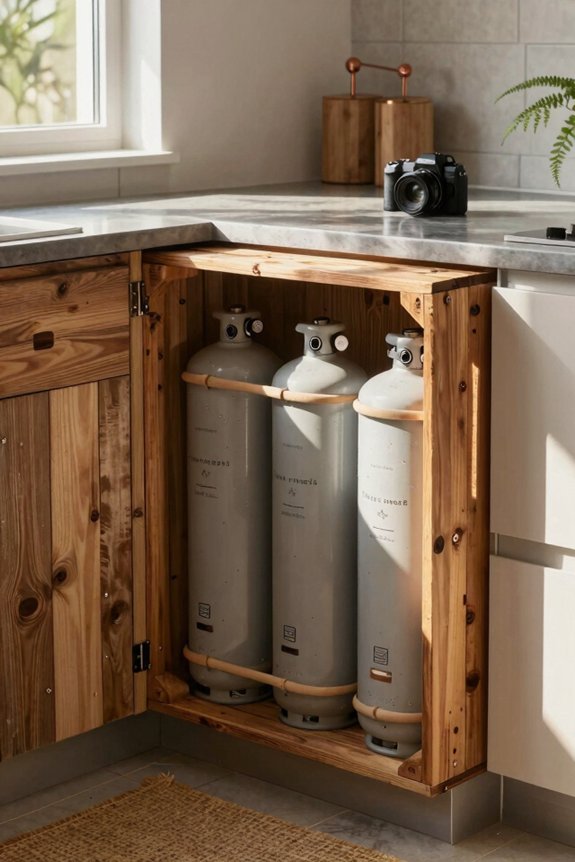
How do you store gas cylinders in your kitchen while maintaining an attractive look? Rustic wooden crates offer the perfect solution. Eco-friendly storage doesn’t mean sacrificing style, it means embracing it.
Consider these practical advantages:
- Stackable designs maximize your kitchen’s vertical space while maintaining visual appeal
- Customizable finishes let you paint or stain crates to match your décor seamlessly
- Reclaimed wood options reduce waste and add authentic personality to your space
You’ll appreciate brands like Farmho, which deliver nesting crates in varying sizes at budget-friendly prices. Their customer reviews consistently praise durability and functionality.
Sand and seal your wood to protect against spills. This simple step keeps your crates looking good while withstanding kitchen realities. Your storage becomes a deliberate design choice rather than a practical afterthought.
Stainless Steel Mobile Carts for Flexible Placement and Portability
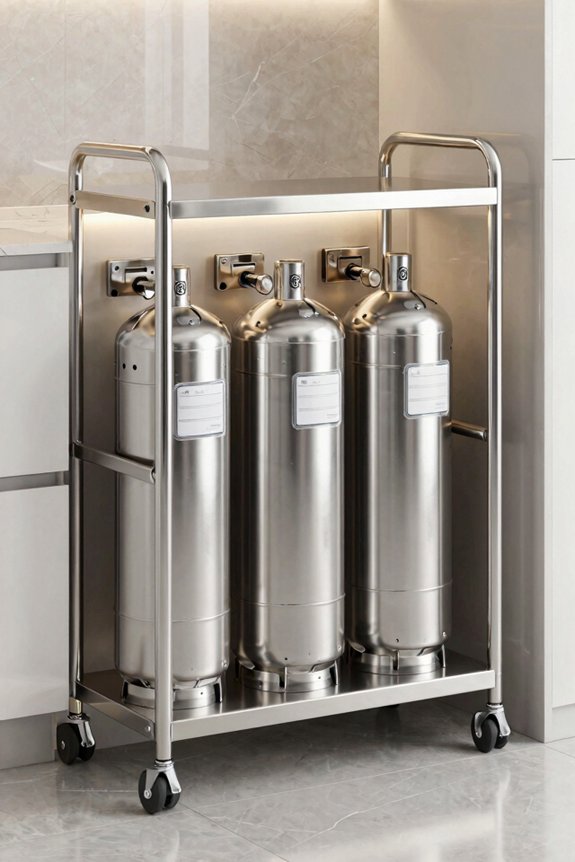
I’ve found that stainless steel mobile carts improve how you manage gas cylinders in modern kitchens, combining durability with the hygiene standards professional spaces demand. You’ll appreciate the locking wheel mechanisms these carts provide. They’re safety features that keep your cylinders stationary during prep work while letting you reposition them effortlessly between stations.
What really sets them apart is how they blend industrial functionality with that sleek aesthetic that’ll give your kitchen a professional appearance without sacrificing practicality.
Durability And Cleanliness
When you’re managing gas cylinders in a busy kitchen, you’ll want a storage solution that can handle both the physical demands and hygiene standards of professional cooking.
Stainless steel mobile carts deliver exactly that. Here’s why they work so well:
- Corrosion resistance keeps your cart looking sharp despite constant exposure to moisture and cleaning chemicals
- Easy disinfecting surfaces eliminate bacteria and food particles in seconds with a simple wipe-down
- Durability under pressure means your investment withstands years of heavy-duty kitchen use
The sleek stainless steel build resists rust while maintaining that professional aesthetic you’re after. You’ll appreciate how quickly you can sanitize these carts between shifts, no porous materials trapping contaminants. This matters. Your team deserves equipment that supports both safety and cleanliness standards without compromise.
Locking Features For Safety
Because gas cylinders demand serious security measures, you’ll want a mobile cart that won’t let your storage setup become a liability. Locking wheels and padlock-ready frames create secure storage solutions that prevent unauthorized access and accidental displacement.
| Feature | Benefit | Why It Matters |
|---|---|---|
| Locking Casters | Immobilizes cart when stationary | Prevents rolling during busy service |
| Padlock-Ready Frame | Secures cylinders in place | Deters tampering in open kitchens |
| Built-in Restraints | Keeps cylinders upright | Reduces pressure valve damage risk |
I’ve found that stainless steel carts with these safety features give me peace of mind. They’re engineered to hold heavy cylinders while keeping them accessible.
When you invest in locking mechanisms, you’re protecting both your team and your operation. That’s smart kitchen management.
Industrial Kitchen Enhancement
How do you keep gas cylinders accessible without sacrificing kitchen workflow? I’ve found that industrial stainless steel mobile carts improve cylinder storage into a strategic advantage.
These carts deliver practical benefits you’ll immediately notice:
- Flexible positioning lets you move cylinders away from heat sources while maintaining quick access during service
- Durable stainless steel surfaces resist corrosion from spills and humidity, simplifying maintenance in demanding kitchens
- Locking mechanisms secure cylinders during transport, preventing accidents when relocating equipment
The beauty lies in freeing your floor space while keeping cylinders readily available. You’re not just storing equipment; you’re optimizing your kitchen’s footprint. Professional kitchens benefit enormously from this approach, especially open-plan layouts where every square foot matters.
I’ve witnessed how mobility enhances both safety and efficiency. Your team moves cylinders strategically throughout service, responding to operational needs without compromise.
Built-In Drawer Systems With Custom Compartments and Labeling
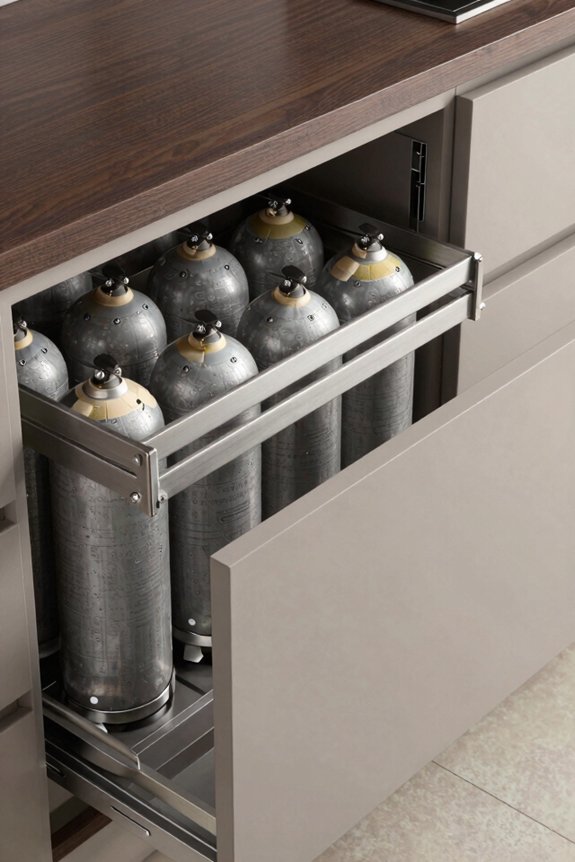
Where should your gas cylinders actually live in a modern kitchen? I’d argue that deep drawers with custom compartments are your best bet. You’re creating designated slots tailored to your cylinder diameters and heights, which eliminates wasted space and makes grabbing what you need effortless. I recommend pairing deep drawers with storage organizers featuring soft-edged borders. They protect both your cylinders and your kitchen aesthetic.
Pull-out mechanisms matter too; they let you access back cylinders without wrestling with front ones. What really sets this approach apart is flexibility. Mixed configurations with modular inserts mean you’ll reconfigure storage as your needs evolve.
Clear labeling on each compartment makes it obvious to everyone in your household what’s stored where, converting cylinder management from frustrating to convenient and organized.
Floating Shelves With Containment Lips to Prevent Rollaway
I’d recommend installing sturdy floating shelves with built-in containment lips; those raised edges protect against cylinders rolling off during earthquakes or accidental bumps. You’ll want shelves made from weight-capable materials like stainless steel or reinforced wood that can handle the heft while anchored securely into wall studs with heavy-duty brackets.
The lip design itself should be at least 2-3 inches tall and slightly angled inward, creating a secure cradle that keeps your cylinders accessible yet completely stable.
Sturdy Shelf Installation Methods
Most modern kitchens benefit tremendously from floating shelves with built-in containment lips; they’re your safety net against wayward gas cylinders. I’ve found that proper installation creates a reliable storage solution.
Here’s what I recommend focusing on:
- Weight-bearing capacity: Select shelves rated for at least 50 pounds per shelf to handle multiple cylinders without sagging
- Secure wall anchors: Use heavy-duty brackets into studs, ensuring installations won’t fail under load
- Lip height: Choose containment lips at least 2-3 inches tall to effectively prevent rollaway
Position your shelves at elbow height near prep areas for convenient access. I pair mine with non-slip mats underneath cylinders for extra stability. When you invest in quality installation methods, you’re investing in kitchen safety and reliability.
Safety Containment Lip Design
How do you keep a gas cylinder from becoming a kitchen floor hazard? Containment lips are your answer. These protective barriers, raised edges on floating shelves, prevent gas cylinders from rolling off unexpectedly. I’ve found they’re important for modern kitchens where style meets safety.
When you install shelves with containment lips, you’re creating a secure zone that keeps cylinders visible and accessible without compromise. The lips act as physical guards, reducing spill risk during quick grabs. Choose shelves with lips at least two inches high; they’ll cradle your cylinders firmly while maintaining that sleek aesthetic you’re after.
Pair these thoughtfully with ventilation considerations to prevent moisture buildup. You’ll appreciate how containment lips make storage safer and more reliable, proving that smart design really does belong in every kitchen.
Gas Cylinder Holders: Anti-Tip Stands That Look Sleek
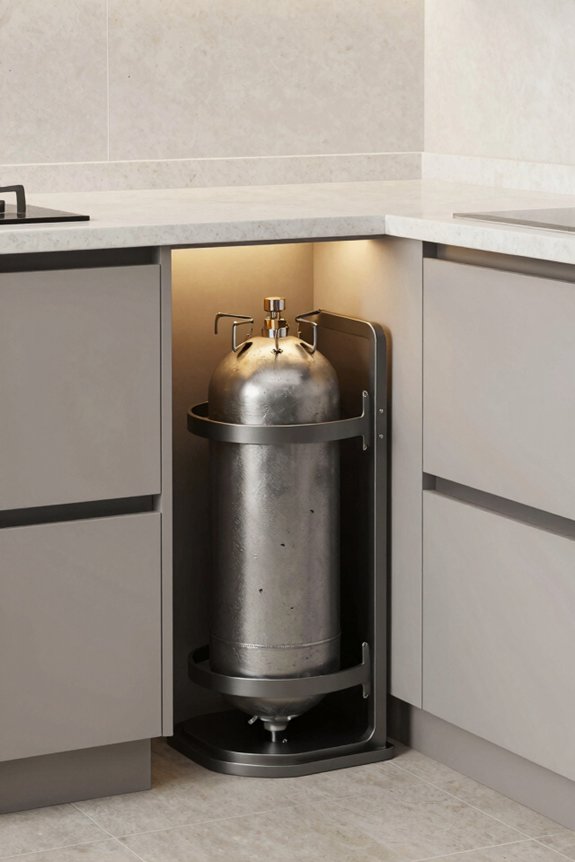
Keeping your propane cylinder upright and secure doesn’t mean sacrificing kitchen aesthetics. I’ve found that modern anti-tip stands work well as functional storage that complements your space.
Consider these sleek options:
- Wall-mounted brackets like the QWORK 6.9–7.25 inch cylinder bracket offer space-saving elegance while keeping cylinders safely secured
- Freestanding stands with non-slip bases and steel construction provide flexible placement without permanent installation
- Integrated shelf models add a practical top surface for workspace organization while maintaining cylinder stability
These stands incorporate locking mechanisms and durable materials that prevent tipping incidents. Whether you’re storing horizontally or vertically, you’ll find options that fit standard 5–20 lb propane cylinders.
I recommend checking user reviews on readily available online options to gauge fit and performance. The right anti-tip stand keeps your kitchen both functional and polished.
Labeling, Tracking, and Securing Cylinders With Smart Accessories
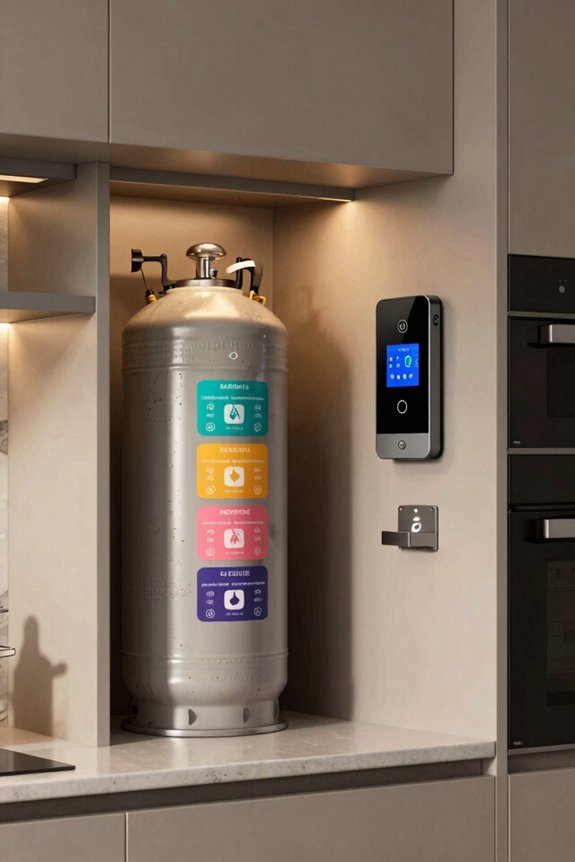
Beyond keeping cylinders upright, you’ll want to know exactly where they are and what condition they’re in. I recommend pairing RFID or QR-code tags on each cylinder with a centralized app that tracks location, status, and inspection dates in real time. This system turns labeling from guesswork into precision; you’ll spot expired cylinders instantly.
For security, tamper-evident seals and smart locks deter unauthorized access while signaling tampering immediately. I’ve found Bluetooth-enabled weight sensors particularly useful, as they alert you when cylinders are removed or need replacement, eliminating surprises mid-cooking.
Temperature and humidity sensors within your storage enclosure monitor conditions affecting cylinder integrity. Together, these smart accessories create accountability and peace of mind, keeping your kitchen gas system safe, organized, and reliably accessible whenever you need it.