L-shaped kitchens present unique spatial opportunities that require thoughtful planning. I’ve found that most people underestimate how much efficiency they can gain by repositioning just three elements. The secret lies in understanding your work triangle: the relationship between your sink, stove, and fridge. Get this right, and you’ll find cooking becomes more efficient and enjoyable.
But here’s where most homeowners miss the mark entirely.
Apply the Kitchen Work Triangle Rule
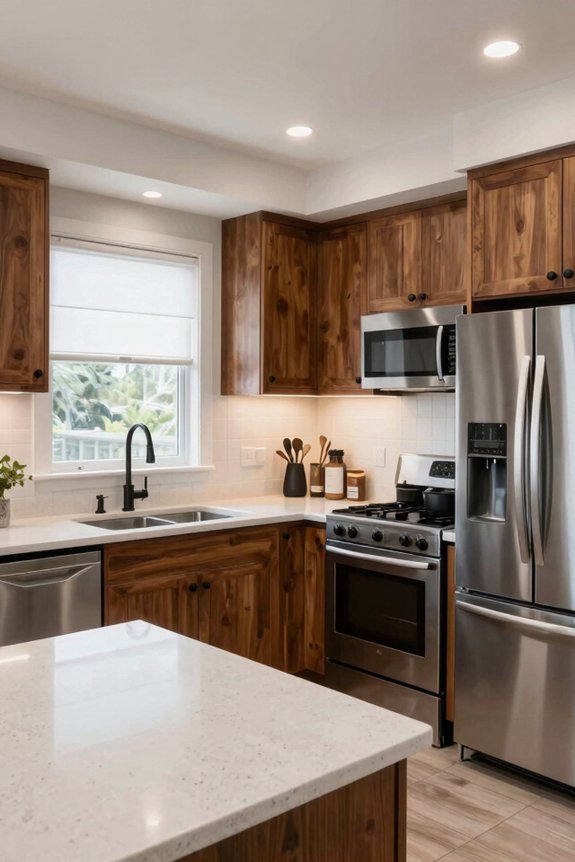
Why do some kitchens feel effortless to cook in while others leave you exhausted? The kitchen work triangle is your answer. This design principle connects your sink, refrigerator, and stove with 4 to 9 feet between each leg, creating space optimization that changes how you move.
In an L-shaped layout, position the sink on one leg and the refrigerator at one end of the opposite leg. Place your stove at the other end or on an island integration for optimal workflow efficiency. This arrangement minimizes walking distance during meal prep and reduces cross-traffic congestion.
Consider sink placement near a window so you’ll gain natural light while maintaining efficiency. For larger kitchens, two triangles prevent bottlenecks. This strategic approach makes cooking feel like collaboration with your space rather than combat against it.
Position Your Fridge, Stove, and Sink for Smooth Cooking
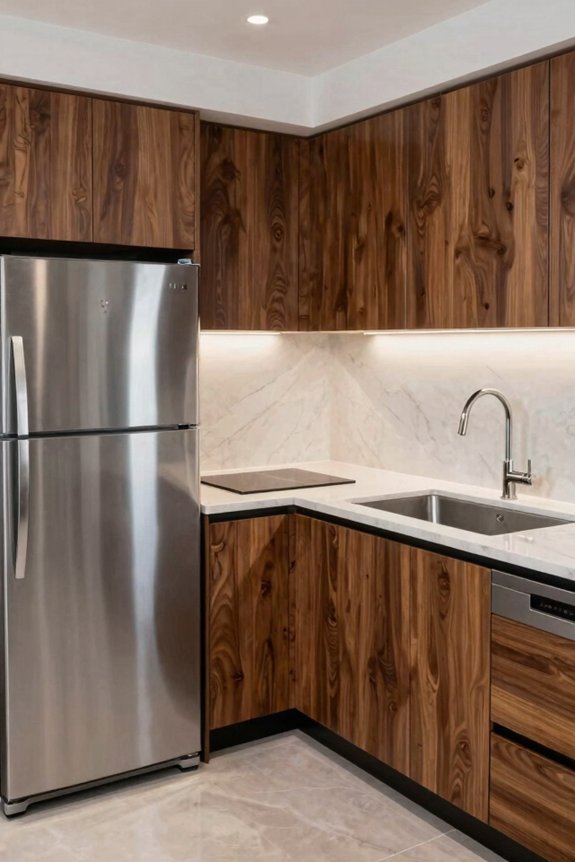
Most kitchens fail because they treat the three workstations as afterthoughts rather than anchors.
Most kitchens fail because they treat the three workstations as afterthoughts rather than anchors.
I’ve learned that strategic placement improves how you actually cook. Your L-shaped kitchen works well when you position these essentials intentionally:
- Fridge placement anchors one end of the L, reducing travel during meal prep and supporting your work triangle
- Stove placement sits opposite or on an island, creating a distinct cooking zone away from the sink area
- Sink position belongs in the middle of one leg near natural light, maintaining balanced workflow throughout
- Corner storage solutions like pull-out shelves maximize accessibility without cluttering primary pathways
Target 4–9 feet between workstations for an efficient work triangle. This spacing prevents bottlenecking while keeping everything within arm’s reach.
When you nail this foundation, your L-shaped kitchen becomes intuitive rather than frustrating.
Maximize Corner Storage With Pull-Outs and Lazy Susans
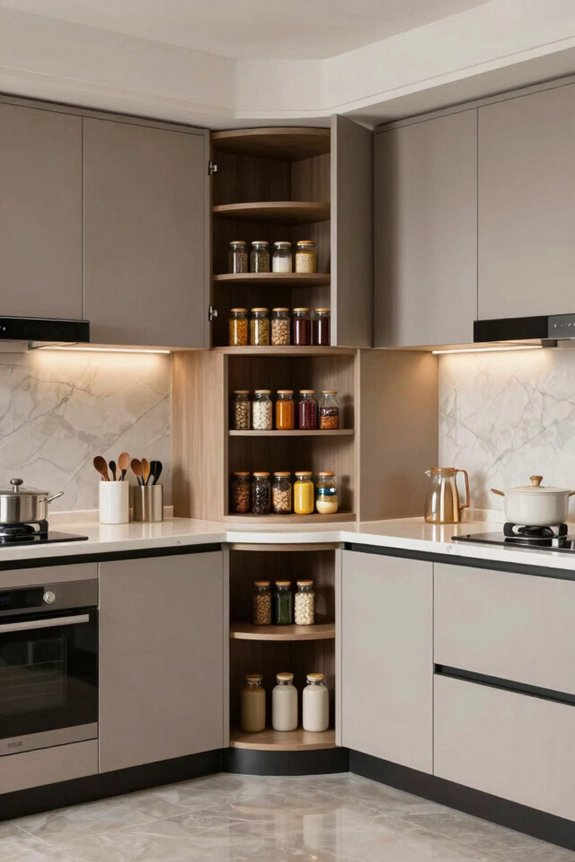
I’ve found that corner cabinets in L-shaped kitchens often become black holes where items disappear, unless you’ve got pull-out shelves or lazy Susans working for you. These hardware solutions make deep, awkward corners accessible by bringing items forward, so you’re not fishing around in the dark for that one pot or small appliance you need.
When you position your most-used pieces on these rotating or sliding systems, your workflow speeds up and you’ll actually use the full capacity of your cabinets instead of abandoning stuff in the back.
Pull-Out Shelf Solutions
Corner cabinets in L-shaped kitchens frequently waste valuable real estate because items get lost in the back, buried behind other cookware and appliances. Pull-out shelf solutions convert this dead space into accessible storage that actually works for you.
I’ve found that installing pull-out shelves dramatically improves corner cabinet functionality. Here’s why they’re so effective:
- Full-extension drawer slides let you access deep corners without straining or crawling inside
- Items slide to the front automatically, eliminating that frustrating reach-and-search dance
- Storage optimization happens naturally as everything stays visible and organized
- Lazy Susan integration pairs perfectly with pull-outs for maximum flexibility
When you combine pull-out shelves with a lazy Susan, your L-shaped kitchen storage improves completely. You’ll retrieve pots and pans faster while using every inch your corner cabinet offers.
Lazy Susan Organization
While pull-out shelves solve the accessibility problem, a rotating lazy Susan takes corner storage further. I’ve found that installing a corner lazy Susan in my L-shaped layout changed those awkward 90-degree spaces into functional storage hubs. Pairing these rotating organizers with soft-close mechanisms ensures smooth, quiet operation during daily use.
| Feature | Benefit | Best For | Design | Maintenance |
|---|---|---|---|---|
| Open-front lids | Quick item identification | Spices and condiments | Glass panels | Easy cleaning |
| Soft-close mechanisms | Reduced wear and noise | Pull-out organizers | Hydraulic dampeners | Minimal upkeep |
| Corner cabinets | Maximum storage efficiency | Deep pantry items | Rotating platforms | Regular rotation |
| Tall pantry pairing | Clean countertop lines | Frequently used goods | Stacked design | Organized placement |
| Pull-out organizers | Improved accessibility | Corner reach zones | Expandable shelves | Dust prevention |
Smart corner cabinet solutions deserve careful consideration for real kitchen improvement.
Build Tall Cabinets to Maximize Hidden Storage
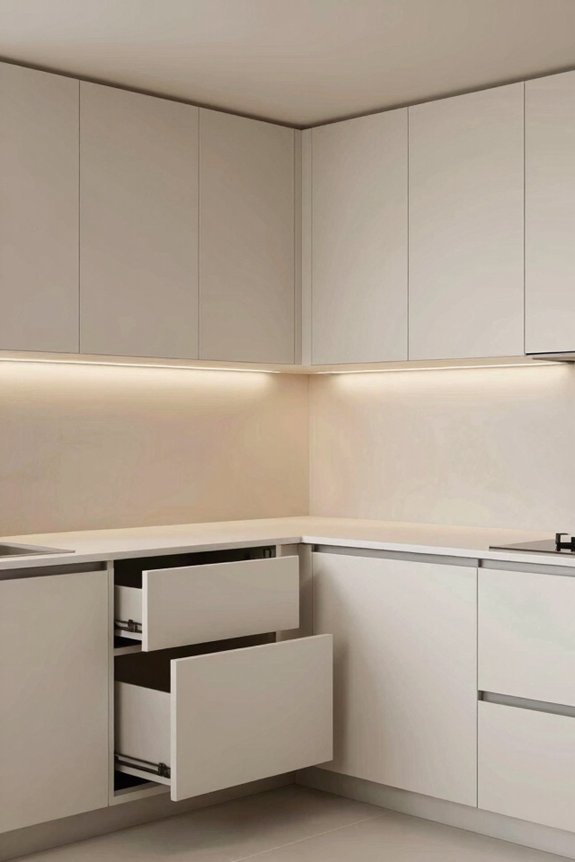
I’ve found that tall cabinets work well for L-shaped kitchens because they reclaim valuable vertical space that most designs leave empty. You can stack rarely used items on top shelves while keeping everyday essentials within arm’s reach, and I recommend pairing darker upper cabinets with lighter bases to trick the eye into perceiving higher ceilings.
This two-tone approach doesn’t just look polished; it improves your kitchen’s proportions while hiding clutter that would otherwise dominate your countertops.
Ceiling-Height Storage Solutions
When you extend cabinetry from floor to ceiling, you’re basically claiming prime real estate that most kitchens leave vacant. I’ve found that ceiling-height cabinets help you organize and experience your L-shaped kitchen differently.
Here’s what makes wall-to-ceiling storage work:
- Vertical storage maximizes every inch of available wall space without consuming floor area
- Pull-out shelves in upper zones let you safely access items without climbing or straining
- Interior drawer dividers keep frequently used essentials organized at arm’s reach
- Corner storage solutions eliminate wasted angles, making those tricky spots genuinely functional
The real benefit comes when you strategically place least-used items high up, reserving convenient heights for daily essentials. This approach creates a taller, airier aesthetic while delivering serious storage gains.
You’ll appreciate how integrated appliances paired with matching cabinet tiers produce that polished, built-in-looking appearance without the designer price tag.
Organizing Vertical Cabinet Space
How do you reclaim hidden storage without expanding your kitchen’s footprint? Tall pantry cabinets with adjustable shelves are your answer. I’ve found that floor-to-ceiling cabinets on one L-leg create continuous vertical storage, freeing precious counter space while establishing a streamlined aesthetic.
The key is pairing ceiling-height cabinets with integrated appliances. This seamless integration prevents visual breaks that otherwise shrink perceived depth. You’re creating one cohesive storage wall rather than disconnected units.
Here’s what works: reserve upper shelves for less-used items and keep daily essentials within arm’s reach below. Two-tone cabinet colors with contrasting upper and lower sections emphasize verticality and draw your eye upward, enhancing kitchen height perception.
Smart vertical storage makes modest L-shaped kitchens into efficient, organized spaces. You’re maximizing every inch without sacrificing style or accessibility.
Two-Tone Cabinet Styling
Why settle for monochromatic cabinetry when contrasting colors can create visual interest in your L-shaped kitchen? I’ve found that two-tone cabinets create depth and define functional zones beautifully.
Here’s how to maximize your space:
- Pair dark lower cabinets near cooking and prep zones with lighter upper cabinets for contrast and visual balance
- Choose a two-tone finish that coordinates with your hardware and countertops for a polished look
- Position tall, ceiling-height cabinets in matching tones to boost storage optimization while drawing eyes upward
- Keep frequent-access items accessible in lower cabinets while reserving upper shelves for display and occasional use
This strategy anchors your L-shaped kitchen visually, emphasizing the work triangle between sink, fridge, and stove. The two-tone approach isn’t just stylish; it’s functional storage optimization that helps you navigate your space intuitively.
Combine Task, Ambient, and Accent Lighting
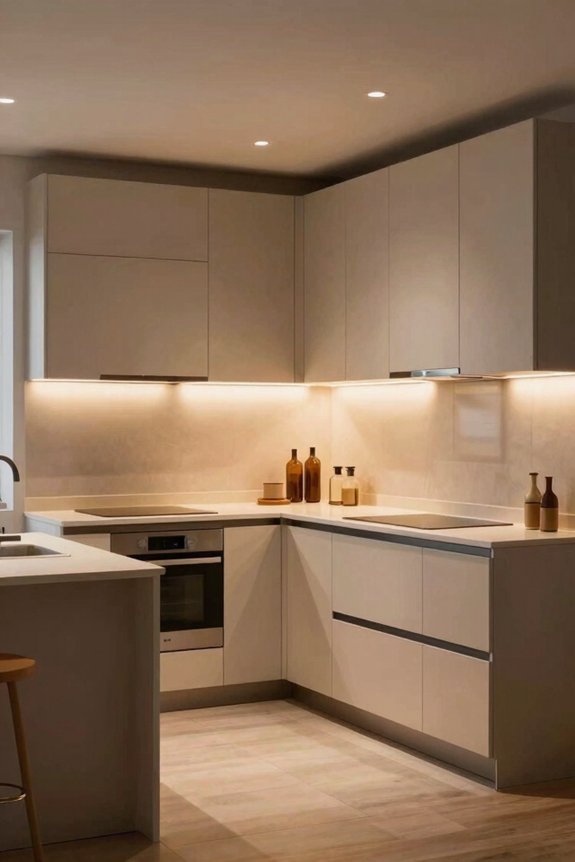
Lighting makes or breaks an L-shaped kitchen, and you’ll quickly notice the difference when you layer three distinct types together. I’d recommend starting with ambient lighting: overhead fixtures that bathe your entire space in general brightness. Next, add task lighting directly above your sink, stove, and prep counters. This focused illumination eliminates shadows where precision matters most.
Finally, incorporate accent lighting to showcase your favorite elements, whether that’s sleek cabinetry or a beautiful waterfall countertop. The real benefit happens when you install dimmable fixtures and adjustable pendant lights over your island. These adaptable solutions let you shift from bright cooking mode to relaxed entertaining without effort. You’re not just solving functionality; you’re creating zones that feel well-considered and welcoming.
Build an Island for Cooking and Conversation
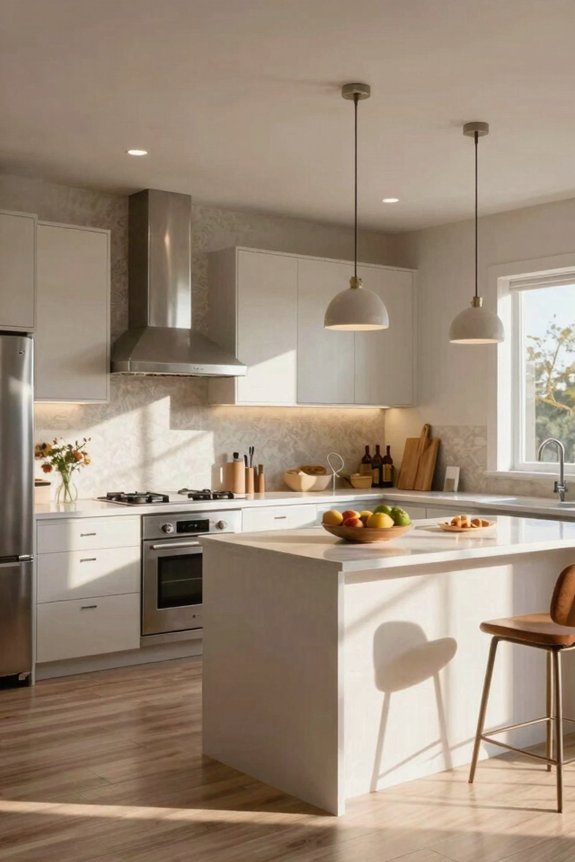
An island changes your L-shaped kitchen from a purely functional workspace into a gathering place where cooking and conversation happen simultaneously.
I’ve found that thoughtfully positioning an island creates the heart of your home. Here’s how to make yours work:
- Position it parallel to your L’s longer leg, maintaining 3–4 feet of clearance for comfortable movement and traffic flow
- Integrate functionality by adding a prep sink or extra storage without sacrificing dining or circulation space
- Install pendant lighting above to establish a center point while improving task visibility during cooking
- Consider flexibility with rolling island carts for small or rental kitchens where permanent installation isn’t possible
An island isn’t just additional workspace. It’s where your family naturally gathers, turning daily cooking into shared moments that matter.
Create Visual Interest With Two-Tone Cabinets and Bold Hardware
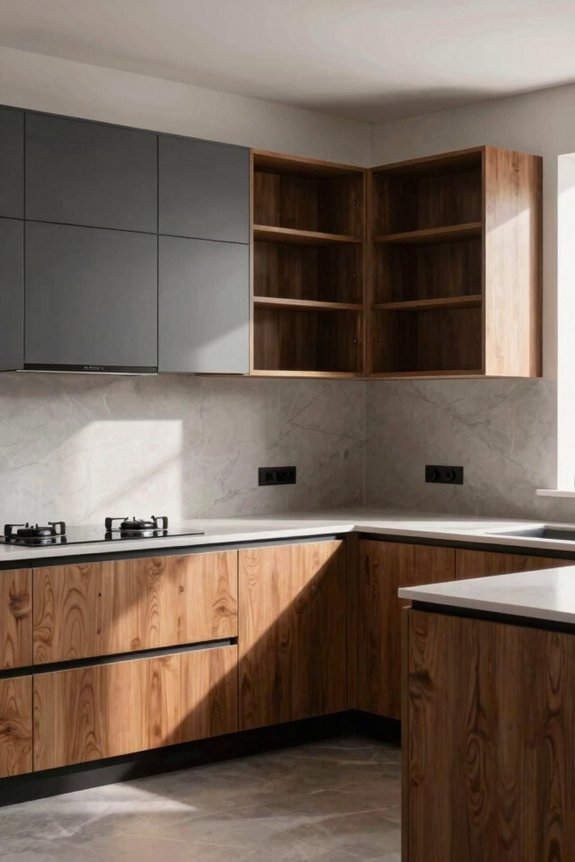
Two-tone cabinetry breaks up the visual weight of your L-shaped kitchen while creating distinct zones that feel planned rather than accidental. I’d pair darker base cabinets with lighter uppers to ground the space without closing it in. This contrast adds visual depth across both legs of your layout, making the kitchen feel organized and purposeful.
Bold hardware, such as black oil-rubbed bronze or brass knobs, ties contrasting cabinet colors together as a focal point. You’re creating a design story that says you belong in this space.
Consider mixing finishes too: matte uppers with glossy lowers introduce texture and modern sophistication. Balance your palette by keeping your dominant color on the larger run and your accent color on the island or smaller section. That’s how you nail kitchen zones with style and intention.
Adapt Your L-Shaped Layout for Your Kitchen’s Size
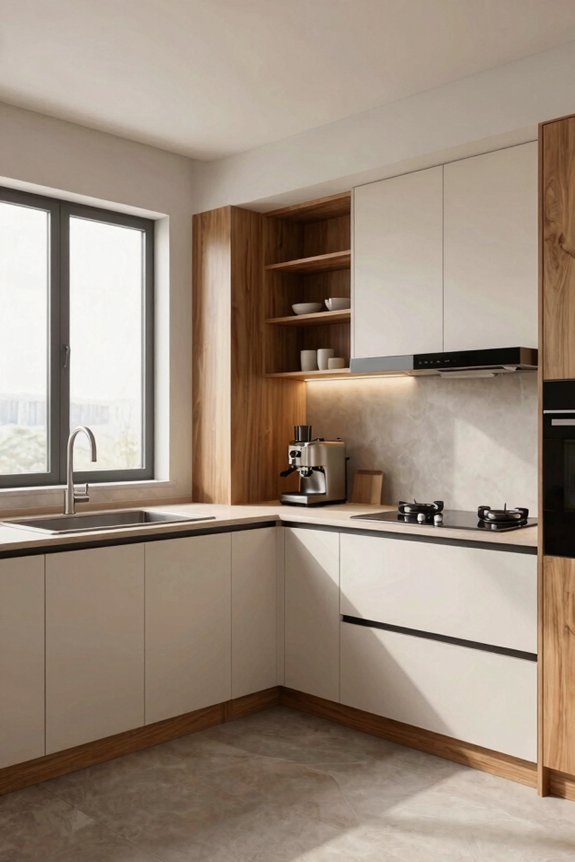
Once you’ve locked in your cabinet colors and hardware, it’s time to think about how your L-shaped kitchen actually functions within your square footage. Your layout’s success hinges on matching your space optimization strategy to your actual dimensions.
- Small kitchens: Install a slim island or peninsula to extend work surfaces without blocking traffic flow
- Medium to large spaces: Add a central island that creates distinct prep and dining zones while maintaining your kitchen triangle
- Narrow layouts: Extend one leg into a breakfast bar or coffee station to minimize bottlenecks
- Any size: Use tall cabinets on one leg for storage solutions that keep countertops clear
The refrigerator anchoring one end, integrated into cabinetry, creates that built-in aesthetic you’re after. This approach ensures your L-shaped layout works well for how you cook and gather.
Add Seating and Nooks to Make Your Kitchen Social
Why settle for a kitchen that’s purely functional when you can design one that naturally draws people in? I’d add a slim 16–20 inch island or breakfast bar to your L-shaped layout. It creates dedicated seating without disrupting workflow between your two work legs.
Consider incorporating a built-in banquette along the longer leg; it maximizes seating while preserving precious prep space. Pendant lighting above your seating zone establishes a visual center point, making your kitchen a place where people naturally gather.
I’d pair this with open shelving or glass-front cabinets nearby. They keep your entertaining space feeling connected and accessible. This approach lets your L-shaped kitchen become where people naturally gather, not just where you cook dinner.