Your kitchen is only as functional as the distance between your sink and stove, and that’s where most homeowners get it wrong. I’ve watched countless kitchens fail because appliances were scattered like furniture in a living room.
The truth? Start with *where* you cook, not what color your cabinets should be. Get this foundation right, and everything else falls into place. But here’s what most people miss about creating a kitchen that actually works.
Start With Appliance Placement: The Foundation of Any Kitchen Layout
The smart kitchen begins with appliances, not cabinets—your appliance placement determines everything else.
The smart kitchen begins with appliances, not cabinets. I’ve found that deciding on your sink, dishwasher, rangetop, and refrigerator first determines everything else: your cabinetry layout, dimensions, and workflow.
Here’s why this matters: you’re creating a work triangle, that efficient path connecting your three main zones. Position your fridge at one end and your gas rangetop at the opposite end. This setup maximizes movement and minimizes wasted steps during meal prep.
I recommend keeping these four appliances clustered closely together, leaving ample countertop space between them. Consider placing a heat source in your island for enhanced prep accessibility. Avoid stacking an oven beneath your rangetop; you’ll lose valuable storage.
Your kitchen layout succeeds when appliance placement comes first.
Which Kitchen Layout Shape Fits Your Space and How You Cook?
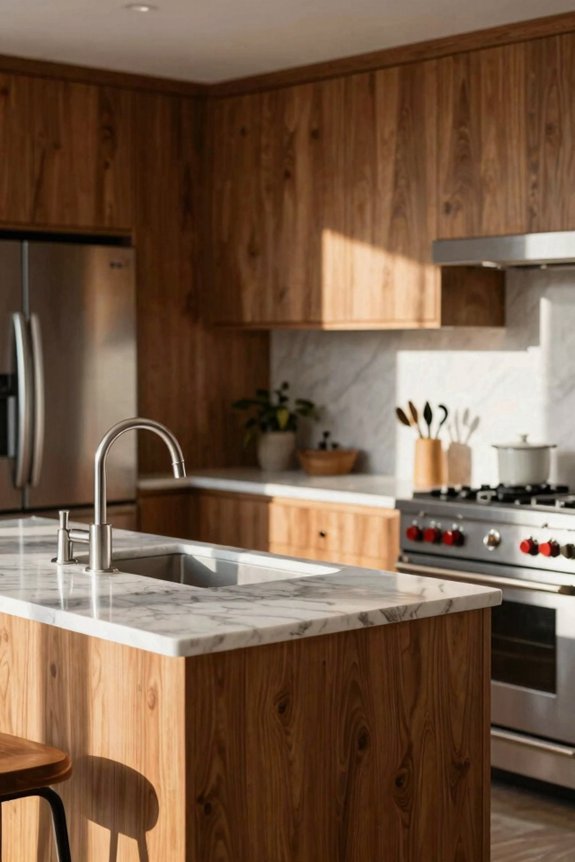
How do you know which layout shape works best for your kitchen? I’ve found that matching your kitchen layout to your space and cooking style is important for space optimization and workflow.
If you’re cooking solo in a narrow area, a galley layout’s parallel walls create smooth efficiency. Got multiple cooks? A U-shaped kitchen forms a natural triangle, keeping everyone in sync. L-shaped layouts offer flexibility; they adapt beautifully to small or large spaces while accommodating islands or dining areas.
For tight quarters, one-wall designs maximize floor space cost-effectively. If you’re serious about storage in a spacious kitchen, G-shaped layouts extend U-shapes with a peninsula, though they can disrupt traffic in smaller rooms.
Consider your actual cooking patterns. Your kitchen layout should support how you really cook, not how designers imagine you should.
The Work Triangle: Your Zoning Blueprint
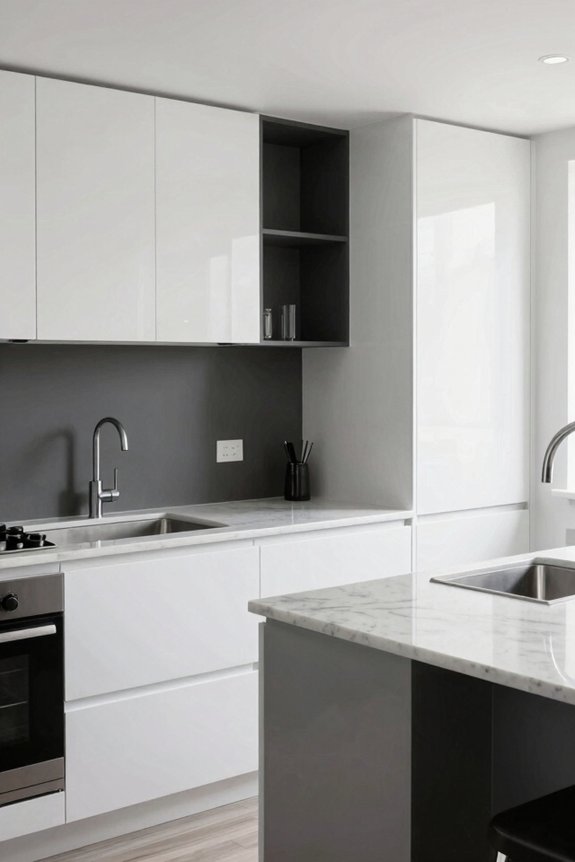
Once you’ve chosen your layout shape, it’s time to optimize the actual workflow within it: the work triangle. This zoning blueprint connects your sink, refrigerator, and range into an efficient triangle that minimizes unnecessary steps.
In U-shaped kitchens, I position the sink near the center with appliances at opposite ends. L-shaped designs place the refrigerator at one end, cooktop at the other, and sink between them. For open-concept spaces, I keep this triangle intact while adding islands or peninsula seating nearby.
The benefit of space optimization through the work triangle is that you’ll move purposefully between prep, cooking, and cleanup without wasting energy. Even small kitchens benefit when you protect that triangle from clutter and obstacles.
Add Storage Without Eating Floor Space: Vertical Shelving and Hidden Cabinets
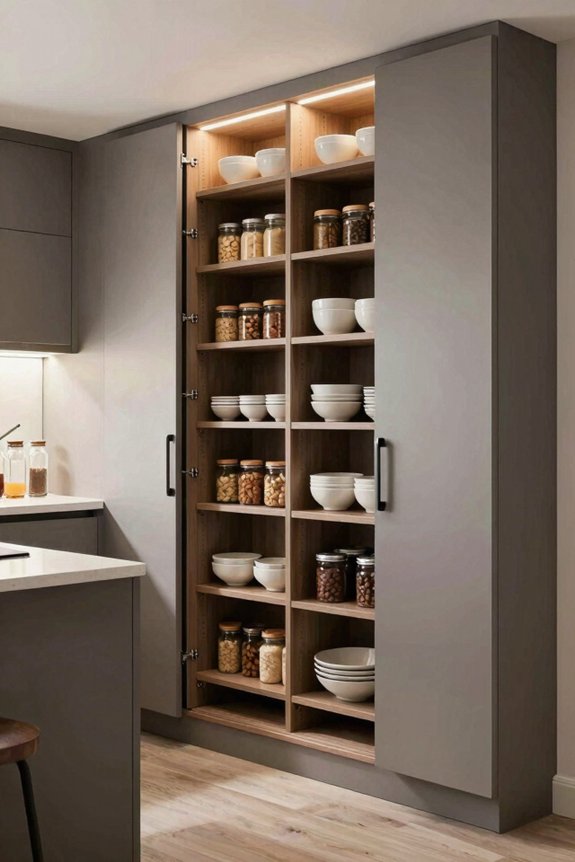
I’ll show you how I’ve redesigned cramped kitchens by pushing storage upward instead of outward. Vertical shelving and hidden cabinets are your best-kept strategies against clutter. When you stack tall pantry units and overhead cabinets, you’ll nearly double your storage capacity without sacrificing a single square foot of floor space where you actually move and cook.
Pull-out organizers tucked behind cabinet doors keep everything accessible yet hidden, so your kitchen stays visually calm while holding everything you need.
Vertical Storage Solutions
When floor space is precious, vertical storage becomes your kitchen’s hidden asset. I’ve found that pull-out shelves and wall-hung organizers turn awkward wall space into accessible storage goldmines. Think tall, adjustable cabinets that accommodate everything from wine bottles to mixing bowls without consuming your precious countertops.
Wall-mounted pot racks and open shelving at eye level keep frequently used tools visible and within arm’s reach. You’re not just organizing; you’re creating workflow efficiency. Pull-out pantry shelves minimize stretching and searching, making meal prep smoother.
The beauty of these solutions is that they free your lower counters for actual cooking. By stacking strategically upward, you’re reclaiming horizontal real estate while keeping essentials accessible. It’s smart design that lets you cook comfortably in any kitchen size.
Hidden Cabinet Organization
How do you hide what you need while keeping it accessible? That’s where hidden cabinets and vertical shelving shine. I’ve found that integrating pull-out shelves and drawer partitions creates organized systems from chaotic spaces. Your everyday items stay within reach, but out of sight.
Consider dedicating a cupboard as your small appliance “garage.” Your blender, toaster, and mixer disappear, leaving counters clean and inviting. Tall, wall-mounted storage capitalizes on vertical space; perfect for cups, lids, and spices that’d otherwise crowd shelves.
The key to success is storage optimization through intentional placement. Hidden cabinets don’t mean forgotten items; they mean purposeful organization. By combining these strategies, you’re not just saving floor space. You’re creating a kitchen where everything has its place and your space feels genuinely yours.
Make Your Kitchen Feel Bigger: Open Sightlines and Movable Islands
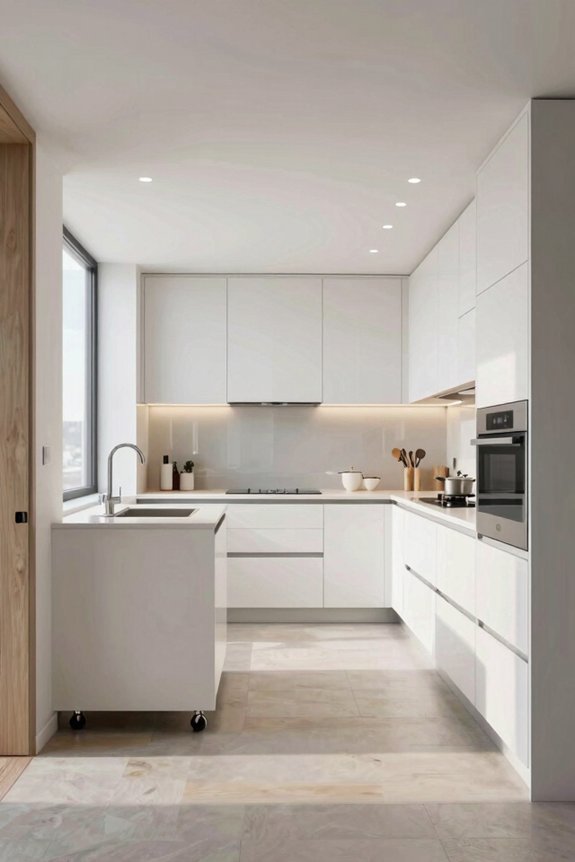
Ever notice how some kitchens feel cramped even when they’re spacious? I’ve learned that open-concept design changes how we experience our kitchens.
Creating open sightlines removes visual barriers, making your space feel larger and more inviting. Here’s what I recommend:
- Maintain uninterrupted sight lines across kitchen, dining, and living areas to enhance flow and connection
- Install a movable island that provides prep space without blocking views or limiting furniture arrangement flexibility
- Use consistent flooring throughout connected spaces to visually expand the entire area seamlessly
I’ve found that built-in appliances and a cohesive color story further strengthen this expansive feeling. A movable island works especially well, as it adapts to your lifestyle while preserving those crucial sight lines.
This approach creates the open-concept kitchen where everyone gathers naturally, making your space into somewhere truly functional and welcoming.
Islands vs. Peninsulas: Which Fits Your Kitchen?
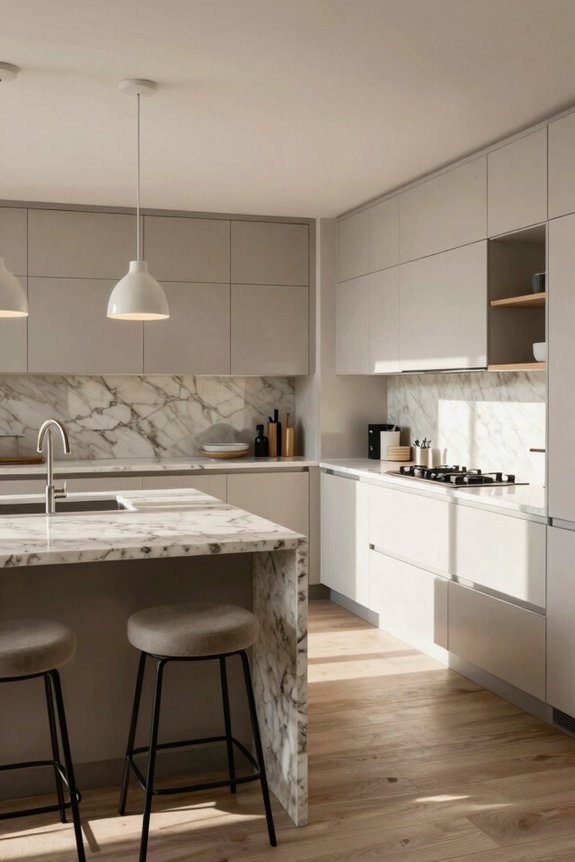
Now that you’ve decided to keep those sight lines open, you’ll face another key choice: should you install an island or a peninsula?
Islands work brilliantly when you’ve got the square footage. They provide central counter space, storage, and seating while letting everyone gather around. Peninsulas, however, are your space-saving option. They create a partial U-shape with one open side, offering extra counter space without consuming as much room.
Islands provide central gathering space in larger kitchens, while peninsulas maximize counter room in compact layouts.
Here’s the practical difference: peninsulas align naturally with your work triangle by placing either your cleaning or cooking zone along that extended counter. Islands demand more clearance but offer flexibility. Consider pairing them; a peninsula for prep work and an island for seating creates distinct zones while maintaining flow.
Your kitchen size ultimately decides. Smaller spaces? Peninsula wins. Larger layouts? Islands shine.
Pick a Layout That Supports How You Actually Cook
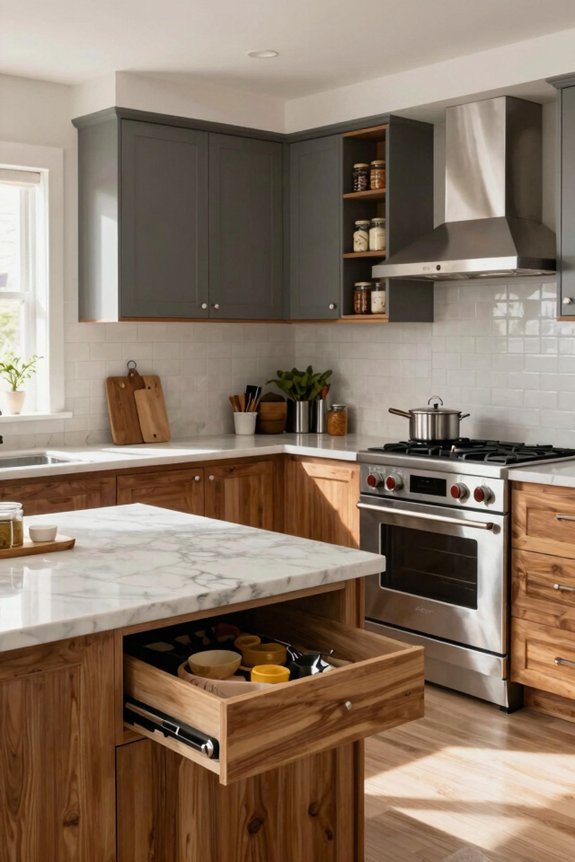
Your kitchen layout should match your cooking style, not the other way around. Understanding how you actually work in the kitchen makes a real difference, from appliance placement to traffic flow.
Consider these approaches:
- U-shaped layouts position your refrigerator and range on opposite ends with the sink centered, creating an efficient work triangle that minimizes steps
- L-shaped designs accommodate islands or dining areas while maintaining openness for entertaining and sightlines across spaces
- One-wall or galley kitchens maximize floor space in small spaces, preserving clear pathways without sacrificing functional work zones
If you’re a solo cook or have limited square footage, skip the island. Multiple cooks? A U-shaped kitchen delivers the efficiency you’re after. Your layout should support how you cook, not complicate it.