I recently worked with a homeowner who replaced her tired laminate kitchen floor with large-format porcelain tiles in a marble-look finish. It completely changed how the space functioned. The shift wasn’t just about how it looked; it fundamentally changed how she used her kitchen.
But here’s what surprised us both: the right flooring choice involved way more than picking something that looked good. Let me show you why your floor matters more than you might think.
Durable Kitchen Flooring Materials for Everyday Use
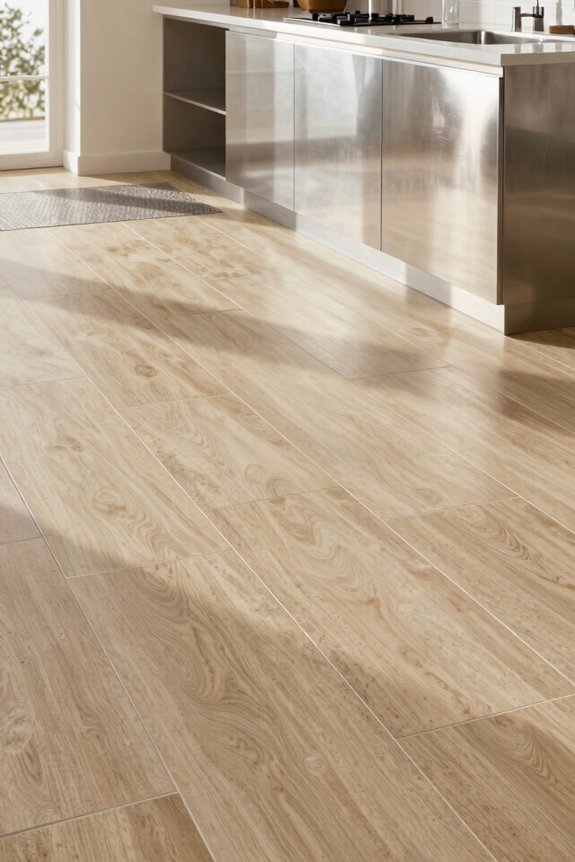
What makes a kitchen floor truly practical? It’s choosing materials that handle daily spills, foot traffic, and the occasional dropped pan without flinching.
Luxury vinyl plank delivers impressive water resistance and scratch protection at a fraction of hardwood’s cost. I’ve found it mimics real wood beautifully while staying forgiving underfoot.
Luxury vinyl plank combines water resistance and scratch protection with authentic wood aesthetics at a fraction of hardwood’s cost.
Porcelain tile offers unmatched durability with style versatility: wood-look, marble, or natural stone textures work seamlessly in any design scheme. It pairs wonderfully with radiant heating for those chilly mornings.
Engineered hardwood provides that coveted natural oak aesthetic with solid performance. It extends beautifully from kitchen into great rooms, creating visual continuity.
The key? Match your material to your lifestyle. High-traffic families thrive with porcelain or luxury vinyl plank. Those wanting warmth prefer engineered hardwood’s authentic character and feel.
Classic and Contemporary Kitchen Flooring Styles
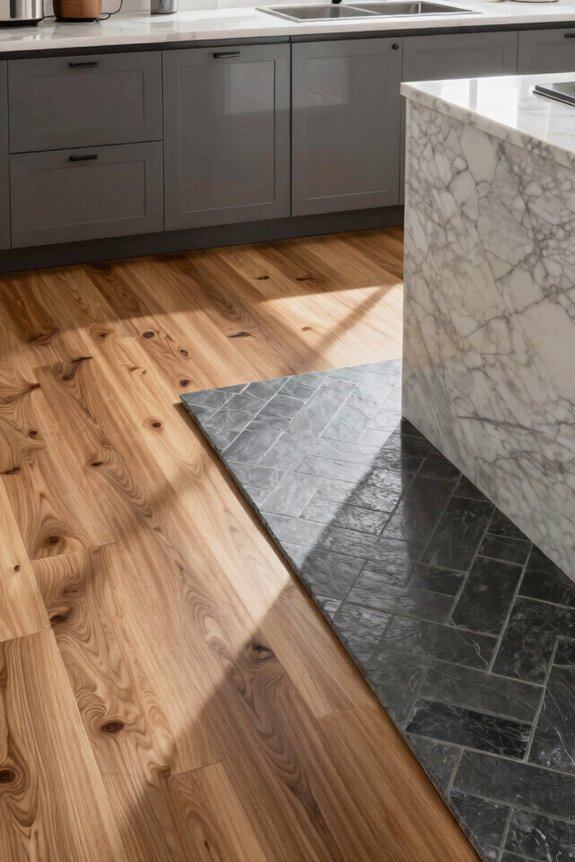
Whether you’re drawn to timeless design or modern edge, your flooring sets the design tone for the entire kitchen.
I’ve found that blending styles creates spaces that feel both grounded and current. Marble-look tiles deliver sophisticated aesthetics without maintenance headaches, offering delicate or dramatic veining to match your vision. Large-format tiles minimize grout lines, creating seamless expanses that feel spacious and cohesive.
Consider these approaches:
- Arctic White brushed marble for classic kitchen floors with understated luxury
- Marradi Calacatta Emerald featuring deep green and gold veining for bold statements
- Traditional patterns like old-world checkerboards paired with contemporary finishes
- Modern Graphite Geometric Tile for high visual impact
The key is mixing traditional patterns with modern materials. This combination keeps your kitchen feeling timeless while remaining distinctly yours, welcoming guests while reflecting your personal design sensibility.
Patterns and Textures That Enhance Your Kitchen Design
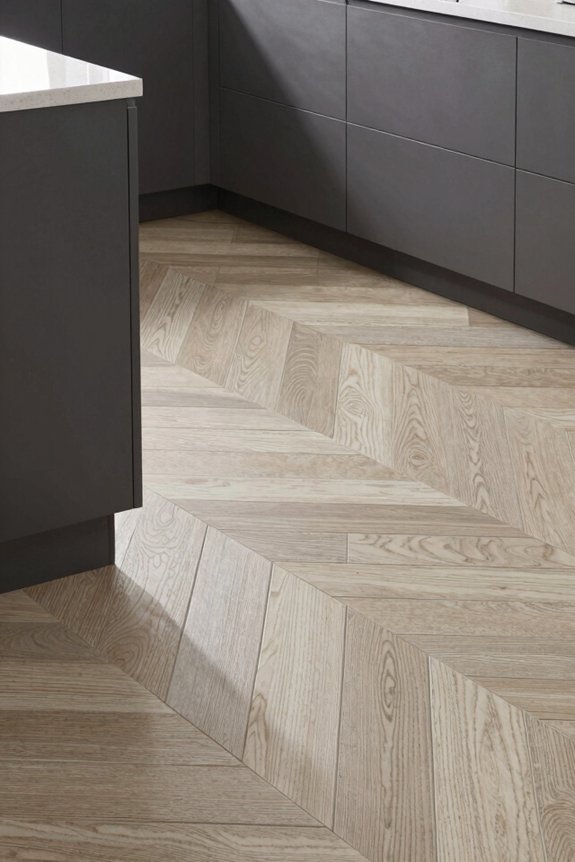
How can a floor become more than just functional, adding depth and character to your kitchen? Strategic pattern choices help you create a space that reflects your personal style.
| Pattern Type | Visual Impact |
|---|---|
| Mosaic tiles | Decorative detail and artistic flair |
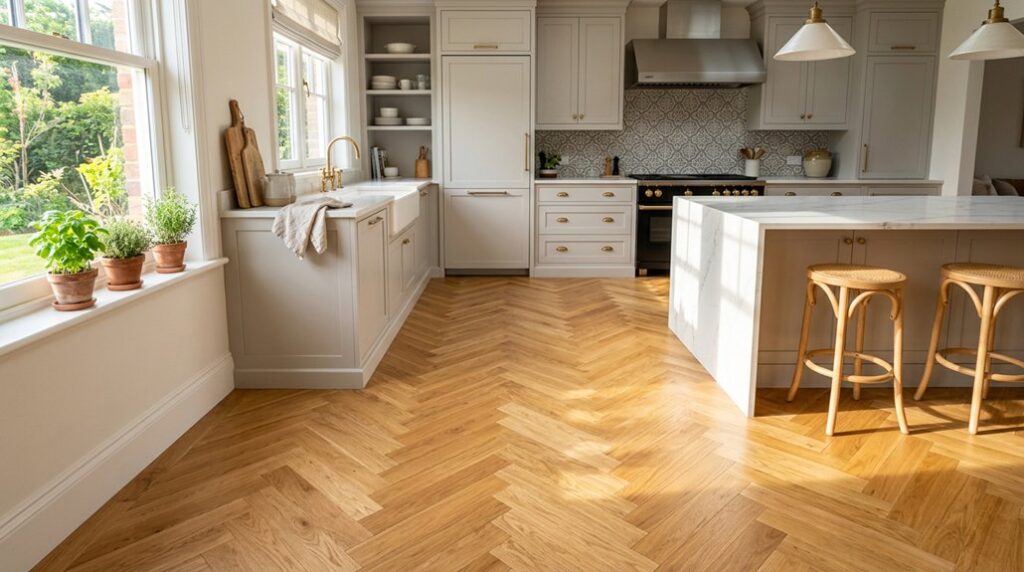
| Herringbone | Movement and dynamic energy |
| Large-format tiles | Seamless, gallery-like expansion |
| Checkerboard | Timeless vintage-modern blend |
I’ve discovered that large-format tiles create visual continuity, reducing grout lines that fragment smaller spaces. A mosaic border adds personality without overwhelming your kitchen’s narrative.
Herringbone patterns introduce sophisticated texture, whether you’re embracing contemporary minimalism or vintage warmth. That old-world checkerboard delivers high-contrast sophistication that grounds traditional and modern designs alike. You’re not just choosing flooring; you’re curating an experience that reflects your design instincts and invites others into your culinary haven.
Extending Your Floor Style Into Connected Rooms
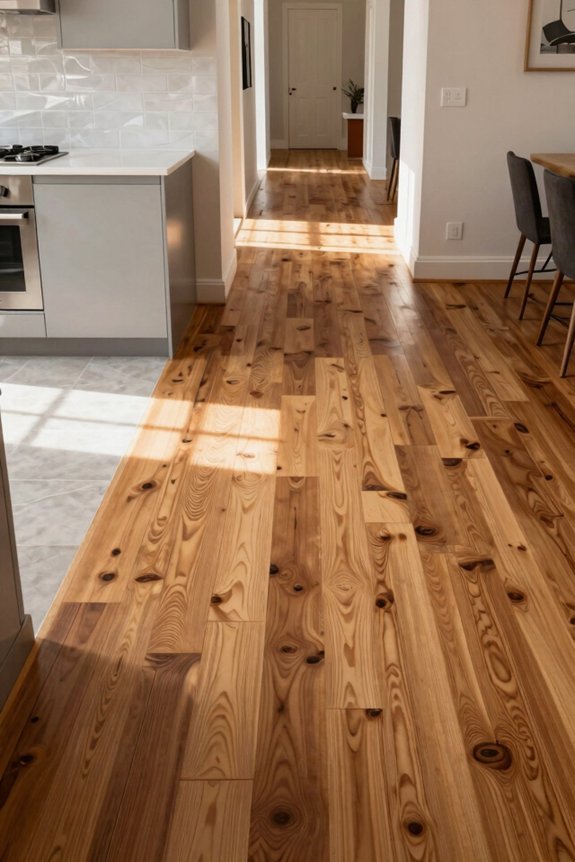
Why settle for a design that stops at your kitchen’s threshold? I’ve discovered that extending your floor style into adjoining spaces creates a cohesive flooring experience that connects your entire home.
Here’s what works best:
- Large-format tiles with fewer grout lines maintain seamless transitions between rooms
- Wood-look porcelain carries warmth across kitchens, dining areas, and living spaces
- Herringbone patterns reinforce continuous design narratives from kitchen outward
- Luxury vinyl plank offers durability for high-traffic zones while staying budget-friendly
When your flooring extends into adjoining spaces, both rooms feel intentionally connected rather than separate. You’re not just installing material; you’re curating an experience that welcomes guests through your home naturally.
This approach signals thoughtful design choices to anyone who enters. I’d recommend starting with large-format tile; it’s the fastest way to achieve that unified, spacious feeling.
Pairing Flooring With Your Cabinet Style and Budget
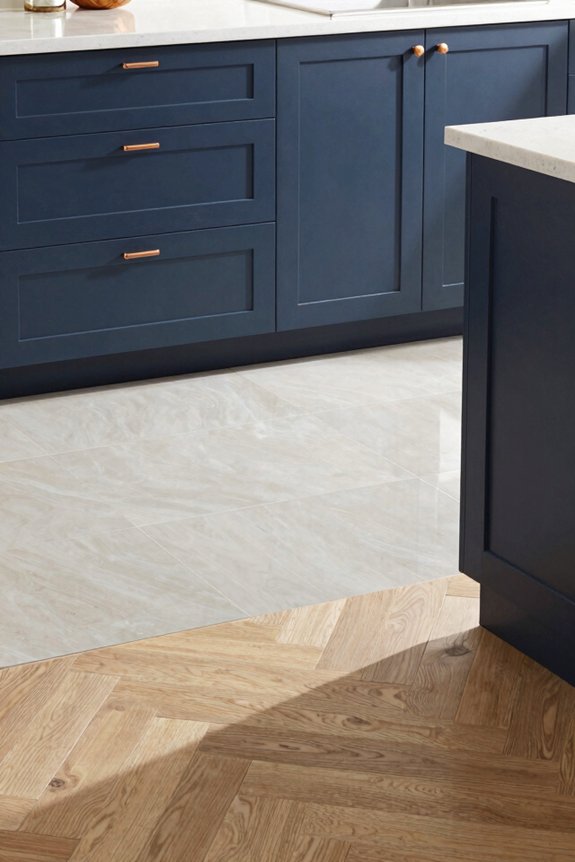
Your kitchen’s cabinets set the tone for everything else, including what flooring will actually look good underfoot. Light cabinetry pairs beautifully with cream-colored stone or arctic white marble, creating that rich, unified appearance you’re after.
Your kitchen’s cabinets set the tone for everything else, including what flooring will actually look good underfoot.
Budget-conscious? Luxury vinyl with Marmoreal Calacatta looks delivers marble aesthetics without the price tag or installation complications. It’s scratch- and stain-resistant, perfect for real life.
Wood-look porcelain or engineered hardwood balance warmth with durability across cabinet styles. Large-format tile minimizes grout lines, making your space feel bigger while complementing neutral cabinets.
Consider patterned layouts such as checkerboards or borders to add personality, but make sure they work well with your cabinet style. That’s how you protect both aesthetics and resale value.
The right flooring isn’t just practical; it’s your kitchen’s foundation.