Like Marie Kondo meets Japanese minimalism, Japandi design creates kitchens that feel like serene sanctuaries without sacrificing warmth for simplicity. You’re probably wondering how to balance clean lines with cozy charm without ending up with a cold, sterile space.
The key lies in strategic choices in cabinetry, color, and materials that work together harmoniously. I’m about to show you exactly how designers like Norm Architects pull this off, and how you can replicate it at home.
Japandi Cabinetry: Clean Lines and Hidden Storage
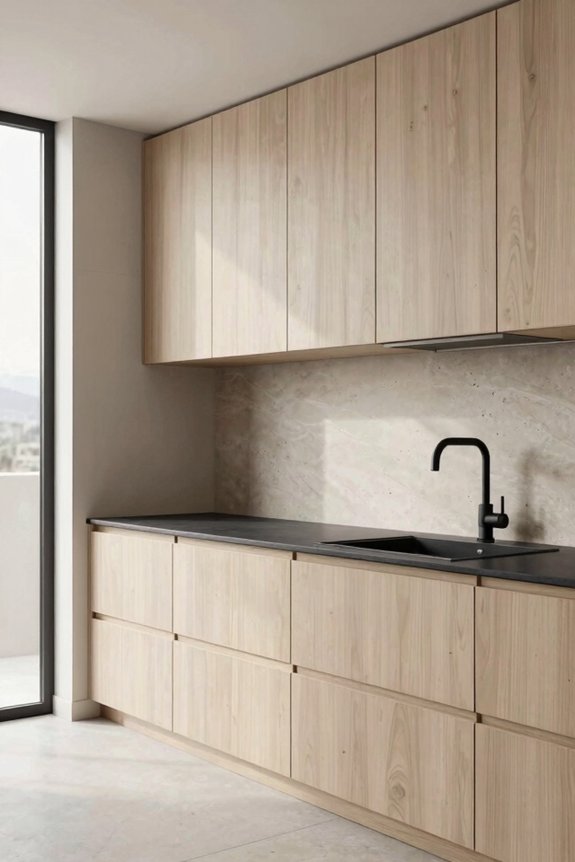
When you’re designing a Japandi kitchen, your cabinetry sets the entire tone; it’s the foundation that either grounds the space in calm minimalism or clutters it with visual noise. I’ve found that Japandi cabinetry thrives on clean lines and minimalist silhouettes that whisper rather than shout. Handleless doors and push-to-open drawers create that coveted uncluttered aesthetic you’re after. These hidden storage solutions keep your countertops serene and clear of clutter.
Consider pairing light timber with darker accents for sophisticated depth. Natural textures matter here: wood veneers and matte hardware add warmth without breaking your neutral palette. Box-jointed joints showcase craftsmanship beautifully. When you embrace these principles, you’re not just storing dishes; you’re creating a sanctuary that feels purposeful and tailored to your needs.
Japandi Color Palette: Mix Light and Dark Tones
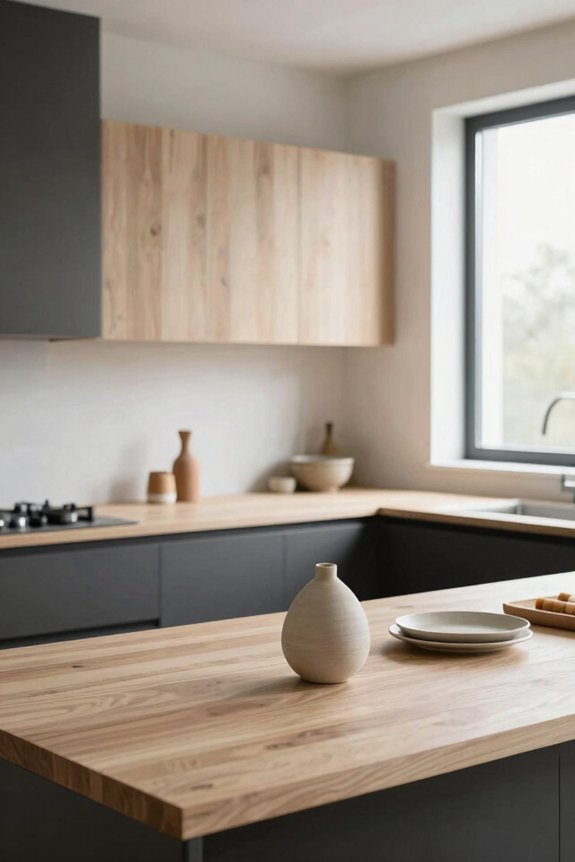
How do you create visual interest without sacrificing serenity? I’ve found that Japandi color palettes masterfully balance light and dark tones to achieve exactly that. Start with neutral bases—crisp white, warm beige, or soft cream—that anchor your kitchen’s calm atmosphere. Then introduce darker wood accents through walnut cabinetry or charcoal islands. This Scandinavian-Japanese fusion prevents monotony while honoring minimalism’s core principles.
I recommend layering in subtle Scandinavian shades like pale pink or soft grey to bridge your light and dark tones. Natural materials amplify this interplay beautifully. Pair light oak countertops with walnut frames, or stone backsplashes with charcoal hardware.
The key is restraint. Use dark accents sparingly as grounding elements. This approach creates kitchens that feel serene, where every design choice serves a purpose and feels deliberate, never cluttered. You’ll build a sense of belonging through thoughtful, harmonious choices.
Natural Materials Define Japandi Kitchen Warmth
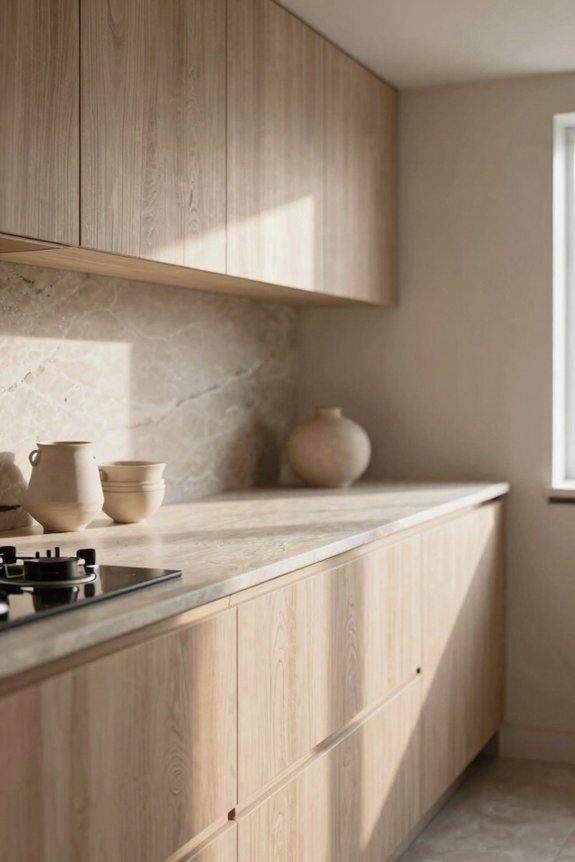
While a balanced color palette creates visual harmony, it’s the materials you choose that truly bring warmth into your Japandi kitchen. Natural materials like wood, stone, and ceramics form the foundation of this design philosophy, changing minimalism from cold to inviting.
I’d recommend incorporating varied wood tones; from light ash to deep walnut, to build visual interest within clean-lined cabinetry. These contrasting tones create depth while maintaining that serene aesthetic you’re after.
Stone countertops and ceramic accessories contribute tactile warmth that makes your kitchen feel carefully designed rather than sterile. A handmade ceramic bowl or stone backsplash signals quality and authenticity.
These materials aren’t just beautiful; they’re durable investments. By prioritizing craftsmanship and natural elements, you’re creating a Japandi kitchen that welcomes both function and soul. That’s the warmth minimalism deserves.
Japandi Craftsmanship: Where Function Meets Beauty
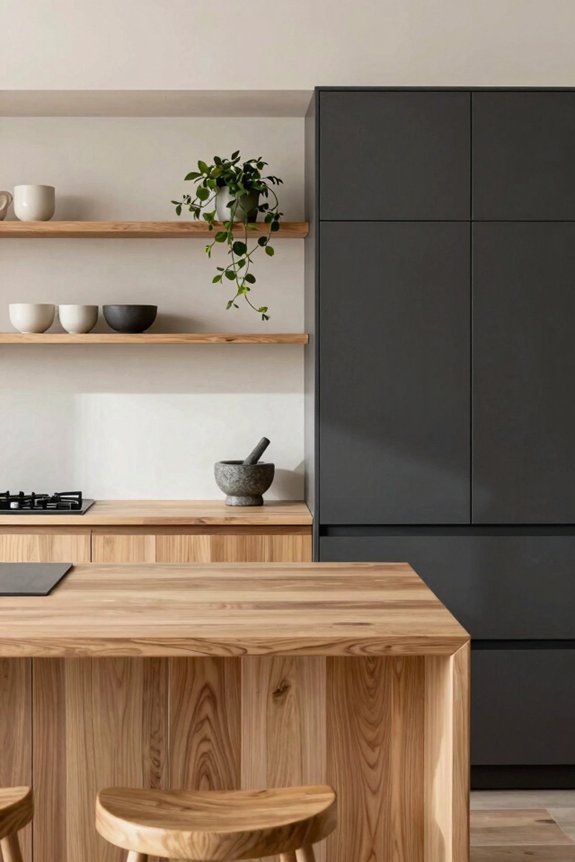
True Japandi design doesn’t separate beauty from purpose; it unites them. You’ll notice hidden handles and uninterrupted fronts that create an uncluttered, calm kitchen environment. This isn’t minimalism for show; it’s thoughtful ergonomic storage that actually works.
Natural timber cabinets showcase visible joinery like box joints, celebrating handmade quality rather than concealing it. Wabi-sabi principles shine through imperfect details: a handmade ceramic knob or subtle wood grain variation becomes a design feature.
The craftsmanship here demands durability. High-quality finishes on oak or dark walnut fronts resist wear while aging beautifully. Drawer organizers stay hidden, maintaining those uninterrupted surfaces you appreciate.
You’re investing in pieces designed to function flawlessly for decades, where every joint and finish tells a story of intentional making.
Add Greenery to Soften Japandi Lines
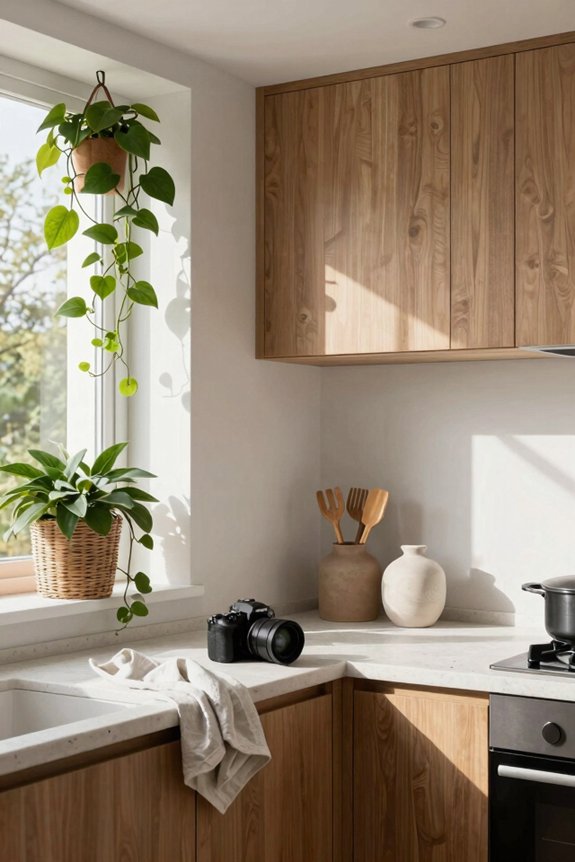
Why do Japandi kitchens with all their clean lines and neutral palettes feel so welcoming? I’ve found the answer: greenery. Plants soften those minimalist forms with organic textures that ground your space. They’re not just decorative; they matter for creating that balanced, calming atmosphere we all want.
I place greenery strategically where it won’t clutter workflow, on open shelves, windowsills, or counters. This positioning maintains airiness while introducing fresh color contrast against light wood and white surfaces. Plants enhance hygge, that cozy warmth Japandi celebrates, making your kitchen feel like a sanctuary rather than a showroom.
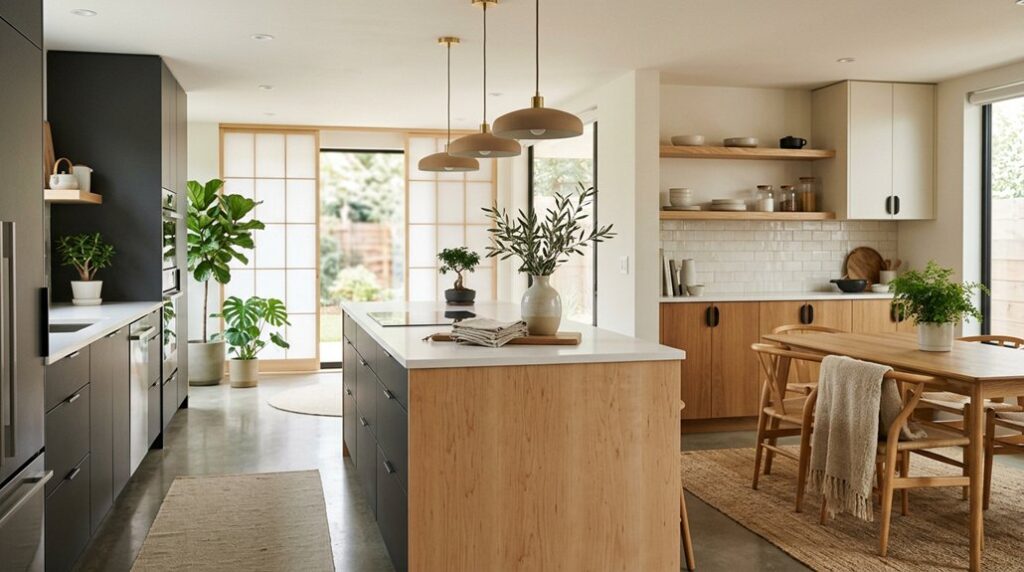
The Camberwell kitchen demonstrates this beautifully: white quartz, light timber, and carefully positioned foliage work together seamlessly. Your Japandi kitchen becomes welcoming when nature joins the design conversation. That’s when function meets soul.