
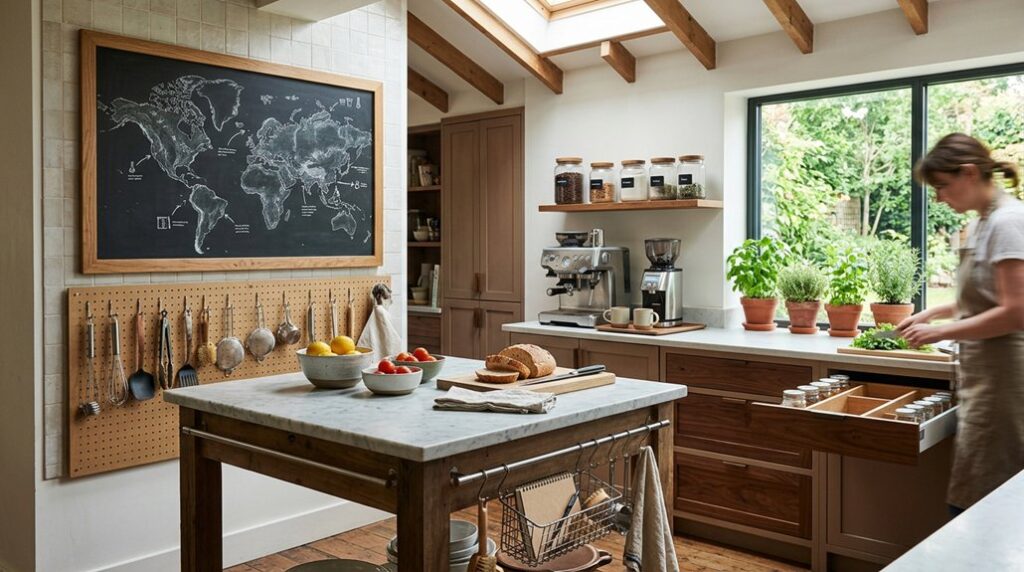
I’m going to walk you through seven proven kitchen planner strategies that’ll help you redesign your space, and honestly, most people skip the foundational stuff.
You’ve probably thought about new cabinets or a fresh coat of paint, but here’s what separates a mediocre kitchen from one you’ll actually love: understanding your layout’s flow before you spend a dime.
Let’s start with something that’ll surprise you.
Start Your Kitchen Planner: Layout Foundation
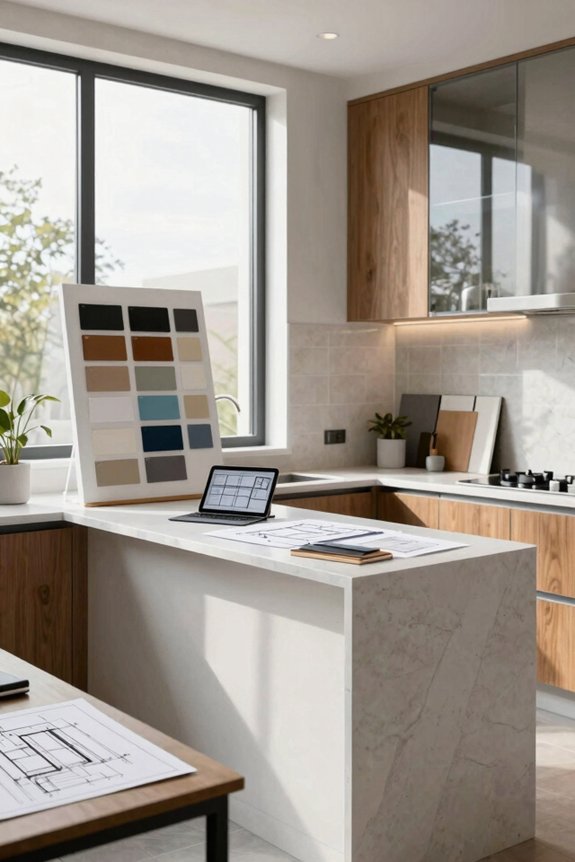
Ready to plan your kitchen with confidence? Starting with a kitchen planner helps you build solid layout foundations before making costly decisions. You’ll click “start Kitchen Planner” and discover how to visualize your space effectively.
The free tool offers multiple floor plan options: kitchenette, L-kitchen, U-kitchen, and G-kitchen designs. You can freely place doors and windows to match your space exactly. No downloads required; it’s entirely online.
What makes this approach helpful? You’re seeing your finished kitchen before committing to anything. The planner reduces uncertainty by showing exactly how layouts work in your actual space. You’ll make informed design decisions with confidence, knowing you’re part of a community making smart choices about their homes.
Map Work Zones in Your Kitchen Design
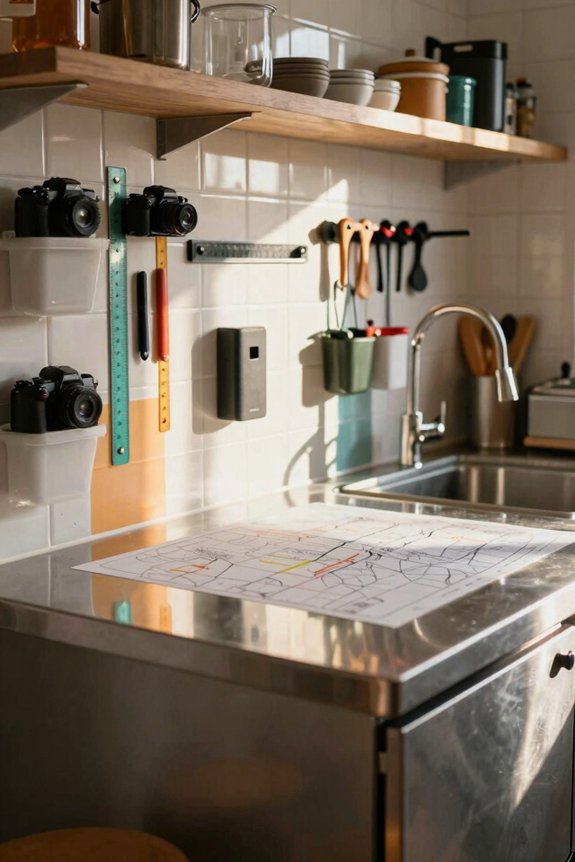
How you organize your kitchen’s traffic flow makes a real difference between a functional space and a frustrating one. I’ll help you map work zones that create a welcoming, efficient hub.
Start by identifying your entry flow, dining, and cooking areas. Clear sightlines from the entry to your kitchen prevent bottlenecks and keep everyone moving smoothly. Position your kitchen work triangle by connecting sink, cooktop, and refrigerator so the total perimeter doesn’t exceed 26 feet. This layout minimizes unnecessary steps during meal prep.
Next, maintain unobstructed pathways between zones. You’ll appreciate how this simple adjustment reduces collisions and creates natural gathering spaces. When work zones flow intuitively, cooking becomes collaborative rather than chaotic. Your kitchen becomes a place where family and friends genuinely want to spend time together.
Plan Cabinets and Countertops for Your Kitchen Style
Once you’ve mapped your work zones, it’s time to select cabinetry and countertops that reflect both your style and how you actually cook. I find that mixing base units, wall units, and tall cabinets creates functional storage that works for real life. Your kitchen planner lets you experiment freely; try different widths and heights until the layout feels right.
Countertops deserve equal attention since they’re where you’ll prep meals and entertain. The tool’s extensive selection means you can visualize granite against white cabinets or butcher block with darker finishes before committing. Don’t forget backsplashes either, as they complete the overall design. Test combinations in 3D view until you’ve found your perfect match, then print your design to share with dealers or designers.
Layer Lighting in Your Kitchen Design
I’m going to show you how layering task and ambient lighting changes your kitchen from a dimly lit workspace into a warm, functional room. The key point: it’s simpler than you’d think.
Task lighting handles the hard work, such as bright recessed lights over countertops. Ambient lighting wraps your space in warmth and eliminates those harsh shadows that make cooking feel like work. Once you nail these two layers, pendant placement becomes your design signature.
Let’s tackle the spacing math that keeps your island looking intentional, not random.
Task And Ambient Lighting
Why do so many kitchens feel either sterile or gloomy? The answer lies in lighting strategy. I’ve discovered that layering task lighting with ambient lighting creates any kitchen into a welcoming hub.
Task lighting provides bright, even illumination where you actually work, over countertops and islands. I position recessed fixtures 2–3 inches from counter edges to eliminate shadows. For standard 8-foot ceilings, I space them roughly 4 feet apart for consistent coverage.
Ambient lighting creates warmth and atmosphere. It’s dimmer, softer, designed to make your space feel lived-in rather than clinical.
Together, these layers work beautifully. You’ll have focused brightness when chopping vegetables, then mood lighting for evening gatherings. That’s when a kitchen truly becomes home.
Pendant Spacing And Placement
Now that you’ve layered task and ambient lighting, pendants become your design’s finishing touch. Getting their spacing right separates a polished kitchen from an awkward one. I’d recommend spacing pendants 24–36 inches apart over your island, positioning them 30–40 inches above the countertop for optimal visibility. Here’s my approach: divide your island length by the number of lights you’re installing, then adjust from the ends to ensure even illumination without shadows.
Don’t forget the practical side. You’ll want 45–60 inches of clearance behind seated guests. This comfortable walking zone keeps your kitchen functional, not cramped. When you nail pendant spacing, you’re not just adding light; you’re creating an inviting gathering space where everyone feels at home.
Position Island and Appliances: Kitchen Layout Strategy
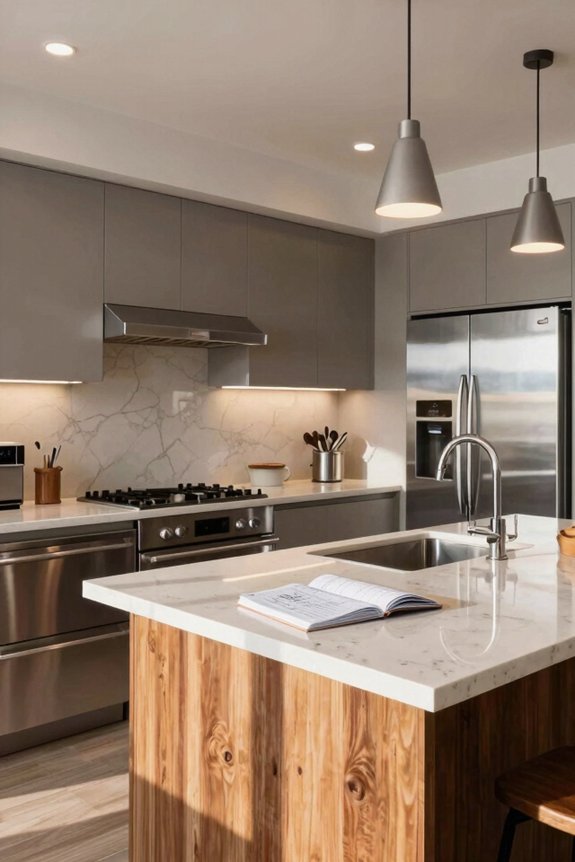
Strategic placement of your island and appliances changes how you’ll actually cook, eat, and move through your kitchen.
Strategic island and appliance placement transforms how you cook, eat, and move through your kitchen daily.
I’ve learned that thoughtful kitchen layout decisions make daily cooking genuinely enjoyable. Here’s what really matters:
- Island positioning: Allow 12–18 inches of seating overhang and maintain 45–60 inches of clearance to walls for comfortable circulation behind seated guests
- Cooktop safety: Maintain 12 inches of clear space on both sides of a cooktop, 15 inches beside a range
- Range hood clearance: Keep 26–36 inches between your cooktop and range hood for proper venting and comfortable use
- Dishwasher placement: Position it within 36 inches of the sink, ideally beside rather than directly across from it
These measurements aren’t arbitrary. They’re based on how people actually move and work. When you nail your island positioning and appliance layout, you’re creating a kitchen that feels effortless.
Test Your Layout in 3D: Catch Traffic Flow and Clearance Issues
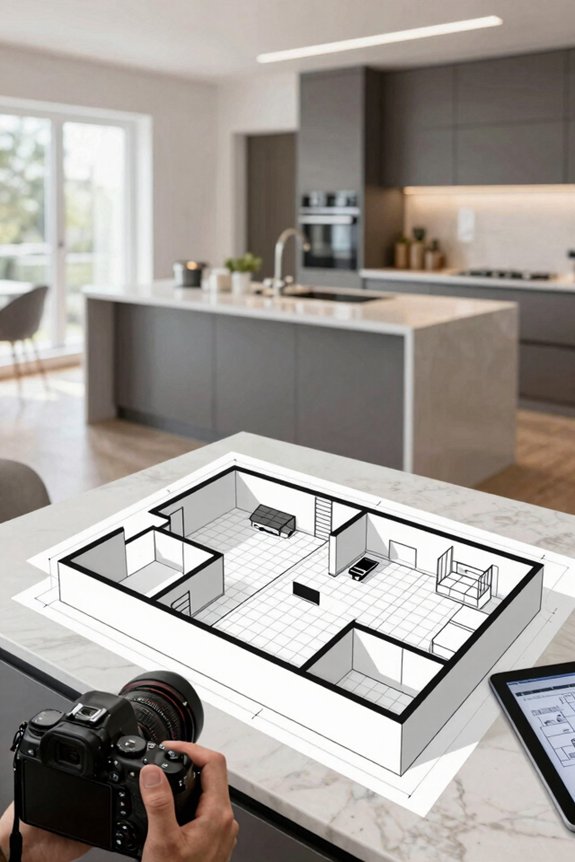
Before you commit to your island placement and appliance positions, a 3D visualization catches the traffic flow problems that 2D drawings miss. I rotate the camera around my layout, walking virtually from the entry through work zones. This perspective reveals where I’m actually moving and whether clearance meets guidelines.
I check that aisles stay wide enough for two people passing comfortably. I test sightlines from the refrigerator to the stove, making sure my workflow feels natural. The 3D view shows me how cabinet doors swing and whether appliances block movement.
When I spot issues, I adjust before construction starts. I print different angles for my reference, comparing how design choices affect daily movement. This step prevents expensive mistakes and confirms my kitchen truly works for how I live.
Get Free Design Feedback on Your Layout
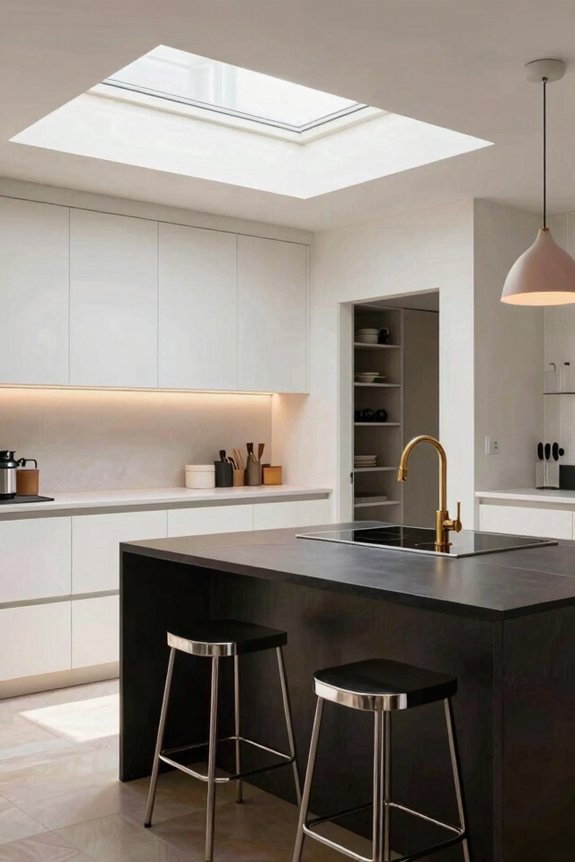
Why settle for guesswork when expert designers will review your kitchen layout at no cost? I’ve discovered that getting free design feedback helps your kitchen planning move from uncertain to confident.
Expert kitchen design feedback transforms your planning from uncertain to confident—at no cost.
Here’s what you’ll gain:
- Expert guidance that aligns your design with your personal style and needs
- Real-time collaboration with professional designers who understand spatial flow
- Detailed review of your layout across multiple viewing angles
- Personalized recommendations based on your specific kitchen challenges
You’re not alone in this process. Our design team at 877-573-0088 or designs@cabinets.com connects you directly with highly qualified professionals. They’ll catch potential issues you might miss and celebrate smart choices you’ve made.
This free design feedback helps your kitchen planning reflect both functionality and your unique vision before any commitment.