White kitchens aren’t just blank canvases; they’re blank canvases with purpose. I’ve found that great results happen when you layer in natural light, warm metallics, and subtle color accents that create a sophisticated, warm space instead of something cold and bare. But here’s what most people get wrong: they treat white as a monolith.
The real secret? Understanding how different whites interact with wood tones, marble veining, and strategic lighting to create depth and warmth. Want to know where to start?
Natural Light and Reflective Surfaces in White Kitchens
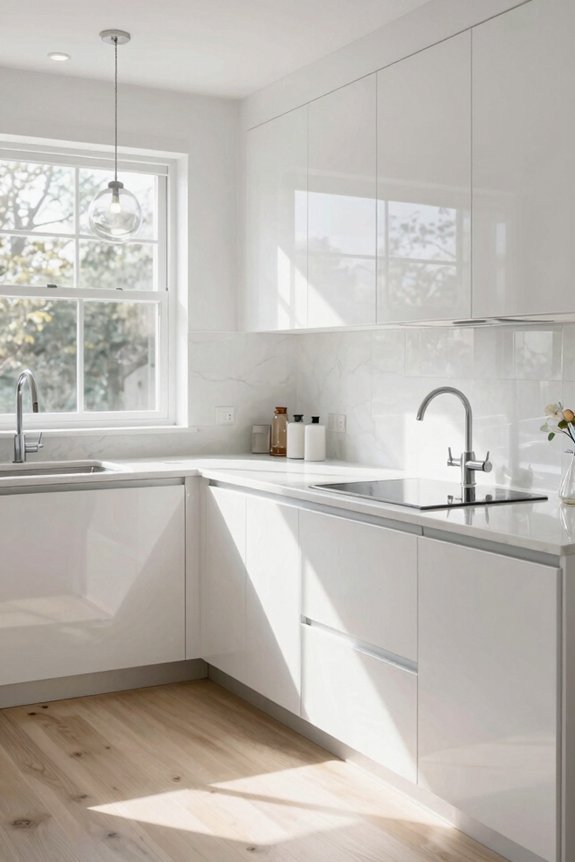
Have you noticed how white kitchens seem to glow differently depending on the time of day? That’s because natural light and reflective surfaces work together as complementary design elements. I’ve found that abundant natural light floods white spaces, creating brightness that enhances marble countertops and high-gloss cabinetry.
Arched ceiling windows amplify this effect, making your cooking area feel more luminous. White lacquered cabinets bounce light around the room, making everything feel more expansive and premium. Pair these reflective surfaces with marble elements like Calacatta Turquoise Antico, and you’re building a sophisticated kitchen that feels both warm and airy.
The key is combining proper daylight with glare-free task lighting to preserve true whiteness without washing out your space.
White Kitchen Lighting: Layered Fixtures for Ambiance
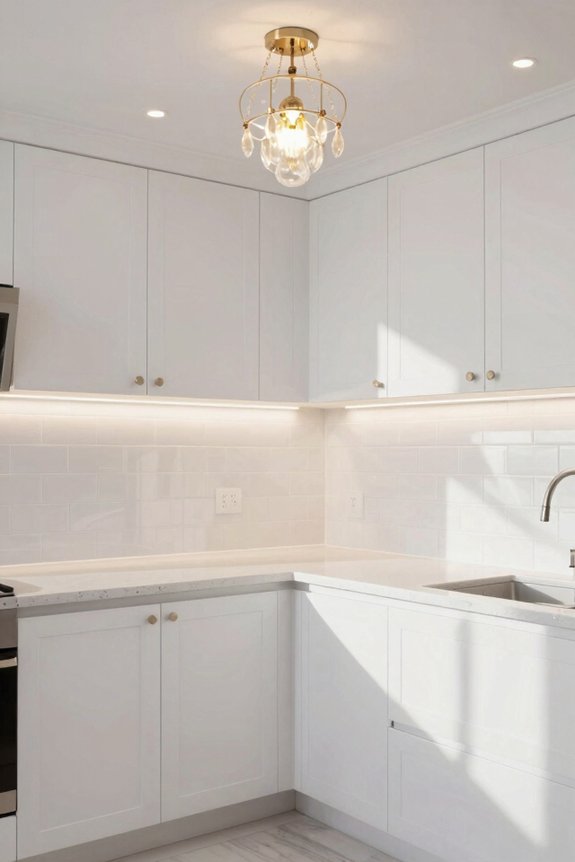
I’ve found that layering your lighting with pendant lights and statement pieces creates a white kitchen that feels inviting rather than merely bright. You’ll want to combine natural daylight through arched ceiling windows with brass or bronze pendant fixtures. These warm metallics create visual interest while avoiding the sterile feel that all-white spaces can sometimes have.
The key is positioning task lighting over countertops for function while letting your statement fixtures handle the ambiance. This approach means you’re not just seeing your white kitchen; you’re experiencing it.
Pendant Lights and Statement Pieces
What makes a white kitchen go from simply bright to genuinely exceptional? Pendant lights and statement pieces, I’d argue. These aren’t afterthoughts; they’re jewelry for your space.
I recommend layered pendant lighting in bronze or brass finishes. They add warmth against stark white cabinetry while serving as focal points. You might choose minimalist glass designs for clean aesthetics or ornate fixtures for traditional charm.
Consider colorful chandeliers too. Two blue statement chandeliers anchor your kitchen’s color story without compromising that crisp whiteness you love. Metallic finishes, bronze, brass, copper, create complementary contrast against marble surfaces and white cabinetry.
The key is coordinating your fixtures with intention. Let pendant lights do double duty: task lighting over islands and ambiance creation. That’s how you design a kitchen that’s both functional and visually impressive.
Natural Light and Brightness
While pendant lights and statement fixtures create intentional drama, natural light does the substantial work in a white kitchen. I’ve found that arched ceiling windows flood spaces with daylight, instantly amplifying brightness and creating that coveted airy feeling you’re after. This luminosity bounces beautifully off marble surfaces like Calacatta Turquoise Antico and reflective metals, multiplying the effect throughout your cooking area.
Natural light doesn’t work alone. I layer in glare-free task lighting to complement daylight, preserving your kitchen’s crisp white aesthetic while making sure you can actually see what you’re chopping. The combination maintains accurate color rendering, keeping those subtle material tones true.
When you harness daylight strategically alongside thoughtful fixtures, you’re not just brightening a room. You’re creating a serene, elegant space that feels welcoming.
Warm Wood Accents: Oak, Walnut, and Natural Finishes
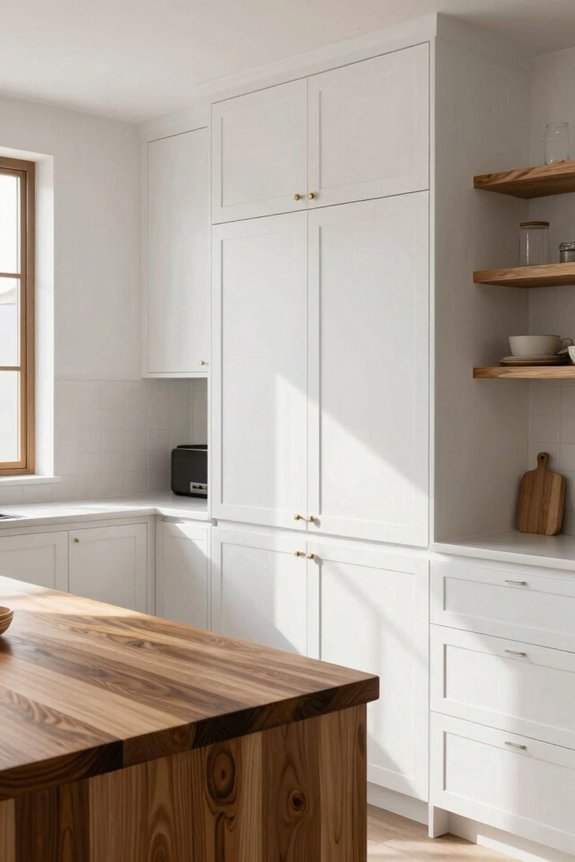
I’m finding that oak and walnut elements bring warmth and visual interest to white kitchens that pure white alone can’t achieve. Consider anchoring your space with a walnut kitchen island or oak cabinetry. These wood tones create natural contrast while maintaining the clean aesthetic you love.
Pairing these woods with bronze or brass hardware completes your design with cohesive metallic warmth.
Oak Wood Kitchen Islands
Because white kitchens can sometimes feel sterile or cold, introducing an oak wood island brings warmth and visual interest to the space. I’ve found that an oak island serves as a visual anchor, grounding your entire kitchen layout while maintaining that bright, airy feel you’re after.
What makes this pairing so effective? Oak’s natural grain and honey tones create authentic contrast against crisp white cabinetry and marble countertops. You’re not sacrificing brightness; you’re adding depth and character instead.
I recommend pairing your oak island with bronze hardware to amplify that modern rustic aesthetic. Consider extending this warmth by incorporating reeded oak paneling on your range hood or peninsula design. This approach creates a unified design, resulting in a space where you’ll genuinely want to gather.
Walnut Cabinetry Design Elements
If you’re looking to improve a white kitchen beyond its bright-but-basic roots, walnut cabinetry delivers sophistication that oak simply can’t match. I’ve found that walnut’s rich grain patterns create warmth and depth that makes your space more inviting.
Here’s what makes walnut cabinetry work beautifully in a white kitchen:
- Rich grain emphasis adds tactile depth to islands and inset panels
- Two-tone contrast with white uppers creates a unified aesthetic
- Brass or bronze hardware enhances luxury while maintaining modern appeal
- Stone countertop pairing (marble, limestone) reinforces timeless design integrity
The key is treating walnut as your intentional accent rather than an afterthought. Recessed cabinetry in walnut grounds your white kitchen with understated elegance. You’re not just adding color; you’re creating purposeful visual hierarchy that tells a complete design story.
Gold and Metallic Hardware: Where to Place Statement Accents
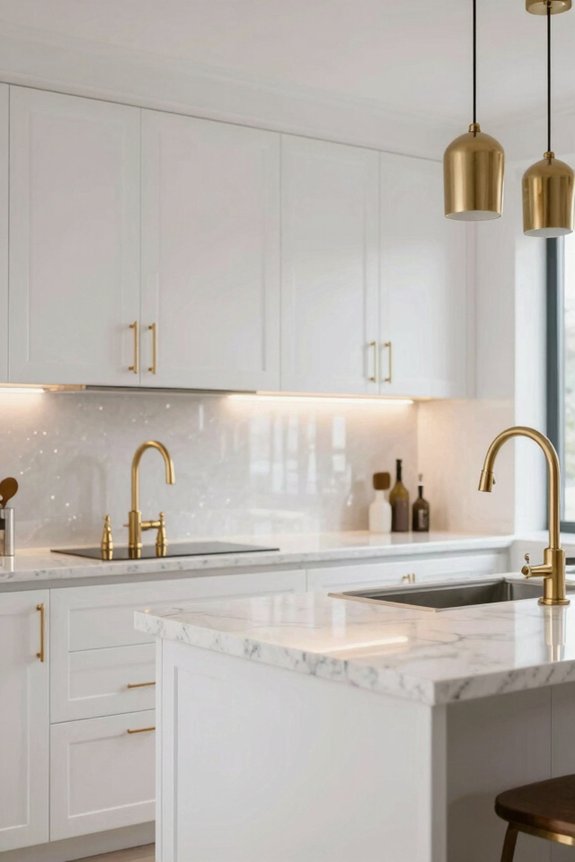
How do you create a pristine white kitchen that goes from clean to captivating? Gold hardware and metallic accents are key. Strategic placement creates visual interest without overwhelming your space.
| Feature | Gold Application | Visual Impact | Practical Benefit | Design Effect |
|---|---|---|---|---|
| Range Hood | Gold trim or frame | Draws the eye upward | Creates focal point | Luxe centerpiece |
| Floating Shelves | Gold brackets | Adds warmth and dimension | Supports display items | Refined elegance |
| Island Cladding | Gold metal panels | Unifies the zone | Anchors workspace | Cohesive theme |
| Hardware | Gold knobs and pulls | Jewelry-like detail | Daily functionality | Polished presentation |
| Fixtures | Gold faucets | Polished sophistication | Essential elements | Luminous glow |
I’ve found that layering these metallic accents across multiple fixed features creates harmony. You’re not just adding shine; you’re building a unified design language that feels deliberate and inviting.
Color Palettes for White Kitchens: Navy, Sage, and Gray
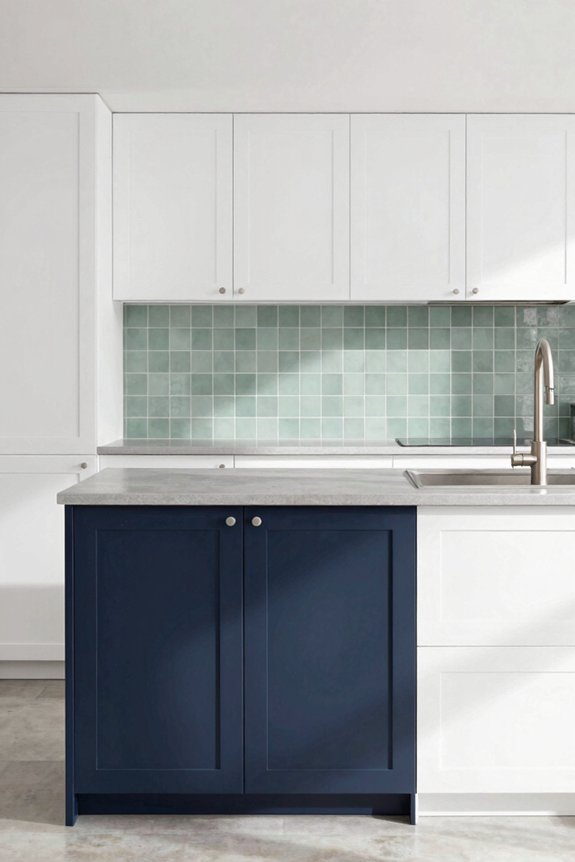
While gold hardware brings sparkle and warmth to your white kitchen, the right color palette creates the foundation for everything else. I’d recommend exploring navy, sage, and gray; three sophisticated hues that work beautifully in white spaces without overwhelming them.
Navy accents deliver bold contrast against bright cabinetry, creating that designer-kitchen feel you’re after. Sage green brings calming, nature-inspired vibes that soften the space beautifully. Gray adds depth while keeping things airy and unified.
Here’s how to apply these palettes:
- Paint your island or range hood in navy, sage, or soft gray
- Use veining in marble backsplashes to echo your chosen tone
- Select hardware in warm bronze or brass to prevent coldness
- Incorporate natural wood elements for warmth and balance
These combinations help you achieve white kitchen elegance that feels polished and intentional.
Statement Focal Points: Range Hoods, Islands, and Sinks
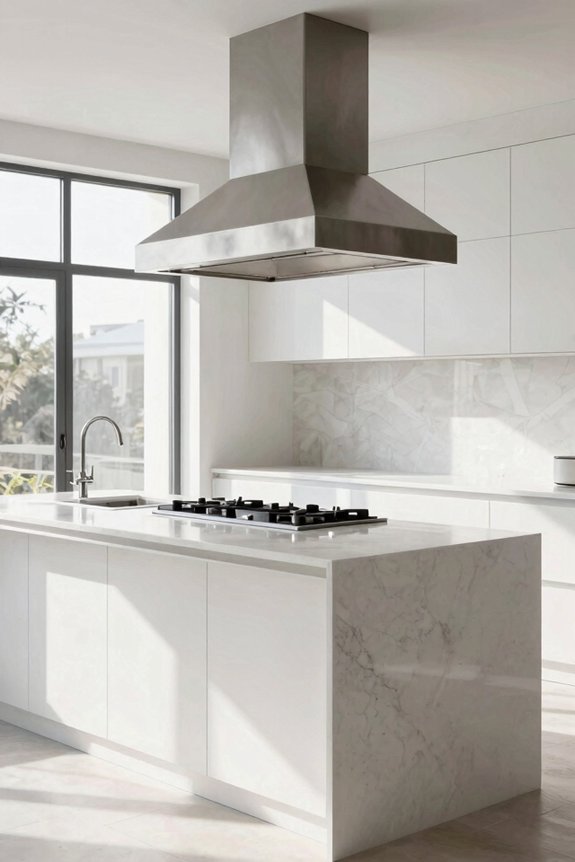
Why settle for blending in when your white kitchen can command attention? I’ve found that statement focal points create beautiful, purposeful spaces. Your range hood deserves to shine, whether gold-finished or color-matched, as it naturally draws eyes upward.
A kitchen island serves as your room’s dramatic centerpiece, especially when clad in contrasting materials or metallics. Don’t overlook your sink; a farmhouse apron design coordinated with metallic finishes creates cohesive elegance.
| Element | Finish | Visual Impact | Function | Design Cohesion |
|---|---|---|---|---|
| Range Hood | Gold | High | Ventilation | Unifies space |
| Island | Contrasting | Dramatic | Workspace | Central anchor |
| Sink | Metallic | Integrated | Practical | Coordinated look |
| Accents | Jewelry-like | Polished | Detail | Bespoke feel |
| Overall | Unified | Striking | Complete | Defined aesthetic |
These three elements working together create your kitchen’s unified design statement.
Countertops and Backsplashes: Marble, Quartz, and Tile Options
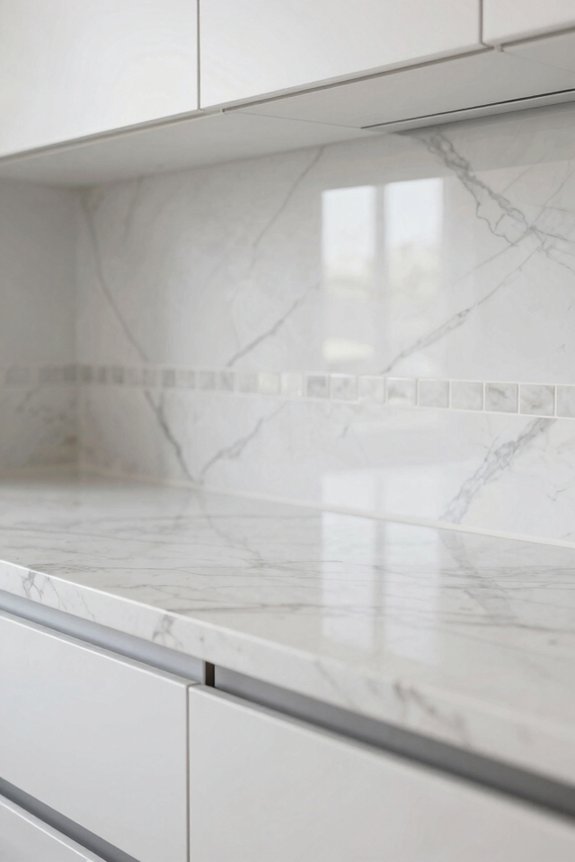
Your countertops and backsplashes aren’t just functional surfaces; they’re the canvas that either anchors or elevates your white kitchen’s entire aesthetic. I’ve found that choosing the right materials affects how light moves through your space, creating that coveted luminous quality we’re all after.
- White marble like Calacatta Turquoise Antico delivers luxurious brightness and classic style
- Quartz countertops offer durability without the maintenance demands marble requires
- Stainless steel tile backsplashes create mirror-like reflections that amplify your cabinetry’s glow
- Pairing surfaces with abundant natural light maximizes their reflective properties and visual impact
When you combine these materials with jewelry-like pendant lighting overhead, you’re not just installing surfaces. You’re creating a cohesive design narrative. The reflective interplay between white lacquer cabinets, marble, and metallic accents creates depth and sophistication, resulting in a kitchen that truly shines.
Maintain Minimalist Aesthetics With Concealed Storage
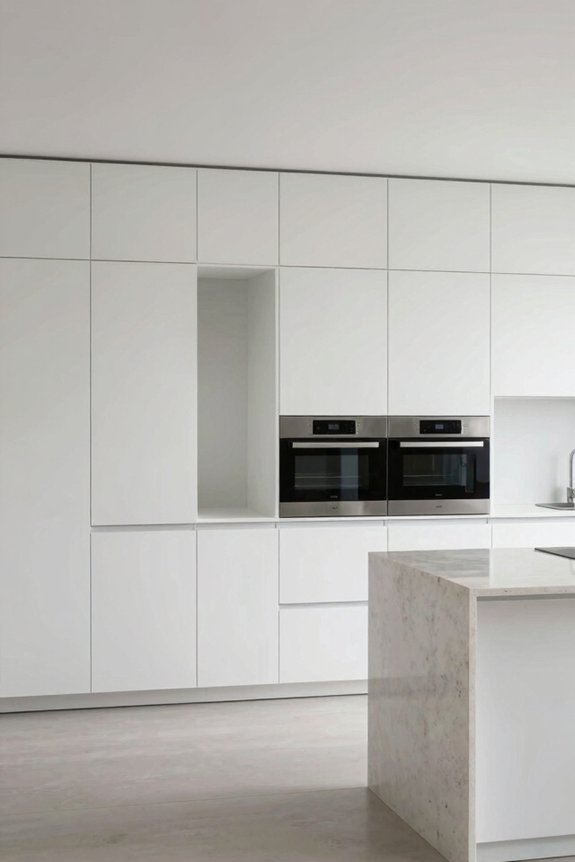
The secret to a white kitchen that feels serene rather than sparse lies in smart storage solutions that work invisibly. I’ve found that concealed storage through handle-free cabinetry and push-to-open drawers maintains your minimalist aesthetic while keeping essentials accessible. Soft-close mechanisms provide silent, seamless operation without jarring slams interrupting your kitchen’s tranquility.
Consider hidden pantry systems and toe-kick storage that maximize space without exposing bulky shelving. Pull-out trash bins and charging stations disappear behind cabinet fronts, keeping daily tasks discreet. Choose matte or high-gloss white finishes with integrated hardware that preserves your kitchen’s unified appearance.
This approach creates a white kitchen that is a sanctuary where form and function coexist beautifully, resulting in the streamlined space you’ve always wanted without sacrificing practicality.