
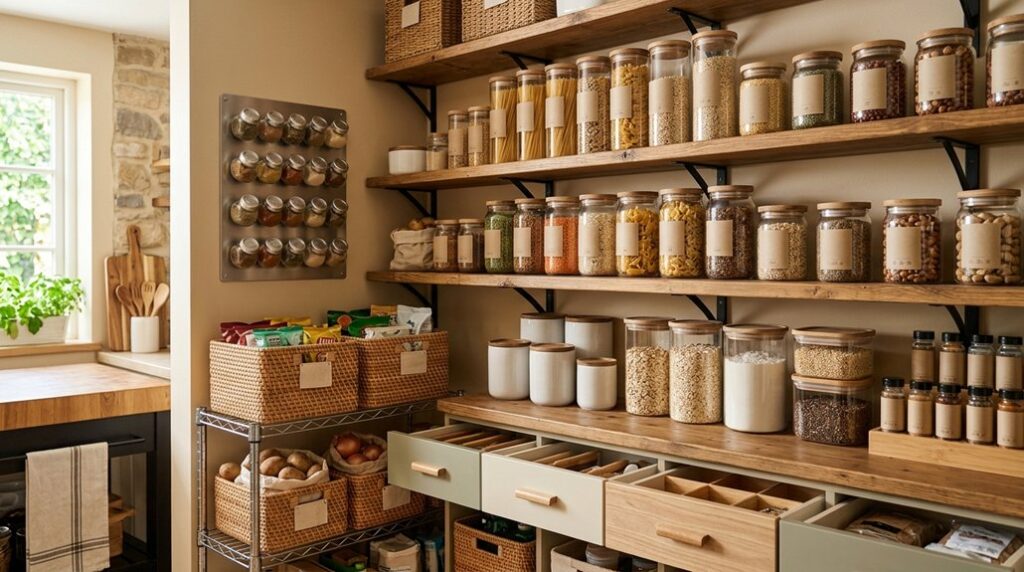
Your pantry is a mirror of your cooking habits, and right now, it’s probably reflecting chaos. I’ve watched countless kitchens move from cluttered disasters into functional spaces, and here’s what I’ve learned: the secret isn’t fancy containers or elaborate systems. It’s understanding that pantry organization actually works when you align it with how you actually cook.
But there’s a critical first step most people skip, one that changes everything.
Declutter Your Pantry Before You Organize
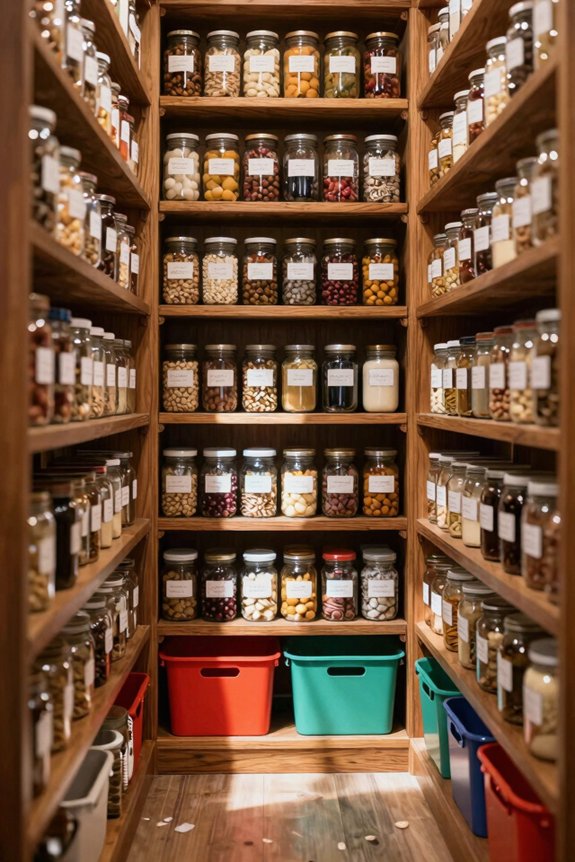
Before you invest in fancy containers or rearrange a single shelf, you’ve got to start with the hardest part: getting ruthless about what actually belongs in your pantry. I call this The Great Pantry Purge, and it’s non-negotiable.
Empty everything onto your counter. Yes, everything. Assess expiry dates honestly and remove items you’ve never used or haven’t touched in months. This declutter phase reclaims real estate you didn’t know you had.
Next, wipe shelves clean and vacuum thoroughly. You’re establishing a fresh foundation for what comes next.
Before restocking, reassess your inventory to prevent duplicates. Then organize into clear categories: breakfast foods, baking supplies, grains. Mirror grocery-store layouts for intuitive navigation. Use clear bins for visibility. Store daily-use items at eye level for quick access.
This pantry purge creates an organized, functional space out of chaos.
Measure Your Space and Plan Your Pantry Layout
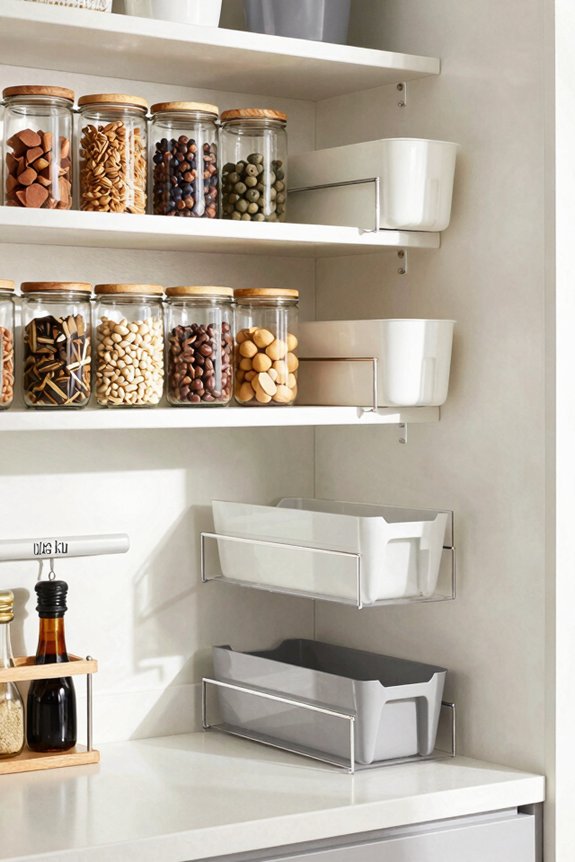
Before you buy a single container, I’d recommend measuring your pantry’s dimensions and sketching out your shelves with actual measurements. This prevents expensive mistakes and helps everything fit properly. You’ll want to assess how many containers of each width fit on your shelves and whether deeper shelves genuinely serve your needs or just create hard-to-reach dead zones.
Think of your layout as a living document: update it as your inventory changes, and don’t hesitate to swap out oversized shelving for shallower, more accessible options that match your daily routine.
Assess Your Available Space
How much space do you actually have to work with? Start by taking precise measurements of your shelves, noting width, depth, and height. This inventory process grounds your layout planning in reality, not wishful thinking.
Next, measure your containers—the ones you already own and any new ones you’re considering. I’ve found that assessing how many containers fit per shelf prevents that frustrating mismatch between vision and execution. Map this on paper with actual dimensions; it’s your blueprint for success.
Consider your daily use patterns too. Are you reaching for cereal daily or storing bulk items seasonally? Understanding what you access regularly helps position containers strategically. This practical groundwork creates a functional pantry that actually serves your household’s needs.
Sketch and Document Measurements
Your sketch becomes the master plan, organizing your pantry with purposeful design. I create detailed organization sketches with exact measurements that evolve as my pantry needs change. This prevents costly mistakes when purchasing containers.
Here’s my approach to space planning:
- Measure shelf dimensions, height, depth, and width with precision
- Document pantry measurements including doorway clearance and obstacle placement
- Note container sizing options that maximize each shelf’s capacity
- Record daily-use item locations for strategic positioning
I sketch shelf layouts showing container placement, then reassess. Does my current depth work, or do shallower options improve visibility? I balance accessibility with capacity.
When I map frequently accessed items to eye level, I access them faster and use my pantry more effectively. My measurements become the foundation for organized storage that actually serves my family.
Align Storage With Daily Use
Why does a perfectly organized pantry often fall apart within weeks? You’re ignoring how you actually use it.
Your daily routine dictates everything. I create zones that match my morning patterns: breakfast items clustered together, snacks grouped separately, canned goods in their own section. This alignment makes your pantry from beautiful but impractical into genuinely functional.
Place daily-use items at eye-level where you naturally reach first. Your most-grabbed cereals, coffee, and cooking staples shouldn’t require step stools or hunting. Tally your inventory and typical weekly consumption before buying containers. This prevents oversizing bins that crowd shelves or undersizing ones you’ll outgrow immediately.
Accessibility isn’t luxury; it’s survival. When everything sits exactly where your brain expects it, you’ll maintain the system effortlessly. Your pantry works because it matches your life.
Identify Which Items You Actually Use Frequently
I’d recommend you start by tracking what you actually grab during your week: cereals, oils, spices, pasta. Rather than guessing based on what you think you should use, focus on identifying these high-rotation staples first.
Once you’ve identified your most-used items, reserve your pantry’s prime real estate (eye level and within arm’s reach) for these products. Leave upper shelves and lower corners for occasional seasonal buys like holiday baking supplies or bulk rice. This simple shift makes your pantry genuinely functional and matched to your real life instead of based on assumptions.
Track Daily Consumption Patterns
How often do we buy something, tuck it away, and never touch it again?
I’ve learned that tracking daily consumption patterns creates a functional pantry system. Here’s my approach:
- Note which items you open each day
- Tally usage weekly to spot true staples
- Compare inventory against actual consumption
- Identify duplicates and overstock sitting unused
By logging daily consumption, I’ve discovered what really matters. Items used 4–7 times weekly deserve eye-level storage for quick access. I’ve eliminated the frustrating rummaging through forgotten goods.
My inventory management now aligns with actual usage patterns, not wishful thinking. Monthly reassessment keeps everything sharp. As eating habits shift, I adjust storage zones and container sizes accordingly. This practical tracking reveals what my family genuinely needs versus what clutters shelves.
You’ll find your pantry finally works for you.
Prioritize High-Rotation Staples
Once you’ve identified what your family genuinely consumes, the next move is arranging your pantry around those discoveries. Place your high-rotation items at eye level; that’s where you’ll naturally reach first. Your olive oil, pasta, and canned beans deserve prime real estate, not bottom shelves.
I’ve found that decanting frequently used staples into clear containers improves inventory management. You’ll instantly spot what’s running low without rummaging through boxes. This visibility helps you skip impulse purchases and prevents overbuying duplicates.
Keep multiples of essentials upfront so you’re restocking weekly, not daily. When your go-to ingredients are visible and accessible, cooking becomes effortless. You’re not hunting; you’re grabbing. That’s the pantry system that actually sticks because it works with your real habits, not against them.
Assess Seasonal Usage Needs
Your pantry isn’t static, it shouldn’t be, anyway. I’ve learned that seasonal usage patterns completely reshape what I actually need stored where. By tracking what I reach for throughout the year, I’ve created storage zones that evolve with my eating habits.
Here’s my quarterly approach:
- Audit expiration dates and move nearing-use items forward
- Identify seasonal staples, baking supplies peak in fall, snacks surge during school year
- Reassign storage zones based on current rotation patterns
- Limit stock to what I’ll genuinely use monthly
This dynamic rotation prevents waste while keeping what I need easy to find. During my quarterly review, I honestly assess which items gathered dust versus which disappeared quickly.
That honest inventory guides my next shopping cycle and keeps my pantry aligned with how I actually cook and eat today.
Choose Containers: Pop-Tops, Baskets, or Clear Bins
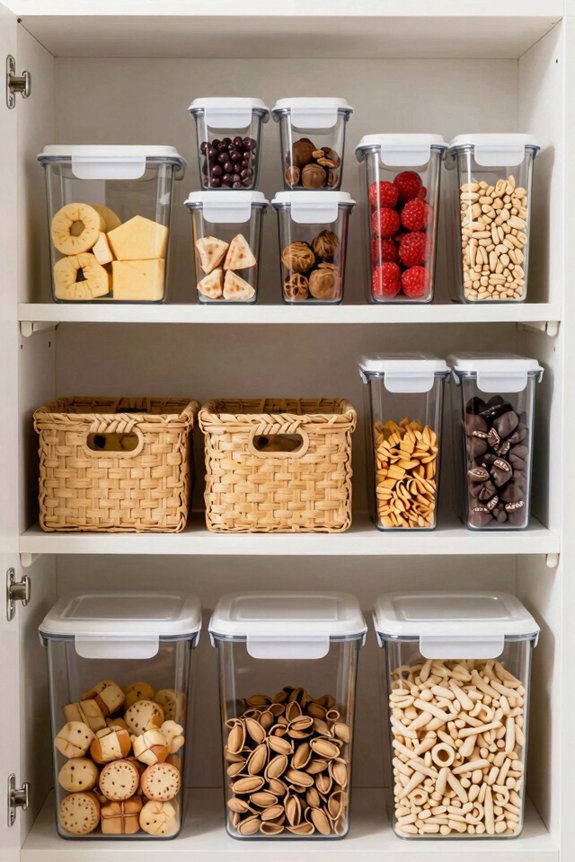
What’s the secret to a pantry that actually stays organized? The right containers. I’ve found that mixing three container types creates both function and visual cohesion.
Pop-top containers keep items fresh while letting you see contents instantly, no mystery boxes. Open plastic bins offer maximum visibility for grab-and-go items. Water hyacinth baskets add warmth and breathability, creating that polished look we’re all after.
Pop-top containers keep items fresh and visible, while water hyacinth baskets add warmth and that polished, organized look we’re all after.
Here’s what works: decant everything from bulky boxes into pop-tops. You’ll spend less time hunting and more time enjoying an organized space. I keep frequently used items front-and-center in a front-loaded display, maintaining multiples at eye level to minimize refilling.
Skip matching sets. Instead, buy exact sizes on sale. This approach keeps your pantry practical, beautiful, and functional.
Decant Bulk Items Into Clear Pop-Top Containers
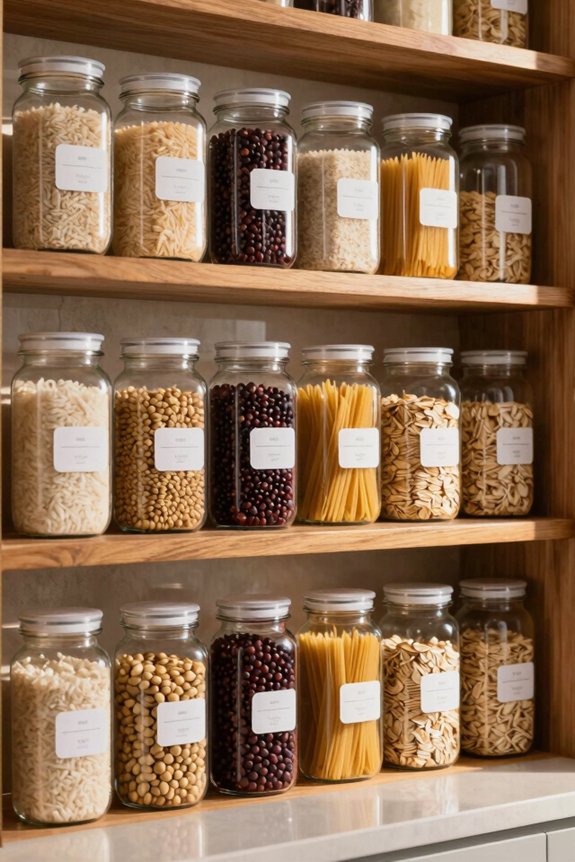
When I decant bulk items like cereal, pasta, and flour into clear pop-top containers, I can instantly see what I’m running low on; no more mystery boxes hiding in the back. These stackable containers make efficient use of my vertical shelf space while keeping everything fresher longer, since airtight seals beat crumpled bags every time.
You’ll find that the quick visual access means fewer duplicate purchases and less wasted food, which honestly makes the small effort of transferring items completely worthwhile.
Visibility And Space Savings
How much time do you waste peering into dark corners of your pantry, squinting at labels, or worse, buying cereal you already own?
Clear pop-top containers solve this problem entirely. You’ll gain instant visibility of what’s inside and how much remains, eliminating duplicate purchases and wasted money. Here’s what improves your pantry:
- Clear containers let you spot items instantly without opening anything
- Stackable storage maximizes vertical space on every shelf
- Eye-level labeling makes front-facing bins instantly recognizable
- Uniform sizing creates organized-looking shelves
Transfer bulk items from bulky packaging into these containers, and you’ve reclaimed valuable real estate. You’re not just organizing; you’re creating a system where everything’s visible, accessible, and efficient. Your pantry becomes functional, not just neat. That’s the difference between storage and smart organization.
Easy Access And Freshness
Why do pantries fail? They lose freshness and chaos ensues. I’ve found that decanting bulk items into clear, airtight pop-top containers makes a real difference. You’ll instantly see what you’ve got—no more mystery jars hiding in back corners.
Here’s what works: I place frequently used items on eye-level shelves for quick grabbing. Clear containers let me spot low supplies before I’m caught without essentials. The airtight seals keep crackers crisp and cereal fresh longer than original packaging ever could.
I label each container with contents and expiration dates. This simple step supports proper rotation, using older items first, and prevents waste. It’s liberating knowing exactly what’s there and when it’ll expire. You’re no longer fumbling through your pantry; you’re managing it like a pro.
Stock Your Most-Used Items Up Front and Visible
Ever notice how you grab the same five items every time you cook? I’ve learned that strategic placement makes my pantry an efficient hub. Here’s what actually works:
- Position high-rotation staples at eye-level for instant access
- Front-load identical items so you refill from behind
- Use clear containers to maintain visibility without opening anything
- Designate a daily-use zone near your pantry entrance
I keep my most-grabbed ingredients—oils, pasta, spices—front and center where I don’t waste time hunting. By placing frequently used items at eye-level, I eliminate that frustrating dig-through moment.
Clear containers let me see exactly what I’m running low on at a glance. Weekly checks keep my daily-use zone stocked. This approach means faster meal prep and less mental effort when you’re hungry.
Label Everything to Prevent Waste and Duplicates
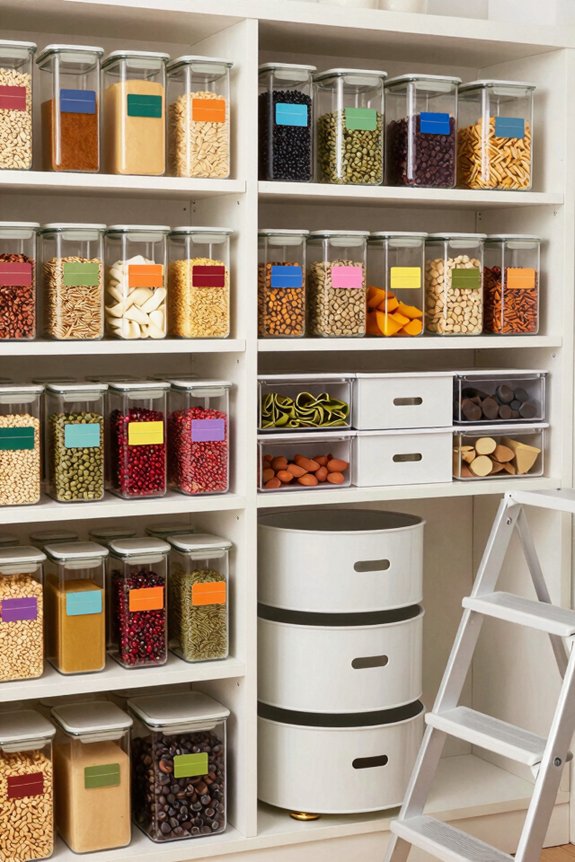
Once you’ve got your high-rotation items positioned for quick access, labeling becomes your next line of defense against pantry chaos. I’ve found that visible labels on bins, baskets, and containers eliminate duplicate purchases by making identification instant. A quality label maker helps pantry organization become something sustainable and effortless.
I decant items into labeled airtight containers, which keeps everything visible and signals when refills are needed. Front-facing labels create an organized, intentional appearance while reducing time spent rummaging through similar items. Regularly updating labels as I rotate stock helps me track expiration dates effectively.
Here’s the truth: labeling prevents waste by ensuring nothing gets forgotten in the back. When you and your household members can identify what you’ve got at a glance, you’re investing in pantry efficiency that actually sticks.
Store Tall and Awkward Items on Upper Shelves
Tall bottles, bulk bags, and oversized containers demand prime real estate on your upper shelves, not because they’re less important, but because they’d eat up valuable lower space where you actually reach most often.
Here’s how to make your upper shelves work smarter:
- Use adjustable shelving to accommodate varying heights and prevent wasted air gaps
- Install risers beneath containers to create distinct vertical zones and improve visibility
- Reserve upper levels exclusively for items you access less frequently but still need accessible
- Pair tall-item storage with strategic labeling at eye level for quick identification
I’ve found that grouping similar tall items together reduces the mental load when you’re searching. Step stools become your best friend, making those hard-to-reach zones into functional storage that actually works.
Keep a Step Stool Accessible for Top Shelves
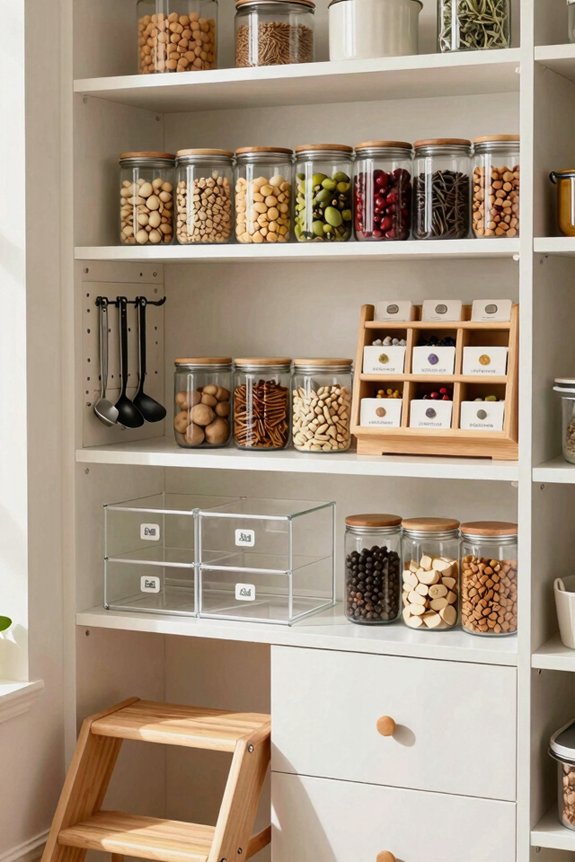
How do you actually reach those top shelves without creating chaos in your pantry? I keep a dedicated step stool in an easily accessible corner. Mine’s positioned near the entrance so I’m not blocking the aisle. This simple tool makes your top shelves genuinely reachable without risky tossing or stretching.
Before relying on it, I inspect the stool’s feet regularly to make sure they won’t slide on my pantry floor. I’ve placed it strategically away from high-traffic zones to minimize trip hazards. This approach to pantry organization lets me store frequently used items at higher levels safely, reducing clutter on main shelves.
A quality step stool supports quick adjustments and maintains neatness. You’ll find your pantry organization improves dramatically when reachability isn’t an afterthought.
Do Monthly Inventory Checks to Stay on Track
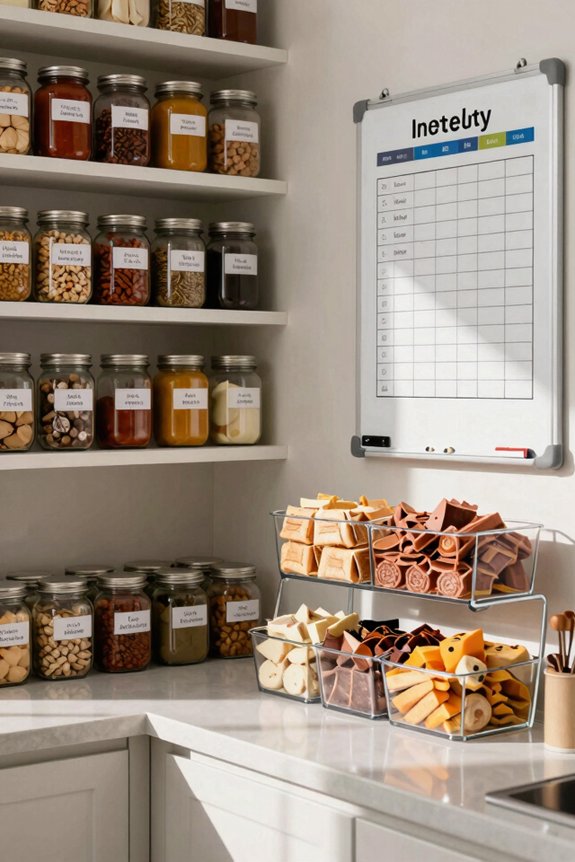
While that step stool helps you reach everything safely, you’ll still struggle to maintain organization without knowing what’s actually in your pantry. I’ve learned that monthly inventory checks help you go from chaotic to organized, and here’s why they matter:
Monthly inventory checks transform a chaotic pantry into an organized system where nothing goes to waste.
- Track expiration dates and remove items before they spoil
- Identify overstock that’s cluttering your shelves unnecessarily
- Spot underutilized products you’ve forgotten about
- Compare inventory against your typical weekly menu
I keep my pantry wall inventory list updated religiously. This practice prevents waste, ensures rotation so older items get used first, and informs smart restocking decisions.
When I check what’s actually on hand versus what I purchase, I adjust my buying habits accordingly. You’ll save money and storage space while maintaining the fresh, organized pantry you deserve.