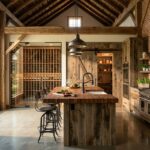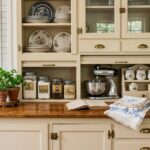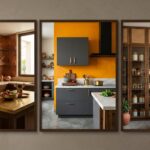
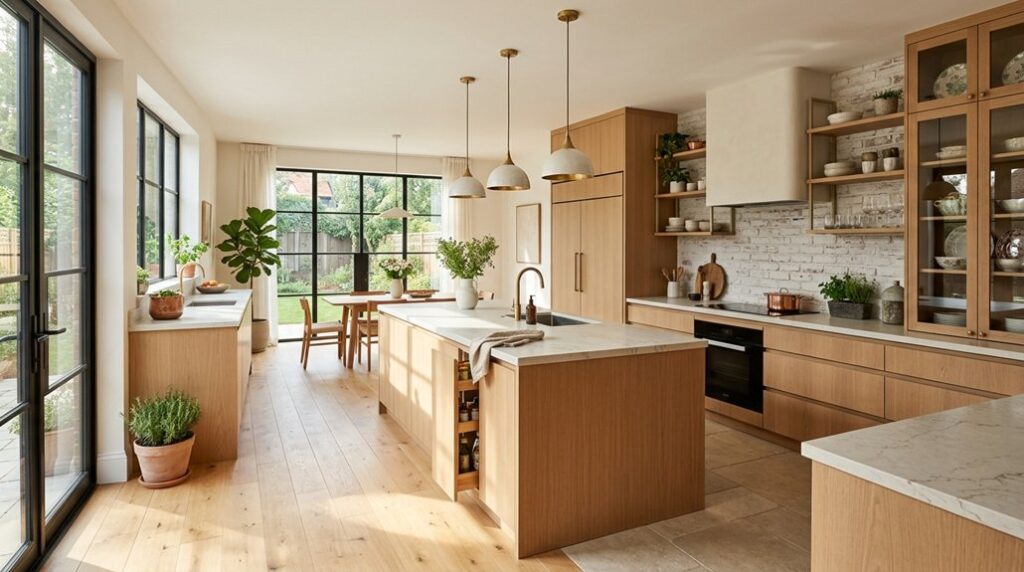
I’ve noticed that open kitchens aren’t just trendy, they’re effective at improving how homes function and feel. When you break down walls and strategically organize your space, you’re not simply creating a bigger room; you’re changing how your household operates and the atmosphere it creates. The trick isn’t removing everything indiscriminately.
Instead, it’s understanding which barriers to eliminate, how to anchor your layout, and what design moves actually preserve that sense of openness. Let’s explore the specific strategies that make this work.
What Makes an Open Kitchen Work for Your Home
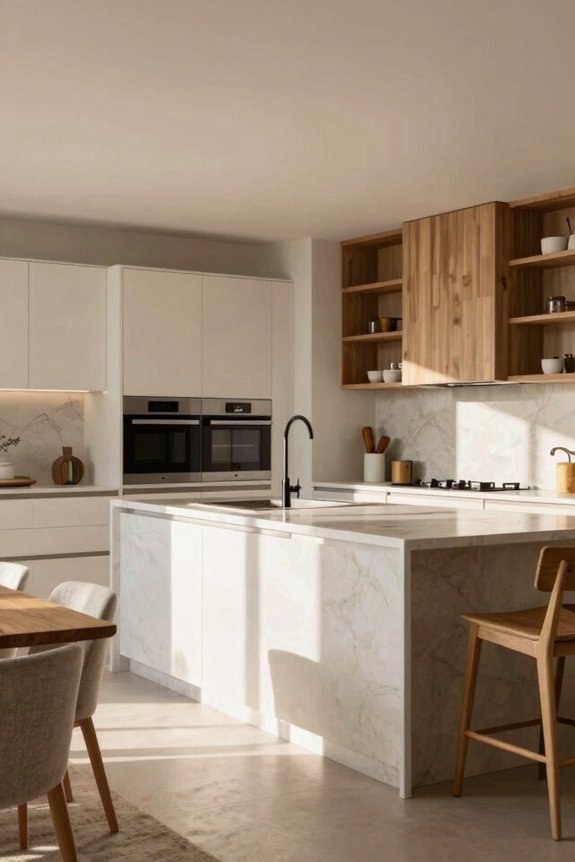
Why do some open kitchens feel spacious and inviting while others feel chaotic? The difference lies in thoughtful design choices that work together.
The difference between a spacious, inviting open kitchen and a chaotic one lies in thoughtful design choices working together.
I’ve found that successful open-layout kitchens balance functionality with flow. A seating island serves triple duty: it provides prep space, casual dining, and storage solutions all in one. Natural light floods through unobstructed windows, making everything feel larger and more welcoming.
Here’s what matters most: your lighting design should layer ambient, task, and accent lighting to enhance depth. You’ll want to evaluate traffic patterns carefully so people aren’t constantly moving seamlessly around each other.
When you incorporate these elements intentionally, your open kitchen becomes a gathering place where everyone belongs, not just a room where cooking happens.
Remove Walls and Barriers Strategically
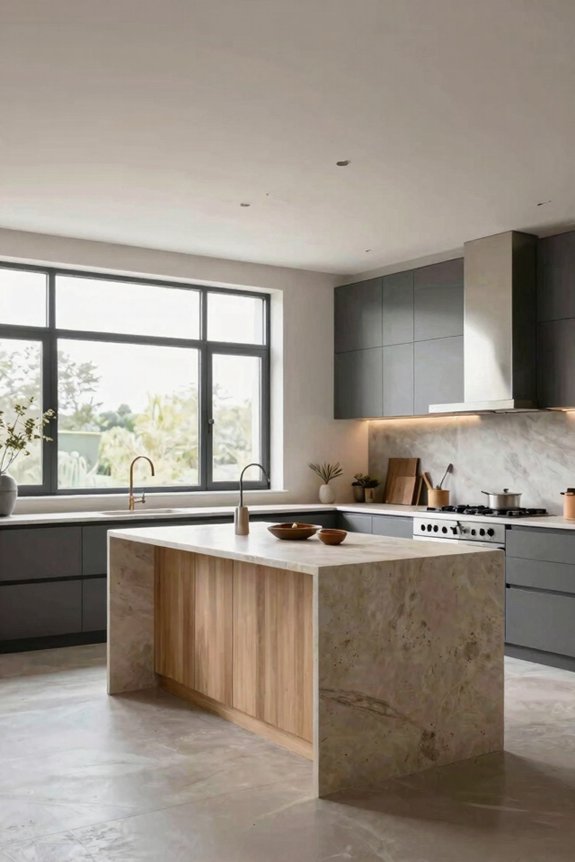
When you’re ready to renovate your kitchen, knocking down interior walls is often a key improvement that opens up your entire home. I’d recommend working with a structural engineer to identify which walls you can safely remove; you’ll want to protect load-bearing supports and reroute plumbing or electrical lines before swinging a sledgehammer.
The payoff is substantial: you’ll gain open sightlines between your kitchen, dining, and living areas, letting natural light flood through and making your space feel significantly larger.
Knock Down Interior Walls
If you’re serious about redesigning your kitchen into a modern gathering space, removing interior walls is one of the most influential moves you can make. I’ve watched this single decision create an open-concept environment that feels exponentially larger and more inviting.
Knocking down barriers between your kitchen, dining, and living areas establishes smooth flow that eliminates visual compartmentalization. You’ll instantly enhance circulation, preserve natural light throughout the space, and maintain unobstructed sight lines.
This open-kitchen layout changes how your family connects. Conversation flows naturally across zones without physical separation interrupting social interaction.
Before you grab a sledgehammer, consult a structural engineer. Load-bearing walls, plumbing, and electrical systems require professional evaluation. This expertise keeps your smooth flow design safe and functional while maximizing your interior wall removal benefits.
Create Seamless Flow Pathways
How you strategically remove walls determines whether your kitchen truly connects with surrounding spaces or simply feels choppy and disconnected. I’ve found that successful open-concept design requires intentional space planning beyond just knocking down walls. You’ll want to consider sight lines, the visual pathways that let you see from kitchen to living room without obstruction. This creates psychological openness, making your home feel larger and more inviting.
When planning your knock-down walls project, work with professionals who’ll verify structural integrity. They’ll identify load-bearing walls versus partition walls, protecting your home’s foundation. Strategic removal opens clear pathways between spaces, eliminating barriers that segment rooms.
You’ll notice how an open layout encourages family interaction, whether you’re cooking or entertaining. This connectedness changes isolated kitchens into gathering hubs that anchor your entire home.
Flood Your Open Kitchen With Light
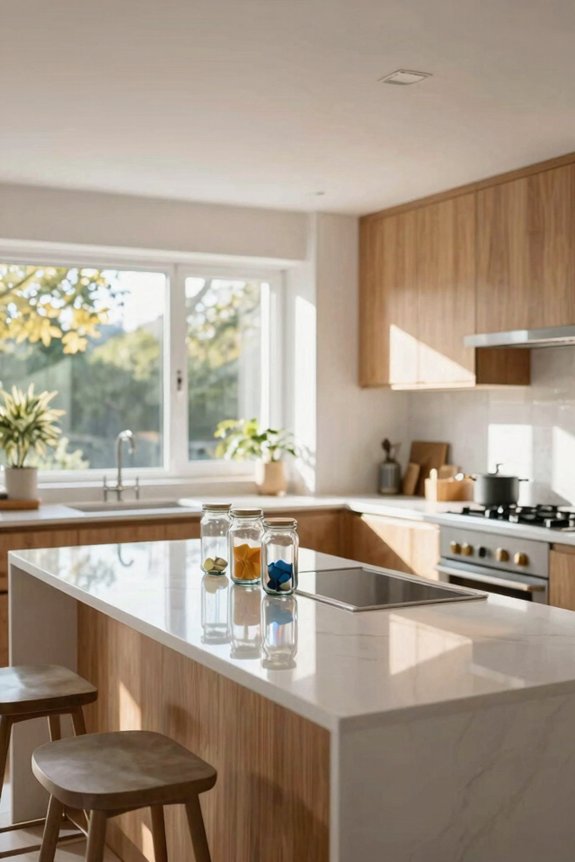
Why does light matter so much in an open kitchen? It’s impactful. Natural light makes your space feel larger, airier, and more inviting, especially in open layouts where everything connects. I’d install large windows or skylights to maximize daylight and create that spacious feeling you’re craving.
Layered lighting is your strategic asset. Combine ambient, task, and accent lighting to highlight features without overwhelming the space. Pair this with a light palette of whites, creams, and soft grays that reflect available light beautifully.
| Element | Benefit | Implementation |
|---|---|---|
| Large Windows | Natural brightness | Position strategically |
| Reflective Surfaces | Light amplification | Mirrors, glossy cabinets |
| Handleless Cabinetry | Visual lightness | Minimalist design approach |
Transparent cabinetry and open shelves reduce visual weight, letting light travel freely. You’ll create a well-coordinated, welcoming kitchen that feels like it’s truly yours.
Use Neutral Colors to Expand the Space Visually
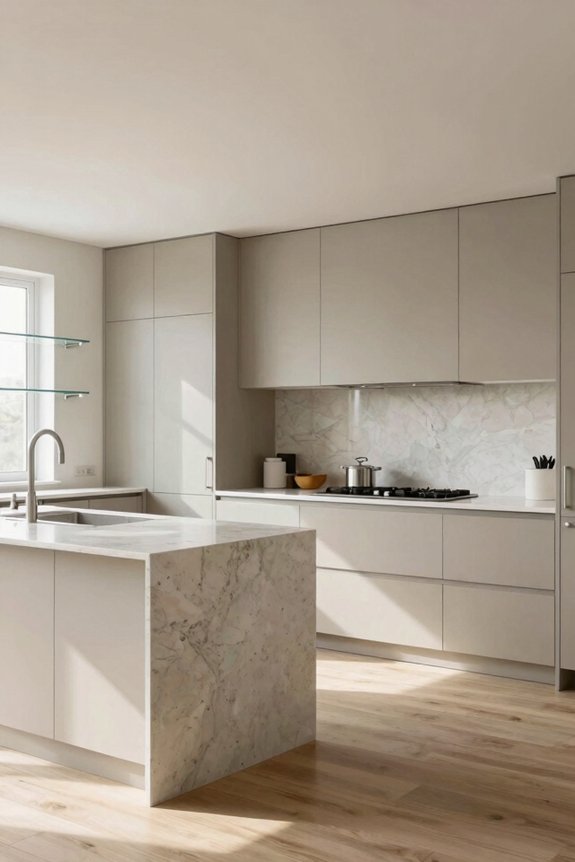
I’ve found that neutral colors—whites, creams, beiges, and soft grays—work effectively in open kitchens because they reflect light and make your space feel larger. You’ll want to apply these calm tones to your walls, cabinetry, and floors to reduce visual weight, then add personality through accessories like bar stools or artwork without overwhelming the airy atmosphere.
Pairing streamlined, handleless cabinets with your neutral palette keeps visual clutter minimal, reinforcing that open, connected feeling throughout your home.
Light Palette Benefits
When you’re designing an open kitchen, the color choices you make can literally reshape how spacious your room feels. I’ve discovered that a light palette isn’t just pretty; it’s effective.
Here’s why light-colored cabinetry and surfaces matter:
- Reflectivity maximizes natural light without expanding your square footage
- White and cream tones create visual continuity across open-concept spaces
- Soft pastels and beiges maintain airiness while adding subtle warmth
- Light-colored materials enhance sight lines between kitchen and living areas
- Neutral bases allow you to introduce personality through accessories
When you commit to this light palette, your open kitchen feels genuinely spacious. Dark, heavy tones do the opposite; they make rooms feel cramped.
I recommend pairing light-colored cabinetry with natural materials like light wood for that airy aesthetic. The result is a space that feels open and inviting.
Color Psychology Strategy
How does neutral color science actually work in open kitchens? I’ve found that light palette choices directly influence how we perceive space. Neutrals like creams, soft grays, and whites reflect natural light, making your open-concept kitchen feel larger. They’re not boring; they’re strategic.
Color psychology tells us that neutrals create calm transitions between your kitchen, dining, and living zones. This neutral backdrop lets architectural features shine without overwhelming sight lines. I recommend pairing neutral cabinetry with lighter countertops and flooring to maximize brightness.
Here’s the key: reserve bolder colors for accessories and textiles instead of major surfaces. This approach preserves that airy feeling while letting your personality come through. You’ll achieve sophistication without sacrificing spaciousness, which is smart design thinking.
Anchor Your Layout With a Kitchen Island
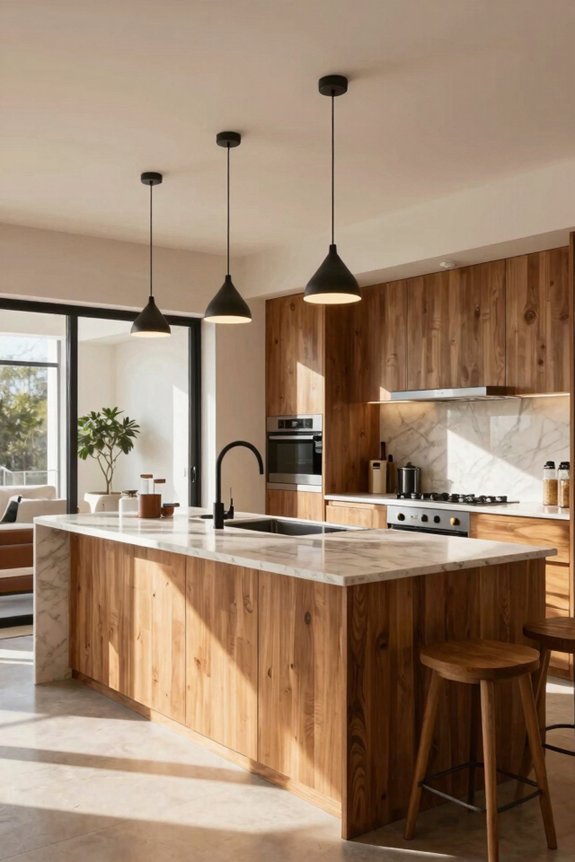
Why does a kitchen island matter so much in open-plan design? It’s your layout’s hero, the element that creates distinct spaces with clear purpose. A well-positioned kitchen island creates natural gathering points while maintaining clear sightlines and traffic flow throughout your home.
A kitchen island is your layout’s hero—it creates distinct spaces while maintaining clear sightlines and functional traffic flow.
Here’s what makes islands essential for open-concept living:
- Workspace organization separates prep areas from dining zones effortlessly
- Integrated storage keeps countertops uncluttered and maintains that airy feeling
- Seating at island encourages casual conversation without blocking workflows
- Bold materials like waterfall marble visually connect your kitchen to living spaces
- Strategic positioning aligns with your lighting plan for cohesive design
When you anchor your layout with an island, you’re not just adding furniture. You’re creating intentional zones that make your open kitchen feel connected yet functional.
Hide Storage, Show Style
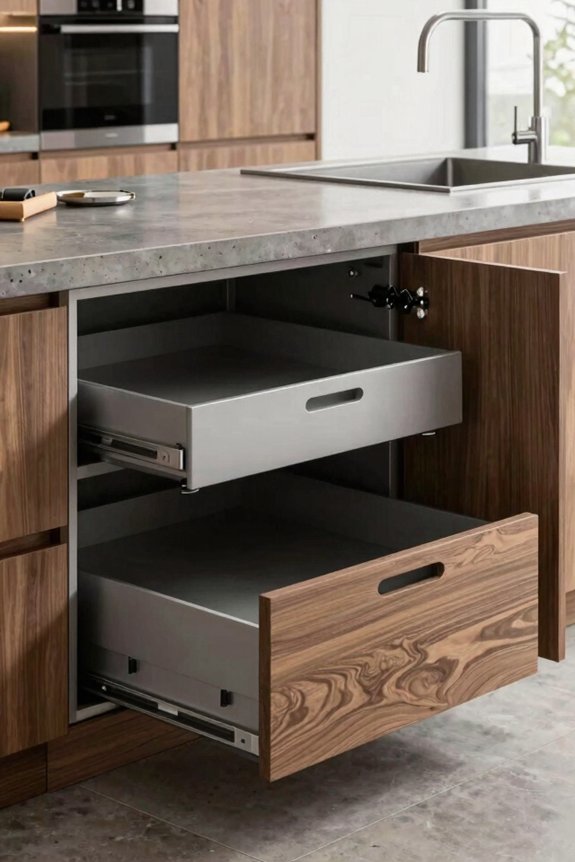
The secret to a beautiful open kitchen? Strategic hiding. I’ve discovered that concealing storage while maintaining clean lines creates a stylish, organized space. Hidden spice pull-outs keep seasonings accessible yet invisible, while corner cabinetry solutions maximize wasted diagonal space. Modular-style cabinets preserve that streamlined open-concept aesthetic you’re after.
| Storage Solution | Best For | Space Saved | Visual Impact |
|---|---|---|---|
| Pull-out spice racks | Frequently used seasonings | 40% more cabinet depth | Maintains clean face |
| Corner drawer cabinets | Cookware and lids | Optimizes awkward angles | Eliminates dead zones |
| Built-in corner drawers | Vertical organization | Diagonal space utilization | Seamless integration |
| Modular cabinetry | Appliance concealment | Hidden supplies | Stylish, uncluttered look |
Strategic organization doesn’t mean sacrificing style. It means joining us in creating spaces where function and beauty coexist seamlessly.
Define Zones While Preserving Sight Lines
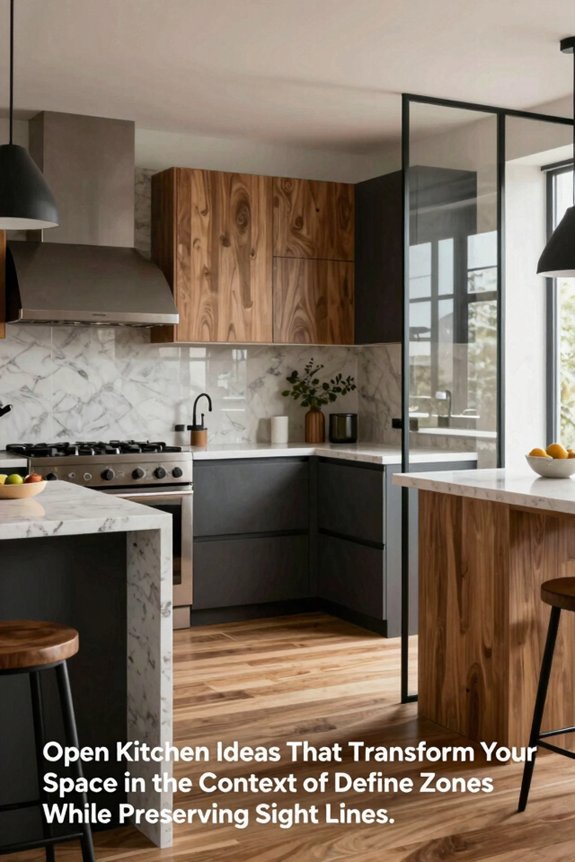
Ever noticed how the best open kitchens don’t feel chaotic? I’ve found that defining zones while preserving sight lines works well. You’re creating transitional zones that guide movement without blocking views.
The best open kitchens define zones while preserving sight lines, creating transitional spaces that guide movement without blocking views.
Here’s how I’d approach your open-concept space:
- Use varying ceiling treatments or soffits to mark kitchen boundaries
- Position area rugs to subtly separate dining from living zones
- Keep tall storage low or open-shelved to maintain sight lines
- Apply consistent lighting across all zones for visual continuity
- Choose a cohesive palette that ties everything together
The key is to stop fighting the openness. Instead of walls, I rely on furniture placement and architectural details like pendant lights to distinguish areas. This zoning strategy lets your kitchen breathe while staying connected to adjacent spaces, which is exactly what modern living demands.