
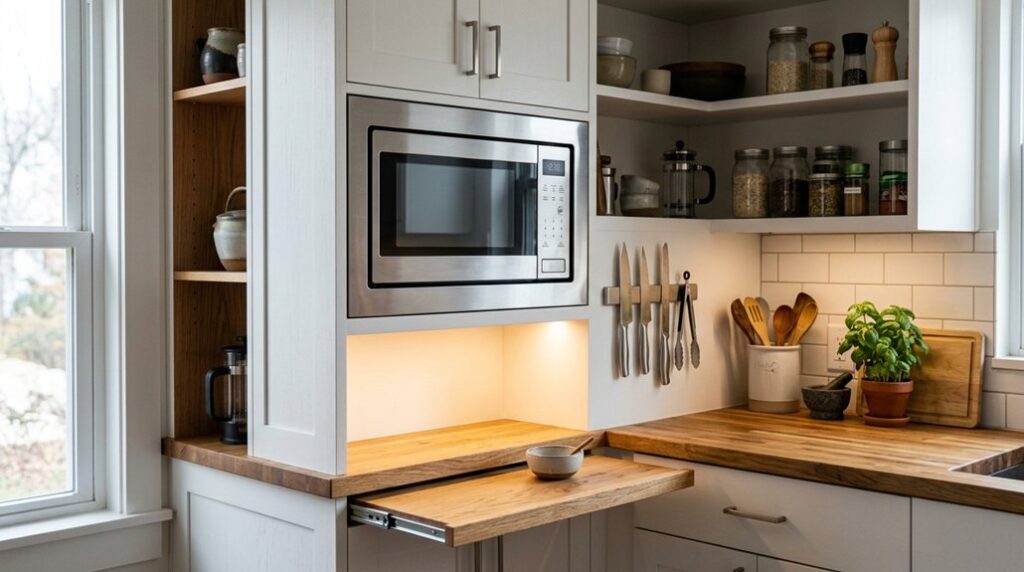
Your small kitchen is like a puzzle, and the microwave is the piece that either fits perfectly or throws everything off balance. I’ve learned that where you place this appliance can actually free up precious counter space, improve your workflow, and make your kitchen feel larger than it is.
But this is the point: most people make the same placement mistakes that sabotage both functionality and safety. So let’s talk about where it should actually go.
Match Microwave Location to Your Kitchen’s Layout and Needs
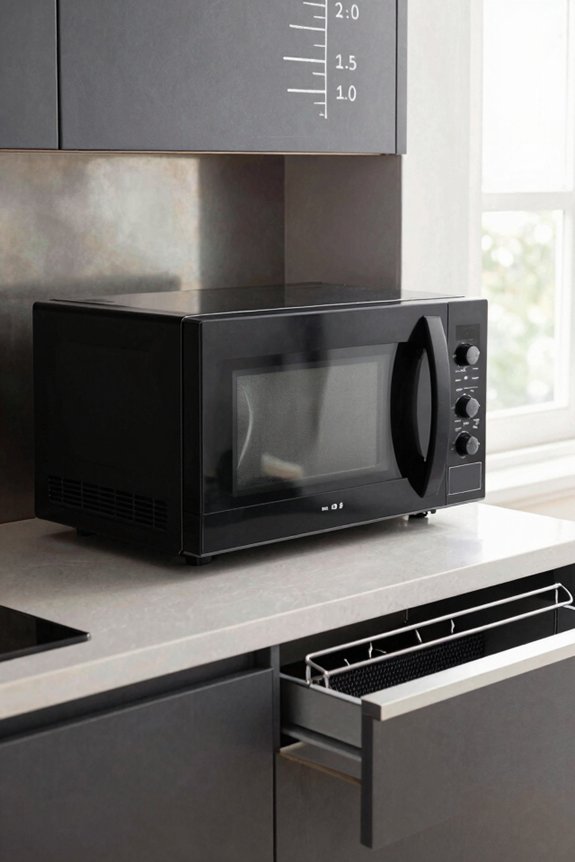
Where should you actually put your microwave? That’s the question we’re solving together. Your microwave placement makes or breaks your small kitchen’s functionality and flow.
Consider five strategic options: over-the-counter, under-cabinet, built-in cabinet, under-counter drawer, or island-integrated designs. Each serves different needs depending on your layout and ergonomics. Under-cabinet and drawer models preserve precious counter space while keeping your kitchen looking organized and thoughtfully designed. Built-in options require proper ventilation and wiring but reward you with a cohesive appearance.
Island placement works beautifully if you’ve got the space. The key is matching your choice to how you actually cook and move through your kitchen. Your microwave shouldn’t dictate your workflow; your workflow should guide its placement.
Over-the-Range Microwaves: Ventilation and Space Savings in One
If you’re tight on space, I’d argue that over-the-range microwaves represent one of the smartest decisions you can make. They’re two appliances working as one unit, giving you built-in ventilation that pulls cooking odors and steam directly from your stovetop, plus integrated lighting that illuminates your range, all while freeing up valuable countertop real estate.
That said, they won’t match the raw power of a dedicated range hood during heavy cooking sessions, so you’ll want to assess whether your kitchen’s ventilation demands justify the trade-off for that sleek, consolidated look.
Dual Functionality and Space Efficiency
Over-the-range microwaves represent one of the smartest space-saving solutions for compact kitchens. I’ve found they’re particularly effective for folks like us working with limited square footage.
| Feature | Benefit | Example Model | Space Saved | Impact |
|---|---|---|---|---|
| Dual Function | Microwave + Ventilation | MMM6030PZ | Counter space | Reduces clutter |
| Built-in Design | Flush-fit appearance | MMV4207JB | Visual flow | Sleek aesthetic |
| Overhead Placement | Vertical utilization | Standard units | Countertop area | Opens workspace |
| Integrated Lighting | Task illumination | Most models | Separate fixture | Consolidates needs |
| Cabinet Integration | Seamless fit | Flush models | Cabinet depth | Professional look |
You’ll consolidate microwave and exhaust functions into one appliance, eliminating appliance clutter. The built-in options flush-fit with standard-depth cabinets for that sleek integrated look we’re after.
However, I’ll be honest: they may not ventilate as powerfully as dedicated range hoods during heavy cooking sessions. Still, for small kitchens, this trade-off typically works well.
Ventilation Performance and Kitchen Lighting
How effectively your microwave removes cooking odors depends largely on its CFM rating, the measure of how many cubic feet of air it processes per minute. I’ve found that higher CFM ratings work better in busy kitchens where steam and smoke accumulate quickly.
Beyond ventilation, you’ll appreciate the built-in lighting these units provide. They illuminate your stovetop, making cooking easier and safer.
Here’s what makes over-the-range microwaves smart choices for small spaces:
- Ventilation systems eliminate odors directly from the source
- Integrated lighting improves visibility during meal prep
- CFM ratings (typically 300-400+) determine performance levels
- Space-saving design keeps countertops clutter-free
You’re investing in both functionality and aesthetics when choosing models with quality ventilation and thoughtful lighting features.
Pull-Out Shelves: Stable Cabinet Storage for Compact Kitchens
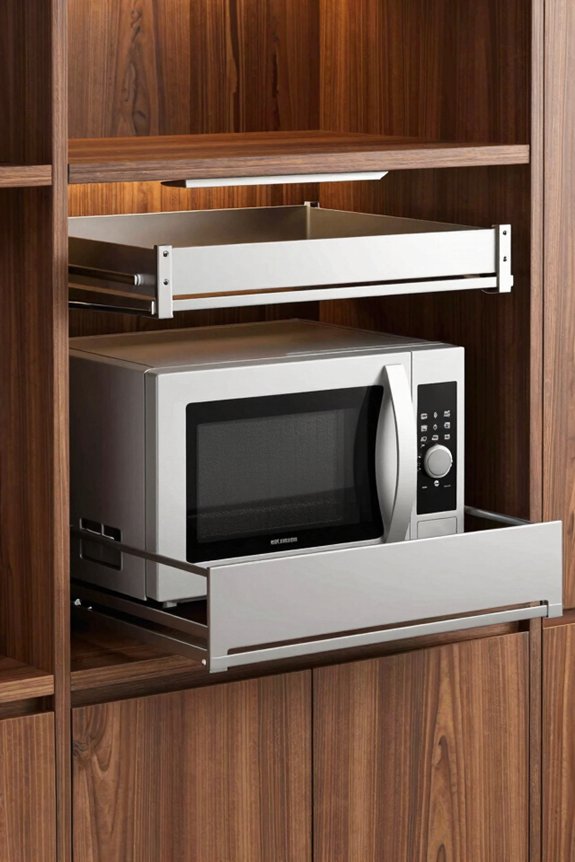
Pull-out shelves convert standard cabinets into functional microwave homes that keep your countertops clear and your appliance secure. I’ve found that cabinet storage with sliding mechanisms makes retrieving hot dishes effortless—you’re not awkwardly reaching into dark corners anymore.
Here’s why they work: curved or sloping shelf sides keep your microwave steady during operation, which dramatically reduces spills and movement. The smooth extension glides let you load and unload safely without wrestling with your appliance.
You can integrate pull-out configurations with existing cabinet systems or install dedicated drawer-like mechanisms. This approach maximizes your vertical storage efficiently. Services like ShelfGenie offer free consultations and 3D renderings to optimize your specific layout.
For small kitchens, pull-out shelves aren’t just storage solutions; they’re effective substitutes that reclaim precious counter space while keeping your microwave accessible.
Microwave Drawers: The Seamless, Space-Saving Solution
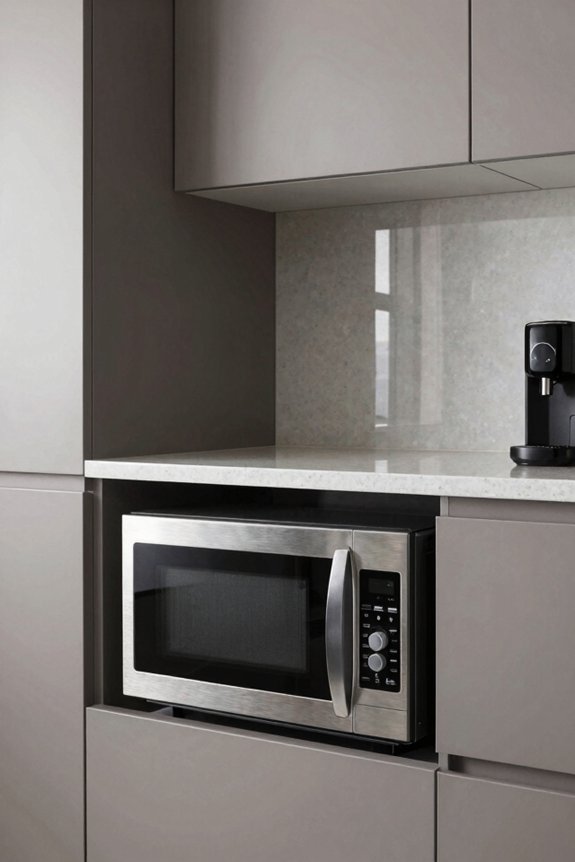
If you’re tired of your microwave dominating your countertop, drawer-style microwaves offer a practical alternative that works well in small kitchen layouts. These space-saving appliances sit seamlessly below your counter, preserving precious workspace while maintaining comfortable access.
Here’s what makes drawer microwaves worth considering:
- Aesthetic appeal: Creates a modern, streamlined look that complements built-in kitchen designs
- Accessibility: Positioned at ergonomic height, reducing awkward reaching or stooping
- Counter preservation: Reclaims valuable real estate for meal prep and appliances you use daily
- Design integration: Pairs beautifully with island cabinets for well-planned spaces
Yes, installation costs run higher than countertop models, and you’ll need proper electrical wiring and ventilation planning. But if you’re seeking that polished, uncluttered kitchen feel, drawer microwaves deliver functionality without compromise.
Hide Your Microwave in a Pantry or Corner Cabinet
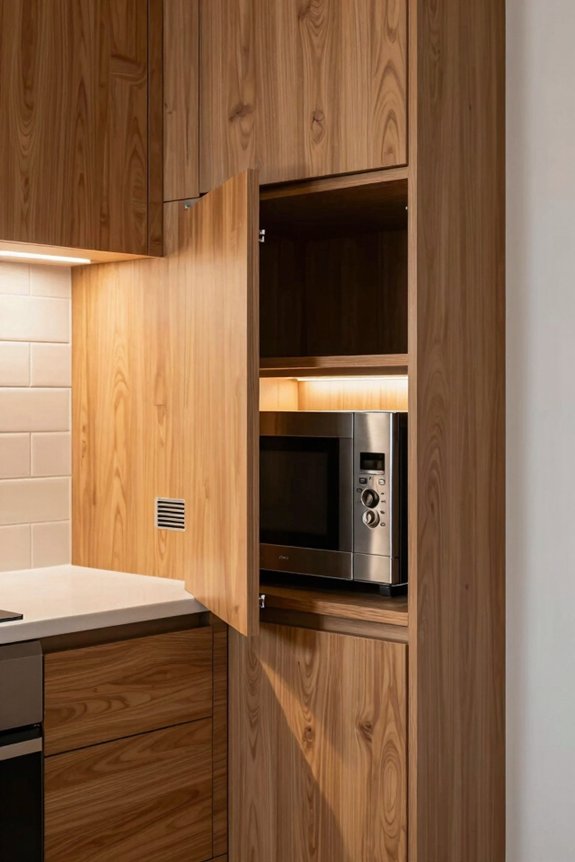
While drawer microwaves offer seamless integration, there’s another approach that pushes the appliance even further from view: stashing it inside a pantry or corner cabinet. I find this solution creates kitchens with no countertop clutter. Your microwave disappears when you’re not using it, creating that coveted clean aesthetic we all want.
However, this strategy requires thoughtful planning. You’ll need proper ventilation and electrical wiring installed beforehand. I’d recommend adding a pull-out shelf or trim kit. These accessories prevent tipping and make retrieving hot dishes safer and easier.
Central cabinet placement near prep areas keeps the microwave conveniently accessible without sacrificing that hidden appeal. Professional installation makes sure everything aligns perfectly with your existing cabinetry. It’s a small investment that pays dividends in both functionality and design cohesion.
Pick a Height That Fits Your Reach and Workflow
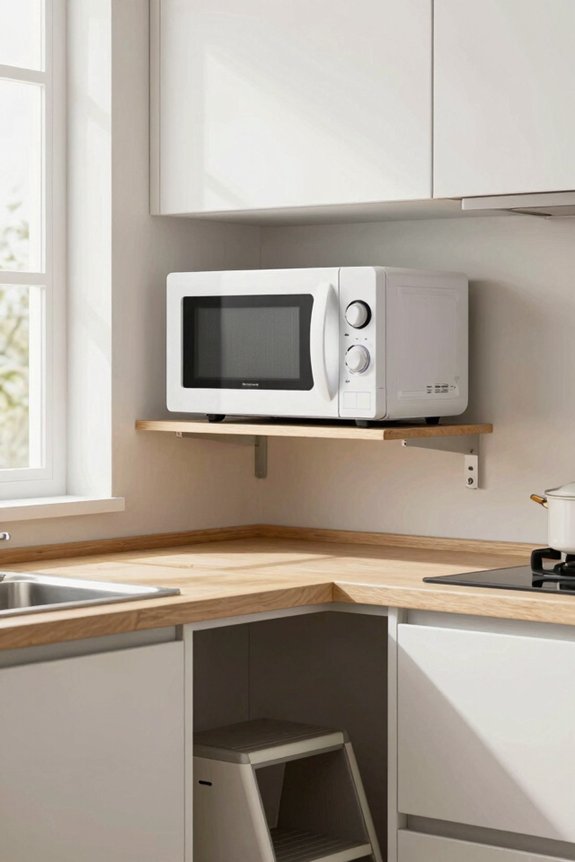
How high should your microwave actually sit? Getting this right improves your kitchen experience, especially in compact spaces where every inch matters.
Placement dramatically impacts daily comfort and workflow efficiency. Here’s what works:
- Over-the-range models maximize vertical space while keeping units accessible without stooping
- Built-in microwaves at mid-height eliminate countertop clutter and reduce awkward reaching
- Drawer-style options minimize bending for shorter users, though they require cabinet customization
- Pull-out shelf solutions let you adjust height to match your specific reach and movement patterns
The key is positioning your microwave between eye level and shoulder height. This sweet spot reduces strain during your 1–2 daily uses while keeping cooking workflows smooth. Consider your height, cabinet depth, and how you naturally move through your kitchen. When placement feels intuitive, you’ll actually enjoy using it.
Compact Microwave Models for Tight Spaces
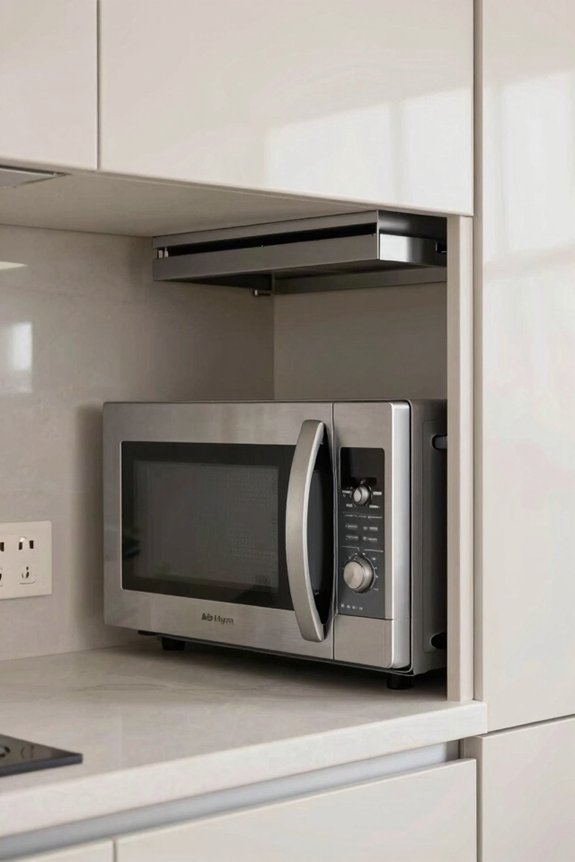
When you’re working with limited square footage, compact microwaves measuring 15–19 inches wide become your best ally. They slip under cabinets or into built-in spaces without dominating your kitchen. I’d encourage you to explore drawer-style options too, since they slide out smoothly without adding vertical bulk, and cabinet-ready trim kits let you integrate them seamlessly for that polished, clutter-free look you’re after.
Whether you choose a countertop unit or go built-in depends on your workflow. Countertop placement keeps things flexible and accessible, while under-counter or island-drawer installations preserve precious workspace for prep and cooking.
Dimensions That Maximize Space
What if your kitchen’s layout doesn’t need to sacrifice functionality for style? I’ve found that selecting the right dimensions changes how your space works. Standard countertop microwaves measuring 15–19 inches wide work beautifully in many layouts, but here’s where strategic placement matters most.
Consider these space-maximizing options:
- Under-counter placement frees your countertops while keeping your microwave accessible
- Drawer-style units integrate smoothly into islands or cabinets for modern aesthetics
- Cabinet-ready configurations blend perfectly with surrounding cabinetry
- Over-the-counter mounting preserves floor space without cluttering work surfaces
I recommend measuring your available space first, whether that’s a narrow counter corner or an under-cabinet gap. A compact microwave’s 10–11 inch height fits perfectly in tight spots. Trim-kit options let you achieve that built-in look without permanent installation.
When you choose dimensions thoughtfully, you’re not just buying an appliance; you’re investing in a kitchen that actually works for you.
Compact Model Features Available
Compact microwaves pack impressive functionality into surprisingly small packages, and you don’t have to compromise on performance when space is limited. I’ve found that compact models deliver the same essential features: defrost, quick-cake presets, and reliable heating without dominating your kitchen layout.
You’ll appreciate drawer-style microwaves, which eliminate awkward reaching and bending. They slide out smoothly, making them genuinely convenient for daily use. For countertop placement, these units measure just 15–19 inches wide, preserving precious counter real estate while remaining fully accessible.
What I love most? You’re joining countless homeowners who’ve discovered that smaller doesn’t mean lesser. These compact models integrate beautifully using trim kits, giving you that polished built-in look without professional installation costs. You’re making a smart choice that works harder for your space.
Countertop Vs. Built-In Options
Now that you’ve seen what compact models can deliver, the real question becomes where to put yours. You’ll face a practical choice between countertop and built-in options, each offering distinct advantages for your space.
Countertop microwaves maximize accessibility and simplicity. They’re straightforward to install: just plug in and go. However, they consume valuable workspace, which matters when square footage is limited.
Built-in solutions free up counter real estate and create that seamless, integrated kitchen look you’re after. Consider these placement strategies:
- Under-cabinet mounting for ergonomic access without clutter
- Drawer-style units that blend seamlessly with cabinetry
- Cabinet-ready models using trim kits for polished integration
- Ventilation planning before commitment to avoid costly rewiring
Weigh installation complexity, electrical requirements, and remodeling costs honestly. Your choice shapes both functionality and kitchen flow.
Plan Ventilation and Wiring Before Installation
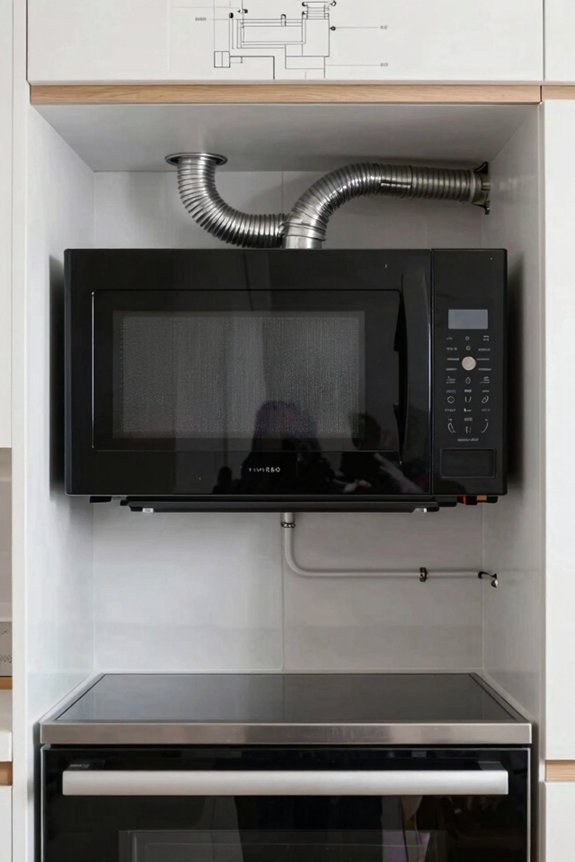
How often do we overlook the invisible infrastructure that keeps our kitchens running safely? Before positioning your microwave anywhere, you’ll need to plan ventilation and wiring as foundation work.
Under-cabinet or built-in microwaves demand dedicated ducting or a vent hood to exhaust moisture and odors effectively. Without proper ventilation, you’re inviting humidity damage to surrounding cabinetry. I’d recommend consulting your cabinet manufacturer about integrated ventilation solutions.
Equally critical is electrical wiring. Your microwave requires a dedicated circuit, and it’s not negotiable. Check outlet placement in your chosen location. Most units need 15-20 amps of power.
Here’s where I suggest bringing professionals in. A licensed electrician handles wiring safely; a contractor manages structural modifications and venting integration. This upfront investment prevents costly mistakes and helps your space function reliably for years.
Keep Microwaves Away From Children
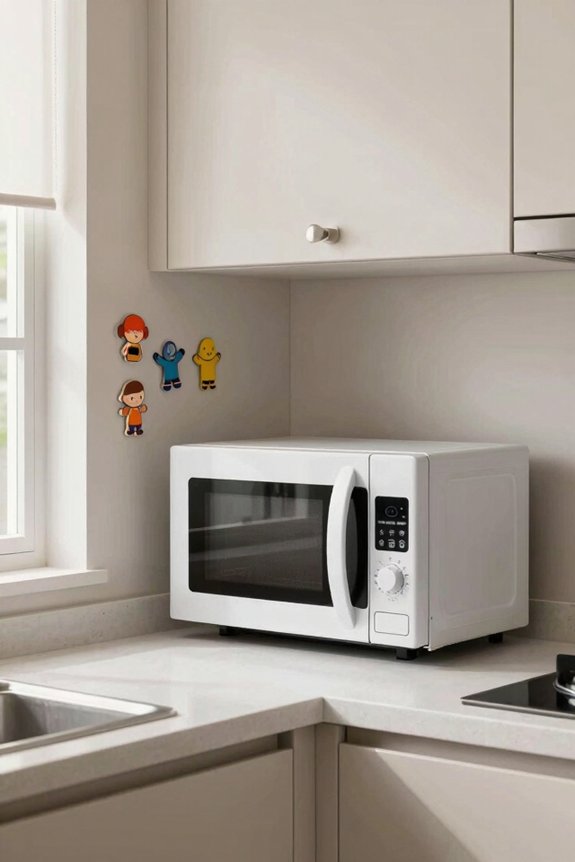
When you’re designing a kitchen layout with little ones around, microwave placement becomes a safety priority that deserves real thought.
I’ve found that strategic positioning dramatically reduces accidents. Here’s what works:
- Mount over-the-range microwaves high enough that curious hands can’t reach controls or hot surfaces during operation
- Choose cabinet-integration options with push-to-open drawers that discourage casual interaction from unsupervised children
- Install child-proof locks on accessible units to prevent unauthorized use and potential burns
- Relocate away from stove areas to minimize grabbing hot cookware or electrical cords during cooking
Under-counter drawer-style units keep counter space clear but require supervision since bending brings kids closer. I’d recommend pairing any placement with labeled cabinets for added security.
You’re creating a kitchen where safety and functionality coexist seamlessly.
What to Avoid: Dangerous Placements and Common Mistakes
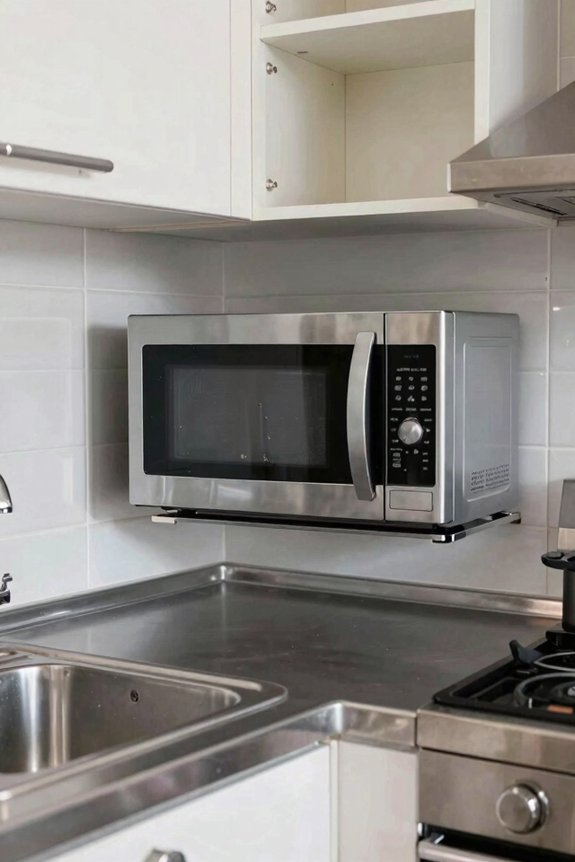
While keeping your microwave out of reach from children protects them, equally important is avoiding placements that compromise your entire kitchen’s safety and function. Don’t install an over-the-range microwave directly above your stovetop; heat and steam damage the unit and shorten its lifespan.
You’ll also want proper ventilation, as cramped cabinets without airflow overheat microwaves dangerously. Skip cluttered, unstable shelves or wobbly carts that invite tipping and complicate cleaning. Avoid blocking your kitchen’s work triangle by positioning it where it obstructs your oven, fridge, or pantry access.
Under-counter installations demand electrical compliance. Improper wiring creates serious fire hazards. Thoughtful placement prevents costly repairs and keeps your kitchen running smoothly while protecting everyone inside.