It’s curious how the kitchen, once hidden away, has become the heart of modern homes. You’ve probably noticed this shift yourself.
Today’s contemporary kitchens aren’t just about cooking; they’re about how you live, entertain, and connect with others. If you’re ready to redesign your kitchen into something truly functional and beautiful, here’s what sets today’s best kitchens apart. The key to success lies in balancing form with flow, and I’ll show you exactly how to achieve it.
Design a Functional Kitchen Island With Waterfall Edges
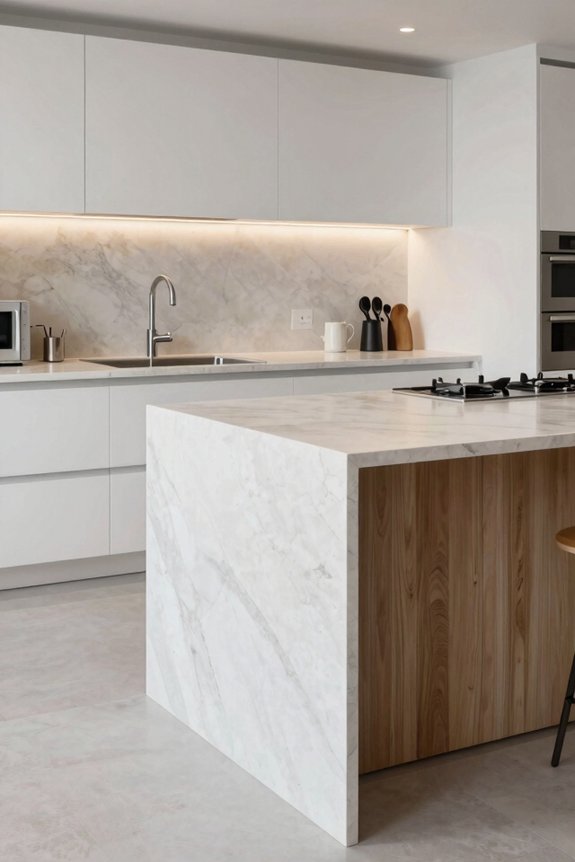
Why settle for an ordinary kitchen island when you can create a sculptural centerpiece that’ll have guests doing a double-take? A waterfall edge brings your kitchen island into modern design by flowing continuous stone countertop material effortlessly down the island’s ends. This dramatic technique works beautifully with book-matched patterns like Orca stone, delivering that seamless, uninterrupted visual your contemporary kitchen deserves.
Position your waterfall-edge island near the range to emphasize its sculptural presence while maintaining pristine surfaces. I’d recommend pairing this stone countertop with warm woods or contrasting metals; brass or bronze hardware shine here for added depth. An oversized island with this feature serves multiple purposes: workspace, gathering spot, and seating area, making your kitchen the hub where family and friends instinctively congregate.
Blend Industrial Architecture With Modern Materials
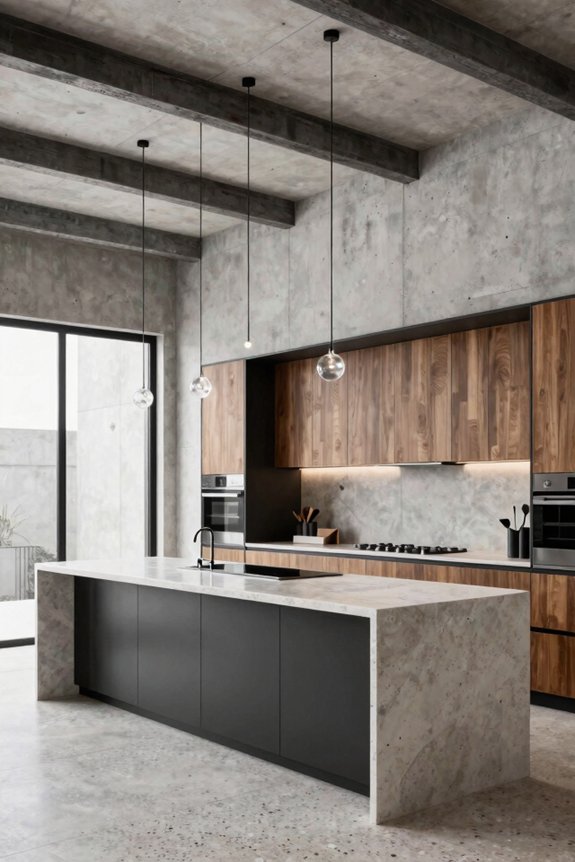
Many contemporary kitchens thrive when you honor the bones of industrial spaces while layering in sleek, modern materials, think of it as giving a 19th-century warehouse an urban facelift. I find this approach creates authentic character without feeling dated.
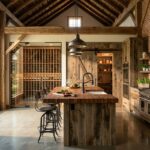
Your open-concept kitchen becomes the perfect canvas for mixed textures. Pair exposed brick or steel beams with warm woods, polished concrete, and brass accents. This contrast deepens visual interest while maintaining sophistication.
Statement fixtures in bronze or gold become focal points against industrial backdrops. These metallic details bridge vintage and contemporary aesthetics seamlessly.
Create Visual Interest With Bold Backsplash Tiles
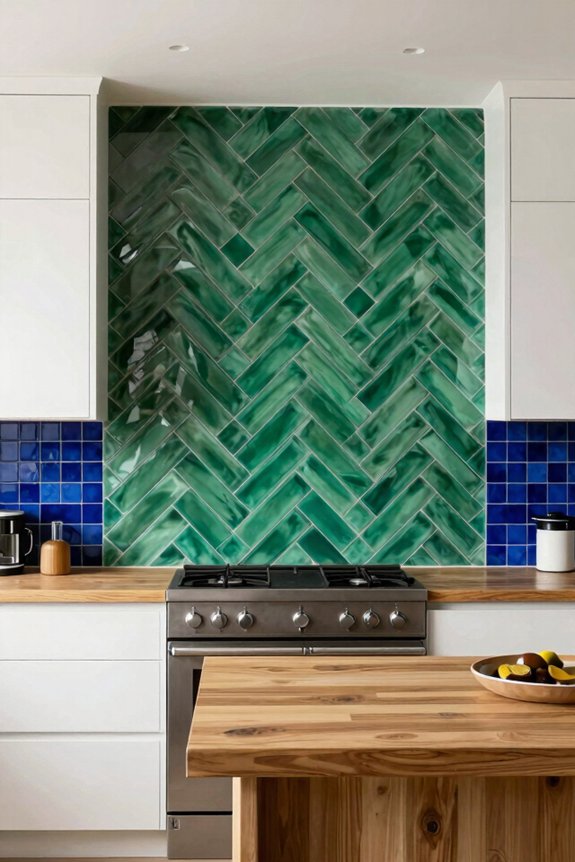
How do you create a kitchen that goes beyond basic function? I’d argue it starts with your backsplash. A bold backsplash serves as your contemporary kitchen’s focal point, drawing eyes upward and establishing character.
Here’s how to nail this design:
- Choose dramatic patterns: large-format tiles or herringbone layouts create visual depth without competing for attention
- Pair with neutral cabinetry: white or gray bases let your tiles shine without overwhelming the space
- Coordinate with hardware: complementary brass, brushed nickel, or black finishes connect everything together cohesively
Metallic or glass tiles amplify brightness through reflective surfaces. Consider bold mosaics or marble accents for unexpected personality.
The visual interest you’re creating makes your kitchen a space where design intention meets everyday living. You’re not just cooking here; you’re making a statement.
Choose a Kitchen Color Strategy With Bold Accents
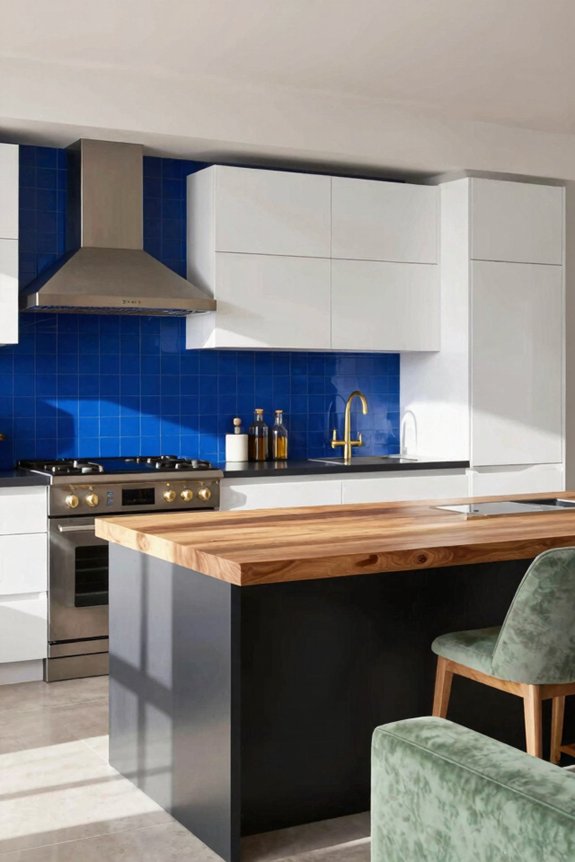
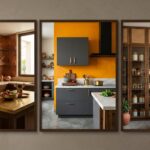
Your backsplash makes the statement—now it’s time to amplify it with color strategy. I find that pairing a white or light base with saturated accents creates that perfect balance: timeless yet energizing. Strategic color placement matters enormously.
| High-Impact Area | Accent Color Option | Design Effect |
|---|---|---|
| Bold Pantry | Deep emerald or navy | Creates focal moment without overwhelm |
| Kitchen Island | Warm terracotta or charcoal | Guides movement through space |
| Dining Alcove | Jewel tones or mustard | Draws attention naturally |
Position your accent color in high-impact areas where it’ll shine. I’d pair bold pantry doors with natural materials: warm woods, stone, or brass to prevent color fatigue and add depth.
This color strategy prevents your space from feeling flat while keeping everything unified. Your kitchen becomes yours, with purposeful choices and balanced details that feel distinctly contemporary.
Layer Pendant and Under-Cabinet Lighting for Illumination
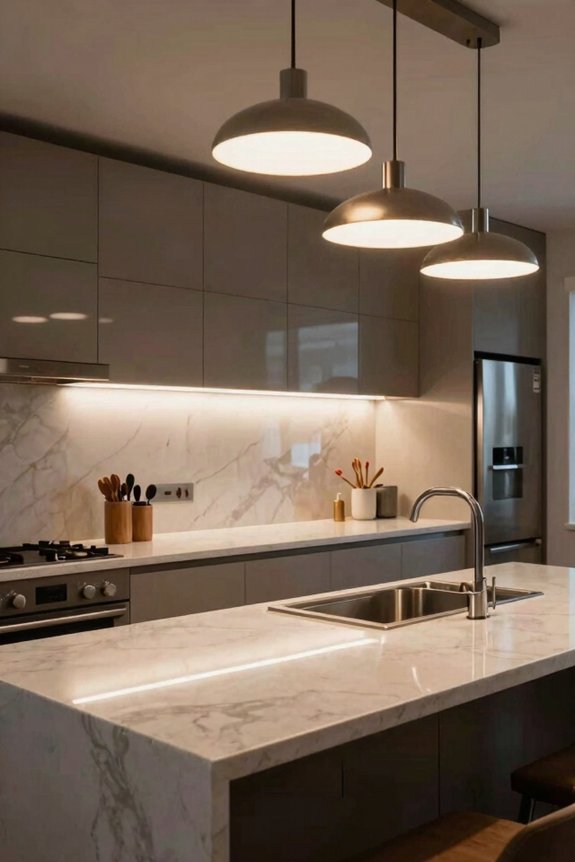
I’ve found that combining pendant fixtures with under-cabinet strips creates the dual functionality you need; pendants serve as your visual anchor while task lighting keeps countertops shadow-free. You’ll want to think strategically about placement: hang glass or geometric metal pendants above islands at roughly 30–36 inches from the surface.
Then run continuous LED strips beneath upper cabinets to eliminate those dark zones where you’re actually prepping food. Install dimmers on both circuits so you can shift from bright, focused work mode to softer ambient light for entertaining.
Ambient And Task Lighting
Where does a contemporary kitchen truly come alive? In the thoughtful interplay of light that changes both function and ambiance. I’d argue that mastering ambient and task lighting is essential for any modern kitchen:
- Pendant lights create overhead ambient glow while serving as striking design focal points with geometric or glass globe styles
- Under-cabinet lighting eliminates shadows on work surfaces and beautifully highlights backsplash textures
- Dimmable controls allow seamless transitions from bright prep work to intimate dining moments
The key lies in balancing color temperature between 2700K–3500K, creating warmth that welcomes both cooking tasks and relaxation. You’re not just installing fixtures; you’re orchestrating an experience. When pendant and under-cabinet systems work together, your kitchen becomes genuinely livable: practical yet inviting.
Fixture Placement And Layering
Layering pendant and under-cabinet lighting creates a kitchen with genuine three-dimensional depth. Position pendant clusters at varying heights over your island; mixing glass globes with geometric metal frames creates visual interest while defining zones naturally. Install under-cabinet lighting along upper cabinets for shadow-free task illumination that highlights stone or stainless steel finishes.
The best results come when you coordinate these fixtures with dimmable controls, shifting from bright worklight during meal prep to warm ambience for entertaining. Choose 2700K–3000K color temperatures; this warmth complements wood and stone beautifully while maintaining clear visibility. Your lighting plan reinforces vertical depth, making spaces feel deliberately designed rather than merely bright. This strategic pendant placement and layering approach turns everyday cooking into a worthwhile experience.
Balance Minimalist Cabinetry With Natural Wood Warmth
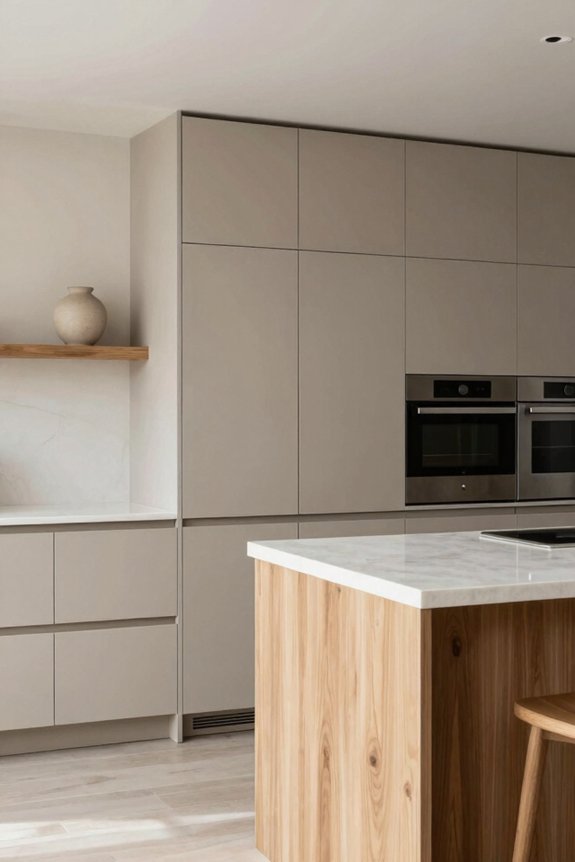
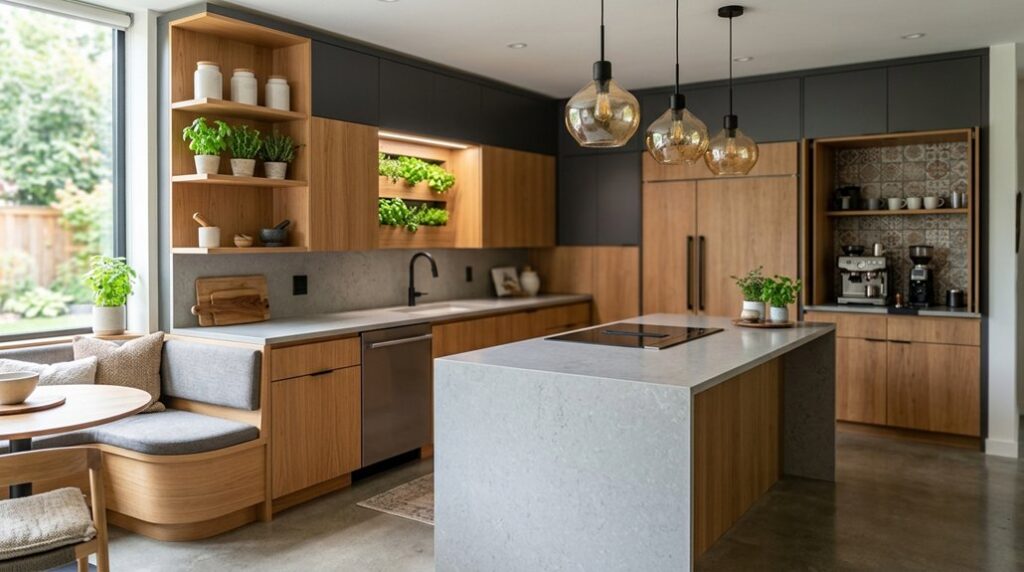
I’ll show you how pairing sleek, handleless white or gray cabinets with warm wood accents, like maple islands or oak open shelving, creates a kitchen that feels both contemporary and inviting. You’re layering texture against clean lines, so the wood doesn’t overwhelm your minimalist foundation but rather provides the space with organic warmth.
Minimalism gives you the calm, modern structure; natural wood gives you the soul.
Minimalist Cabinetry as Foundation
How do you create a kitchen that feels both serene and inviting? I’ve found that minimalist cabinetry serves as your perfect foundation. Here’s why this approach works:
- Handleless doors and flat-panel fronts eliminate visual noise, creating breathing room
- Integrated appliances maintain your seamless silhouette without disrupting clean lines
- Two-tone white and gray combinations preserve harmony while adding subtle sophistication
When you commit to this streamlined base, you’re not sacrificing warmth. You’re strategically preparing space for it. Hidden hardware and uniform cabinet depth reinforce that uncluttered aesthetic we’re all craving. This isn’t about sterile design; it’s about deliberate choices that let your kitchen breathe.
The beauty of this approach lies in its versatility. Your minimalist foundation becomes the perfect canvas for natural textures and bold accents later. You’re building a space that’s both timeless and deeply personal.
Natural Wood Warmth Elements
Your minimalist cabinetry’s clean lines don’t need to feel cold; that’s where natural wood steps in as your hidden advantage. I’d layer warm wood tones like walnut or oak against neutral stone countertops, creating tactile contrast that draws you in. This balance adds depth and coziness to minimalism while keeping it livable.
| Wood Tone | Best Paired With | Effect |
|---|---|---|
| Walnut | Marble | Sophisticated depth |
| Oak | Limestone | Warm earthiness |
| Light ash | Stainless steel | Modern approachability |
Strategic lighting matters tremendously here. I’d use warm-toned LEDs to highlight natural wood grain, positioning task lights above islands and accent lights along shelving.
This illumination doesn’t just showcase texture; it creates an inviting atmosphere where minimalism feels planned rather than bare. You’re crafting a kitchen where clean design meets genuine warmth.
Blending Modern With Organic
When does minimalism feel soulless? When you strip away everything warm and inviting. I’ve discovered that blending modern with organic creates livable spaces that actually feel like homes.
The secret lies in strategic layering:
- Pair neutral base finishes with natural textures like stone countertops or wood grain cabinetry
- Integrate warm wood countertops or butcher-block surfaces with stainless steel hardware for cohesion
- Position wood accents near windows to enhance natural light while maintaining minimalist framework
Your minimalist cabinetry becomes approachable when you introduce walnut shelving or wood-toned island accents. These touches soften clean lines without compromising the streamlined aesthetic you’re after.
Bronze hardware, open shelving strategically placed alongside closed storage, these decisions create tactile contrast. You’re not sacrificing design integrity; you’re creating spaces where form genuinely meets function and belonging.
Maximize Kitchen Storage Without Sacrificing Open Sightlines
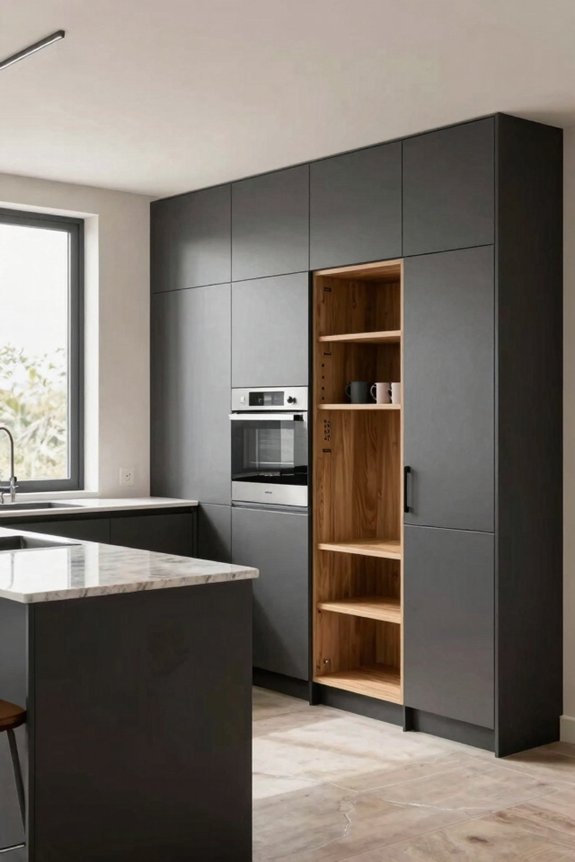
Where does all your stuff go in a contemporary kitchen that actually looks spacious? I’ve found the answer: strategic smart storage that keeps your counters breathing.
I layer hidden hardware, integrated appliances, and two-tone cabinetry to create clean sightlines without cramping your style. Pull-out drawers and pantry organizers tuck everything away, while minimal flat-panel cabinets maintain visual continuity. The trick? Balance concealed storage with selective open shelving, displaying only your functional favorites.
| Storage Solution | Best Location | Visual Impact |
|---|---|---|
| Pull-out drawers | Base cabinets | Seamless |
| Hidden compartments | Island perimeter | Uncluttered |
| Open shelving | Above counters | Curated |
| Integrated appliances | Cabinetry line | Unified |
| Pantry organizers | Inside doors | Efficient |
I position my primary work zones along a central island, preserving openness while gaining ample storage. You’ll feel like you’re part of a well-considered space; a room designed for both living and cooking beautifully.
Integrate Dining and Entertaining Zones Seamlessly
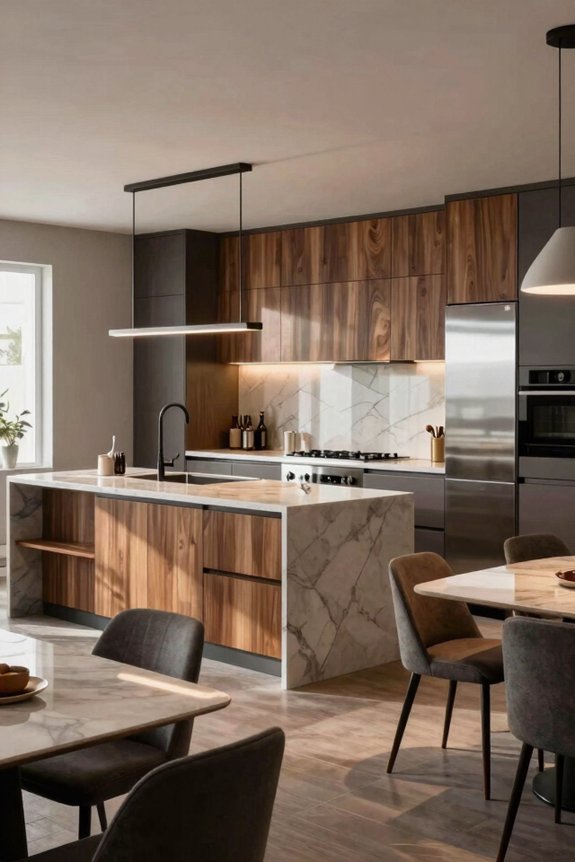
Most contemporary kitchens I design revolve around a substantial island that pulls triple duty: it’s your prep station, casual seating area, and social magnet all at once.
I strategically plan the workflow so your island supports both cooking and dining without a hitch. Here’s what I prioritize:
- Clear sightlines from island seating toward the dining area, creating visual continuity
- Mixed materials, warm woods, brass hardware, stone countertops, that bridge kitchen and dining spaces
- Built-in banquettes adjacent to the island maximizing capacity while maintaining open-plan flow
Large windows or glass doors establish that important indoor-outdoor connection, enhancing your entertaining experience. I position island seating to face outward, so guests stay engaged whether you’re prepping dinner or hosting.
This thoughtful dining integration makes your kitchen the heart of your home, where functionality meets genuine connection.
Select Durable Kitchen Surfaces for Daily Living
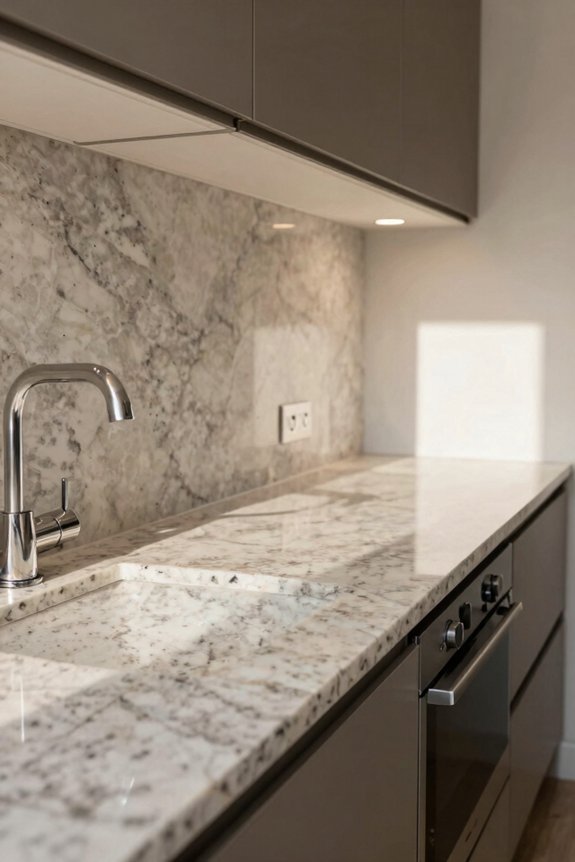
I’ll walk you through selecting surfaces that won’t quit on you because your kitchen works harder than you do. You’ll want to focus on three key areas: your countertops, which should balance style with resilience; your flooring, engineered to handle daily foot traffic without showing wear; and your backsplash, designed for both visual impact and practical stain resistance.
Let’s tackle each one so your kitchen stays beautiful and functional for years to come.
Countertop Material Selection
How do you choose a kitchen surface that’ll withstand daily chopping, spills, and heat without losing its appeal?
I’d recommend focusing on these three countertop materials that deliver both durability and style:
- Quartz composites – These engineered surfaces resist chips and scratches while offering endless color options and requiring minimal maintenance.
- Granite – Natural stone provides heat resistance and unique patterns, though it needs periodic sealing to prevent staining.
- Quartz – Non-porous and low-emission, this material eliminates sealing needs while maintaining a pristine appearance through heavy use.
When selecting durability, I pair hard-wearing surfaces with complementary backsplash and edge profiles. Waterfall edges on islands create drama, while subtle eased edges suit standard counters.
This approach balances practicality with aesthetics, keeping your kitchen both welcoming and sophisticated for years ahead.
Flooring for High Traffic
Your kitchen floor endures more punishment than any other surface in your home. Constant foot traffic, dropped utensils, spilled liquids, and rolling chairs all demand a material that won’t crack, stain, or show wear after a few months. I’d recommend porcelain tile as your go-to durable flooring choice. Its dense, water-resistant composition handles heavy traffic beautifully while remaining resilient under daily stress.
Here’s my insider tip: choose larger-format tiles to minimize grout lines, which trap dirt and stain easily in busy kitchens. Opt for textured finishes that provide slip resistance and hide footprints.
If you prefer warmth underfoot, luxury vinyl planks deliver scratch resistance and comfort while mimicking natural materials convincingly. Whatever you select, transition strips between rooms prevent trip hazards and maintain that consistent, professional appearance contemporary kitchens demand.
Backsplash Durability and Style
While your floor handles the heavy lifting underfoot, the backsplash becomes your kitchen’s hardworking canvas, the surface that guards against splatters, steam, and daily wear while anchoring your design aesthetic. I’ve found that choosing the right material combines both function and style into one unified decision.
Consider these three durability champions:
- Subway tile with sealed grout resists moisture and stains while delivering that clean, crisp modern look you’re after.
- Glass tile maximizes light and perceived space, making smaller kitchens feel airier without sacrificing protection.
- Stone backsplash materials offer unmatched elegance and durability when properly sealed for everyday living.
The key is matching your material’s durability to your lifestyle. Full-wall installations behind cooking zones showcase book-matched stone beautifully while protecting walls where splatters happen most. You’re not just protecting surfaces, you’re investing in a kitchen that’ll look purposeful for years.
Extend Your Design Style to Outdoor Spaces
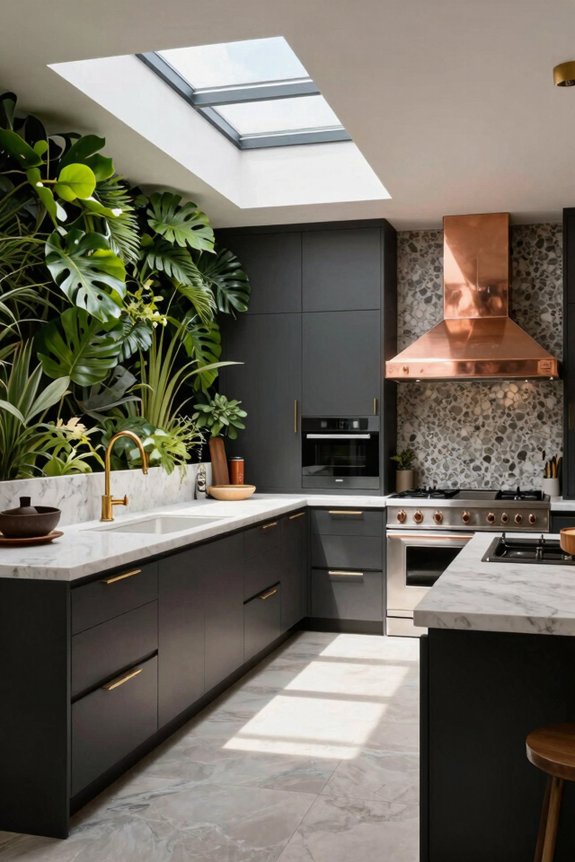
Why settle for a disconnected backyard when you can extend your kitchen’s aesthetic outdoors? I’d encourage you to mirror your indoor design language into an outdoor-kitchen space that feels well-planned and unified.
Start by aligning materials. Use the same warm woods, white countertops, and stainless steel you’ve chosen inside. This creates visual continuity that draws guests naturally from kitchen to patio.
Use matching warm woods, white countertops, and stainless steel to create visual continuity between indoor and outdoor kitchen spaces.
Install large glass doors to establish that indoor-outdoor connection. Natural light becomes your ally here, softening the transition between spaces.
For durability, I recommend weather-resistant finishes like porcelain tiles and rust-proof metals. Stone countertops withstand elements beautifully while maintaining refinement.
Finally, create a functional outdoor-kitchen layout mirroring your indoor setup. Add a grill station, prep space, and covered seating. This seamless design approach extends your entertaining into an outdoor space that reflects your home’s contemporary character.