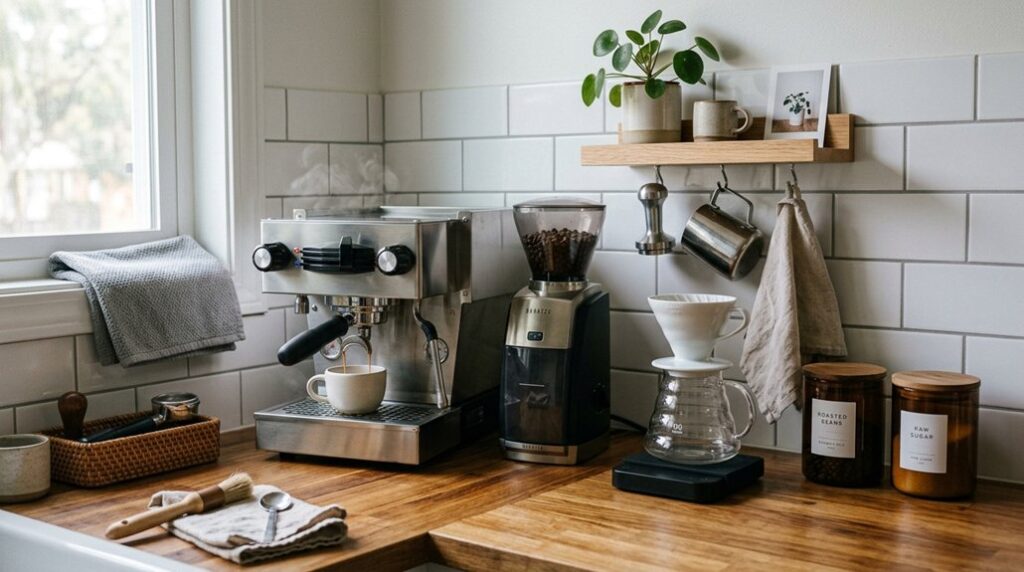
you don’t actually need much counter space to create a functional coffee bar that feels well-planned.
The real question isn’t whether your kitchen can accommodate one; it’s how you’ll strategically position your setup so it becomes a natural part of your daily routine.
I’m going to show you exactly how designers maximize tiny spaces, and the solutions are simpler than you’d expect.
Maximize Vertical Space With Coffee Bar Wall Mounts
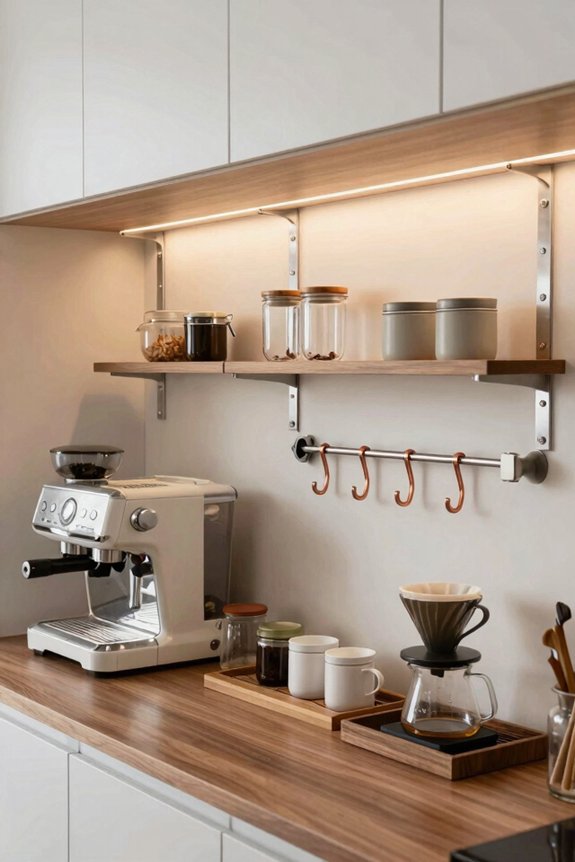
How’re you supposed to fit a functioning coffee station into a kitchen where counter space is already at a premium? Wall-mounted coffee bars are your answer. I’ve discovered that installing a dedicated mug rack on the wall reclaims precious countertop real estate while keeping your essentials organized. Think of it as vertical thinking, literally.
By mounting shelves above your brewing area, you’re creating a dedicated coffee zone that feels well-planned rather than cramped. Add puck lights above these shelves, and you’ve got visibility plus ambiance during those early hours.
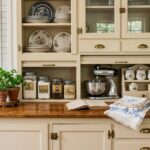
I’d recommend pairing wall-mounted cabinetry with your vertical space strategy to house a compact coffee setup seamlessly. This approach lets you store everything from canisters to small appliances without cluttering your counters. You’re not just organizing; you’re designing a welcoming coffee ritual that fits your lifestyle.
Hidden Coffee Station Storage: Pull-Out Drawers and Cubbies
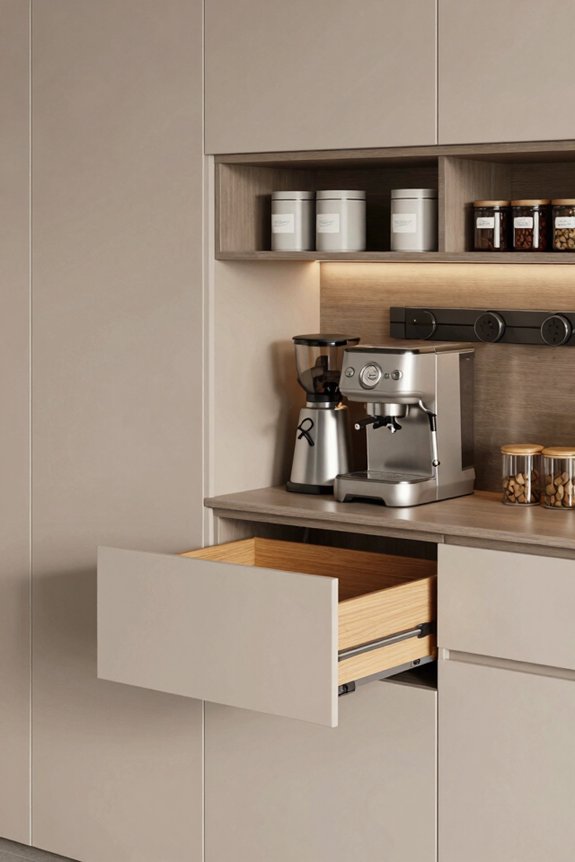
I’ve found that hidden coffee storage solutions, like pull-out drawers and waist-high cubbies, change how you use your kitchen without sacrificing that clean, clutter-free aesthetic you’re after. You’ll tuck your espresso machine, grinder, and supplies behind cabinet doors, keeping them instantly accessible yet completely concealed when guests arrive.
It’s the perfect compromise for small kitchens where every countertop inch counts, and it works smoothly with cabinetry you’ve already got installed.
Pull-Out Cabinet Convenience
When you’ve got limited counter space but can’t imagine starting your day without coffee, a pull-out cabinet coffee station keeps ordinary cabinetry organized and functional. I’ve found this setup brilliantly solves the clutter problem. You simply slide open a waist-high cabinet drawer, and your entire coffee operation emerges. The pull-out convenience means your maker, filters, and beans stay organized inside until you need them.
Doors swing shut afterward, restoring that clean look you’re after. This approach maximizes your kitchen’s functionality without sacrificing style. You’ll appreciate how the cabinet design keeps visual noise minimal while maintaining easy access. It’s the perfect solution for those of us who want our daily ritual smoothly integrated into our home’s design.
Concealed Organization Solutions
Pull-out drawers and hidden cubbies keep your coffee setup organized and out of sight. I’ve found that a concealed organization system keeps your kitchen looking neat rather than cluttered.
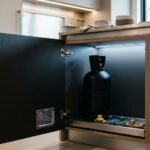
Consider installing a built-in coffee station within existing cabinetry. You’ll slide out a tray holding your maker, grinder, and supplies when you need them, then tuck everything away. A hidden coffee bar works brilliantly near your sink or appliances, maximizing that often-wasted vertical space.
The “Hidden Coffee Cubby” design particularly appeals to me: doors swing open to reveal an organized interior in navy with turquoise accents. You’ll display cups, add a personalized chalkboard menu, and create café-style charm without sacrificing counter real estate.
This approach means your kitchen stays serene while you maintain complete coffee station functionality.
Dedicated Coffee Zones: End-Bench and Side Bar Setups
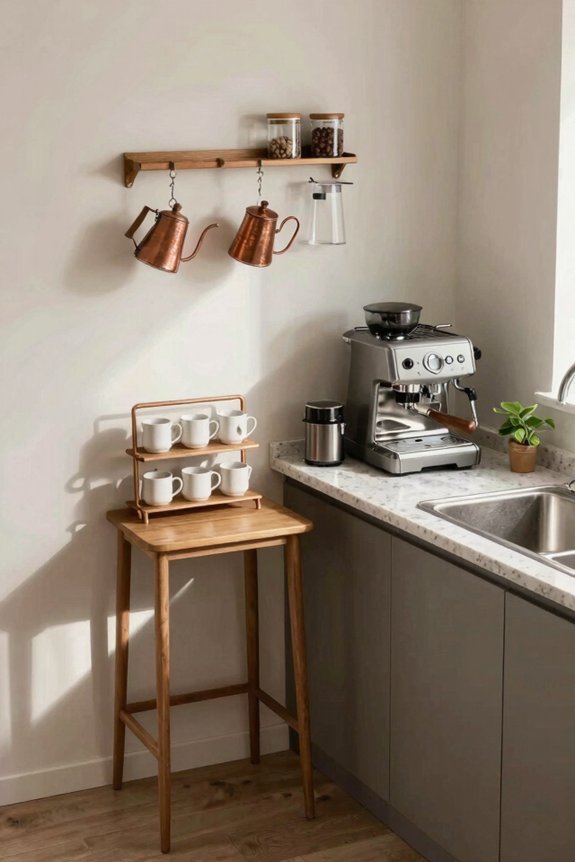
I’ve found that positioning your coffee machine at the kitchen’s end or along a side counter keeps your brewing routine separate from the main work triangle, freeing up valuable prep space. You’ll want to pair end-bench placement with overhead cabinetry for mugs, or choose a side-bar setup near your dining area to create that distinct coffee zone designers favor.
This strategic positioning works brilliantly in tight quarters because it creates a functional, visible station in an underused corner without cramping your sink, stove, or primary countertops.
End-of-Bench Machine Placement
Where should your espresso machine actually live in a compact kitchen? I’d argue the end-of-bench placement solves this beautifully. This coffee station strategy frees your central countertop space for meal prep while clustering everything you need in one dedicated zone.
Here’s why this works:
- Preserves prime prep real estate by moving appliances to perimeter locations
- Creates natural traffic flow; guests grab coffee without disrupting cooking
- Keeps mugs accessible via overhead cabinets above the machine
- Maintains visual balance without requiring full appliance garages
I’ve found that positioning your coffee machine at the bench’s end works well for how kitchens function. You’re not sacrificing workflow or aesthetics. Instead, you’re building intentional countertop space that serves dual purposes: daily brewing and designated gathering spot.
It’s practical design that feels personal.
Side Counter Zone Creation
What if your coffee station lived somewhere completely separate from your main kitchen workflow?
A side counter zone gives you exactly that. I’d position your coffee station near the dining area, far enough from your sink and primary appliances to create breathing room. This setup creates distinct zones in your small-space kitchen. You’re not crowding your prep area or bumping elbows while someone’s cooking dinner.
The beauty? Your coffee bar stays visible and accessible without stealing prime real estate. Mount your mugs overhead on floating shelves above the side counter. Keep your machine, grinder, and favorite beans within arm’s reach. This clearly defined secondary space lets you brew without disrupting the main kitchen rhythm. You’ll appreciate having a dedicated spot that feels purposeful, not squeezed in.
Accessible Dining Area Positioning
How can you position your coffee station so it serves double duty—staying accessible for morning brewing while keeping your main kitchen uncluttered?
I’ve found that placing your coffee bar near dining areas creates a natural gathering spot. Consider these positioning strategies:
- End-bench placement puts equipment at counter’s edge, freeing central workspace
- Side-bar configuration allocates dedicated space away from main appliances
- Traffic flow proximity ensures you’re grabbing coffee without disrupting cooking zones
- Overhead mug storage maximizes reach while maintaining visual appeal
Both approaches work because they concentrate your coffee station in one compact niche. You’re creating a welcoming ritual space that doesn’t demand major remodeling. Your dining area becomes the perfect anchor point; guests naturally gravitate toward coffee, leaving your sink and prep areas completely clear.
Portable Coffee Bar Carts for Flexible Layouts
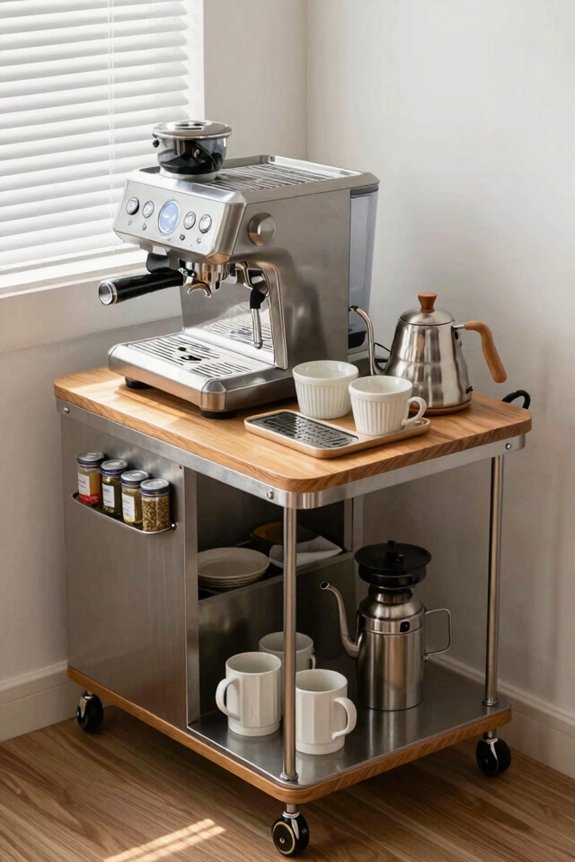
Perhaps the smartest move I’ve made in my compact kitchen was ditching the fixed coffee setup for a mobile cart, and you can too. A portable coffee bar cart helps you use limited counter space by consolidating your entire coffee operation into one stylish unit. I keep my machine, beans, syrups, and mugs on the top tier, while the bottom shelf holds backup supplies without cluttering precious countertops.
The best part? I roll this small space solution between my kitchen, dining area, and home office depending on where I’m working that day. Choose finishes matching your existing décor, whether sleek stainless steel or warm wood, and you’ve got flexible functionality that adapts to your lifestyle, not the other way around.
Design Your Coffee Station: Color, Backsplash, and Styling
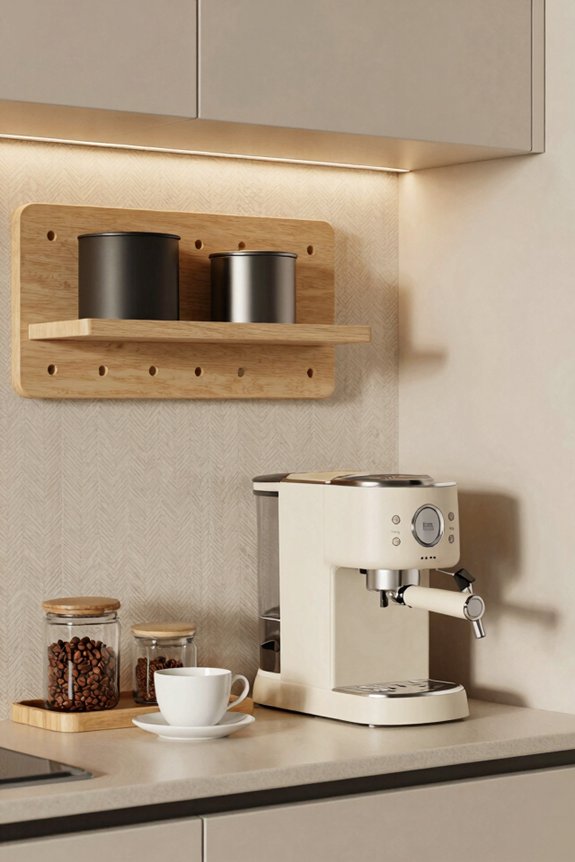
Your coffee bar’s visual impact matters just as much as its function, and I’ve learned that thoughtful color choices and styling improve even the tiniest countertop setup.
I recommend focusing on these design elements:
- Choose a simple, minimal color scheme with neutrals and one bold accent to keep your station visually cohesive
- Coordinate your mugs by color or palette, storing them overhead to free counter space
- Install a dedicated color-backed backsplash that connects your coffee area to your room’s existing decor
- Add decorative touches like framed art or two-tier trays for practical style
Your backsplash becomes the visual anchor, signaling that you’ve intentionally designed this space. When your mugs match your color scheme, everything feels organized rather than cluttered.
You’re creating a curated corner that reflects who you are.
Budget-Friendly Coffee Stations Under $500
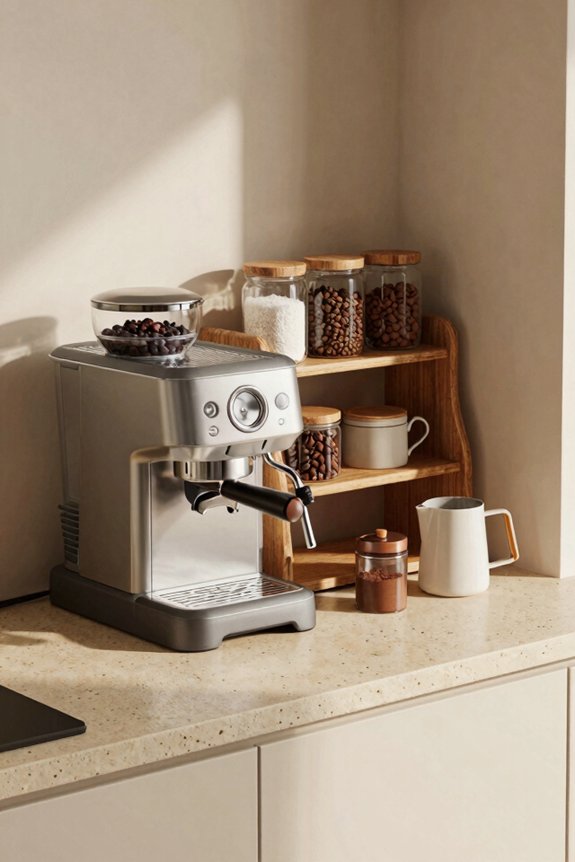
Want a stylish coffee setup without decimating your budget? I’ve found that smart choices create functional coffee havens for under $500.
Start by maximizing existing counter space with compact equipment, think slim espresso machines and ultra-compact microwaves that fit tight 30-inch widths. A small bar cart or peg rack organizes essentials beautifully while saving precious real estate.
| Budget Item | Cost Range | Space Savings |
|---|---|---|
| Bar cart | $40–$80 | Portable, multipurpose |
| Peg rack | $15–$35 | Vertical storage |
| Slide-out tray | $25–$50 | Hidden organization |
Hidden storage makes a significant difference in your setup. Pull-out trays and cabinet doors conceal supplies, keeping counters uncluttered. Position your station strategically, under-stair nooks or bench ends maintain workflow without costly remodels.
You’ll create a welcoming, organized space that feels curated and belongs in your kitchen.