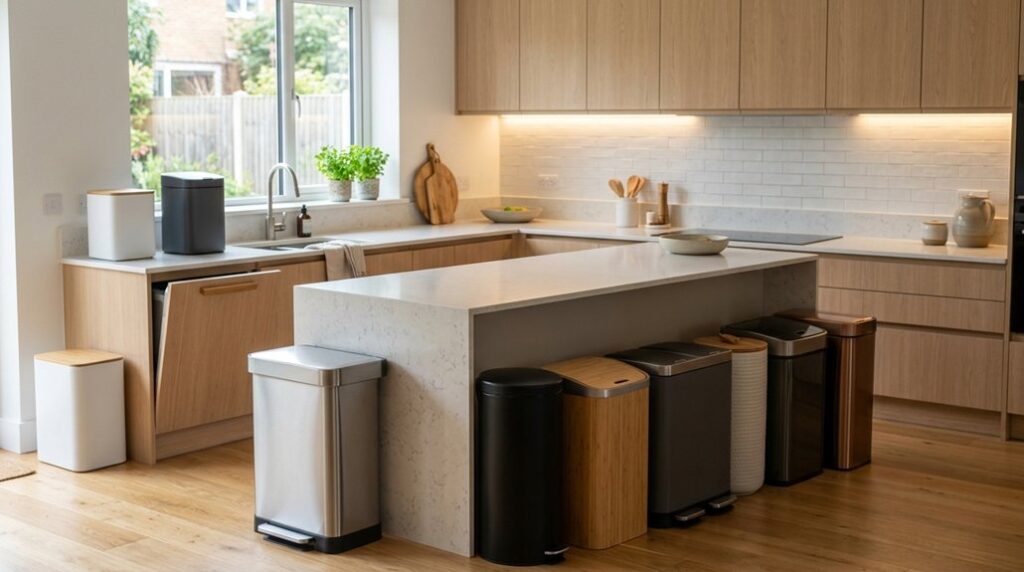
your trash can is probably the least stylish item in your kitchen, yet you see it multiple times daily. I’ve discovered that upgrading this overlooked piece improves both your space’s functionality and aesthetics in surprising ways.
Whether you’re dealing with a cramped galley kitchen or a sprawling open layout, the right bin setup solves problems you didn’t know you had. Let’s explore which solution actually fits your life.
How Do Small Spaces Change Your Trash Can Options?
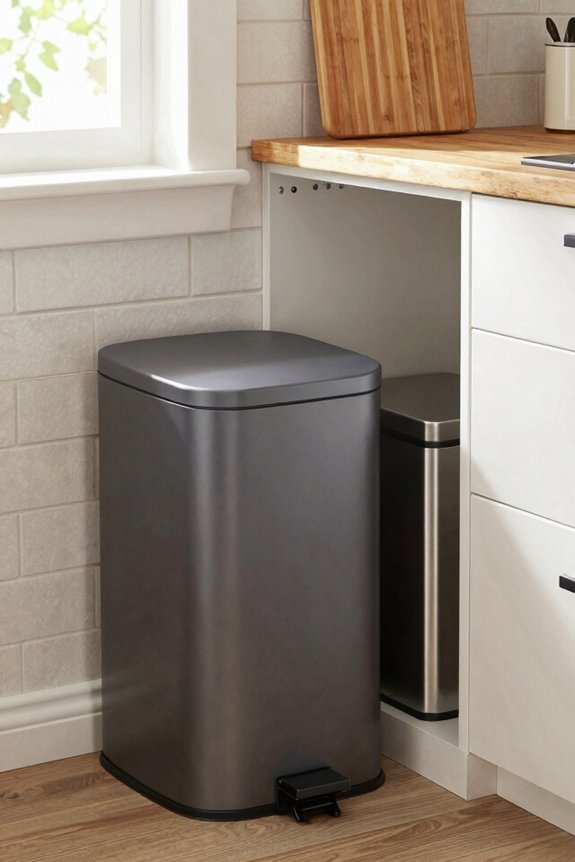
Have you ever squeezed a standard trash can into a cramped kitchen and watched it consume half your floor space? Small kitchens demand smarter solutions. I’ve found that tilt-out cabinet bins brilliantly conceal waste behind doors, maintaining that sleek aesthetic we all crave. Stand-alone slim bins offer flexibility when cabinetry space won’t cooperate.
Under-counter designs maximize floor area without sacrificing functionality. Compact, slimline models specifically engineered for narrow gaps tuck seamlessly beneath counters. Consider dual-compartment stainless steel options; they organize waste sorting while controlling odors in tight layouts. These aren’t compromises; they’re deliberate design choices that work with your limitations rather than against them.
Your space constraints actually clarify which solution serves you best, creating a kitchen that feels well-planned rather than cramped.
Hidden or Visible? Cabinet vs. Standalone Placement
Where should your trash can actually live in your kitchen? I’ve found this decision shapes your entire space’s functionality and style.
Cabinet integration hides your receptacle behind doors, creating neat aesthetics perfect for islands and counters. Standalone bins offer flexibility when cabinetry space is limited, sitting beside islands or along walls. Your choice depends on your kitchen’s layout and priorities.
| Placement Type | Best For |
|---|---|
| Cabinet-integrated pull-out | Small kitchens needing hidden storage |
| Tilt-out cabinet style | Maintaining clean, cohesive appearance |
| Standalone beside island | Flexible, accessible locations |
| Wall-mounted vertical | Reducing floor footprint dramatically |
| Dual-compartment cabinet | Efficient waste sorting seamlessly |
Consider your workflow. Do you want trash visible for convenience, or hidden for visual cleanliness? I recommend matching your choice to how you actually use your kitchen daily.
Dual-Compartment Bins: Trash and Recycling in One Footprint
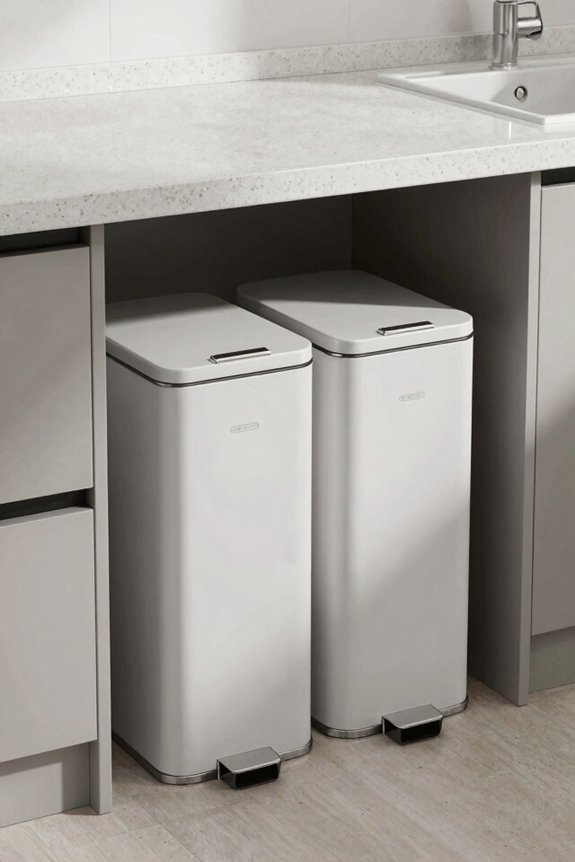
Why settle for two separate bins when you can streamline your kitchen with a single, smart solution? Dual-compartment bins like the Brabantia Bo Touch Top Dual Can improve waste management by housing trash and recycling side-by-side within one compact footprint. I appreciate how they eliminate clutter without sacrificing functionality.
These innovative dual-compartment bins come in various capacities, 3- or 6-gallon options, and coordinated finishes that blend seamlessly with your cabinetry. You’ll find soft-close mechanisms that reduce noise and improve hygiene, making everyday sorting effortless.
What I love most? They’re perfect for smaller kitchens where space is precious. You’re maximizing efficiency while maintaining a cohesive aesthetic. It’s the kind of smart upgrade that changes how your household approaches sustainability without demanding extra square footage.
Hands-Free Operation: Motion-Activated and Touch-Top Models
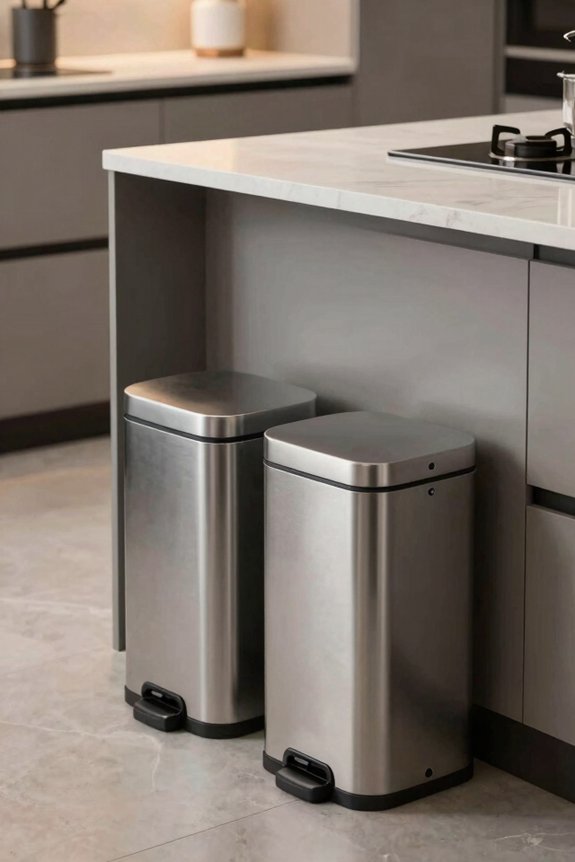
Once you’ve optimized your bin compartments, the next leap forward is removing the need to touch your trash can at all. Motion-activated models let you toss waste hands-free while cooking; no germs transferred, no interruptions to your prep work. I’ve found that stainless steel variants with fingerprint-resistant finishes maintain that sleek kitchen look while handling the daily grind.
Touch-top options offer a budget-friendly alternative if you prefer a gentler activation method. These designs work well in compact kitchens where workflow efficiency matters. Beyond convenience, you’re investing in hygiene; one-handed operation means less contact with waste during meal preparation.
Brands specializing in motion-activated systems pair these cans with odor-containment features, keeping your space fresher longer. This upgrade changes how you interact with kitchen waste entirely.
Material Durability and Care: Steel vs. Wicker vs. Powder-Coated Finishes
I’ll walk you through three material standouts that’ll really impact how long your trash can lasts and how much effort you’ll invest in keeping it looking sharp. Stainless steel brings undeniable durability and that sleek aesthetic we all crave, though you’ll need to wipe it down regularly to avoid fingerprints. Think of it as a small trade-off for a bin that’ll outlast most kitchen trends.
Wicker paired with metal liners offers cottagecore charm and visual appeal, while powder-coated finishes deliver color options and scratch resistance that bare metal simply can’t match. Each material requires different care approaches to maintain its best appearance.
Stainless Steel Longevity
When you’re investing in a kitchen trash can that’ll actually last, stainless steel consistently outperforms its competitors in durability and ease of maintenance. I’ve found that stainless steel longevity really shines in busy kitchens where dents and wear happen daily.
Unlike wicker or powder-coated finishes, stainless steel resists damage while maintaining its sleek appearance for decades. The fingerprint-resistant coatings mean you’ll spend less time cleaning and more time enjoying your space. Many models feature hands-free operation and odor-containment technology, enhancing both hygiene and convenience.
You’re choosing a material that works as hard as you do, standing up to constant use without compromising aesthetics or function. That’s smart investment thinking.
Wicker And Powder Coating
How do you balance aesthetic warmth with practical durability in a high-traffic kitchen?
I’d suggest considering wicker paired with metal liners, like The Basket Lady’s design, for that cottage-core charm. Wicker introduces visual warmth that stainless steel alone can’t match, creating a space where you’ll actually want to spend time.
However, wicker demands respect. Near food prep zones, it’s vulnerable to staining and fraying. That’s where powder coating enters the picture. Steel trash cans with powder-coated finishes deliver durability without sacrificing color versatility. Think Brabantia’s vibrant reds or other bold options that resist fingerprints and wear from constant use.
Here’s my takeaway: choose powder-coated steel for small spaces requiring frequent cleaning. Reserve wicker for less trafficked corners where aesthetics matter more than maintenance headaches. Both belong in your kitchen, just strategically placed.
Style Without Clutter: Design Finishes That Work in Tight Kitchens
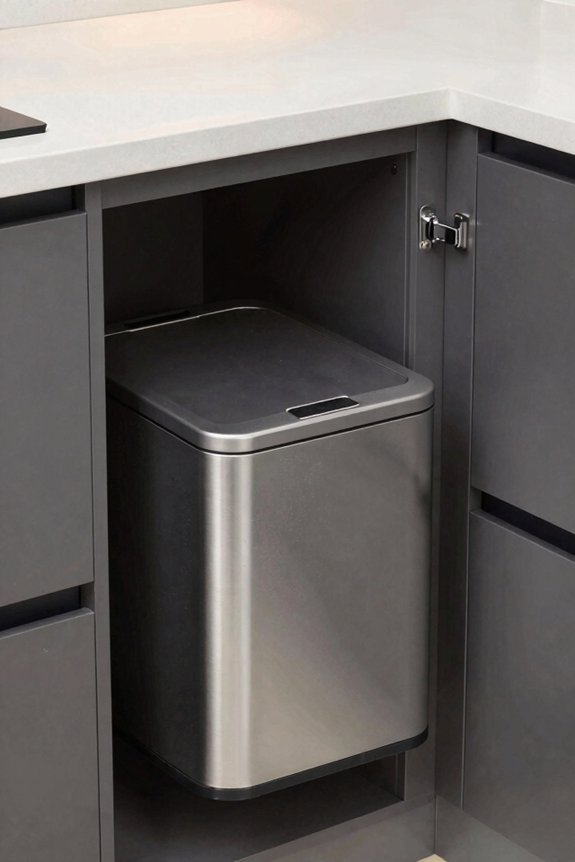
When you’re working with limited kitchen real estate, I’ve found that stainless steel finishes with fingerprint-resistant coatings and odor-containment features deliver both visual sleekness and practical durability. Cabinet-integrated solutions, like pull-out drawers and tilt-out bins, keep your trash hidden while maintaining an organized, polished look that makes compact spaces feel larger.
If you prefer something with more personality, decorative options like wicker-style baskets with metal liners or dual-compartment designs add visual interest and function without sacrificing that clean appearance you’re after.
Aesthetic Finishes for Compact Spaces
Why settle for a trash can that screams “utilitarian eyesore” when your compact kitchen deserves better? I’ve found that stainless steel trash cans with fingerprint-resistant finishes strike the perfect balance. They’re durable, sleek, and blend harmoniously with modern cabinetry. You’re not just buying a receptacle; you’re investing in a design element that keeps clutter invisible.
Consider dual-compartment designs like the Brabantia Bo Touch Top Dual Can, which maximizes waste sorting without consuming extra floor space. If you want character, wicker baskets with metal liners add textured appeal while concealing bins entirely. Tilt-out cabinet options like the Louvixa model hide receptacles behind cabinetry, maintaining the unified appearance you’re after.
The key is choosing finishes that coordinate with your islands and cabinetry. When your trash can disappears into your design scheme, your space feels intentional.
Hidden Storage Design Solutions
If you’ve mastered the art of making your trash can disappear into your cabinetry, you’re halfway to a well-organized kitchen. I’m talking about solutions that blend function with design, keeping waste completely out of sight while maintaining easy access.
Consider these hidden storage approaches:
- Tilt-out cabinet doors that conceal receptacles behind hinged panels
- Pull-out drawer trash cans maximizing efficiency within existing cabinetry
- Wicker exteriors with metal liners offering texture and concealment
- Integrated finishes coordinating with islands or cabinet colors
- Wall-mounted compact options for tight kitchen layouts
When trash cans align with your design aesthetic, they become invisible yet functional. That’s the sweet spot where organization meets style, creating kitchens that feel carefully planned and curated rather than cluttered or compromised.
Quiet Lids and Odor Control: Features That Reduce Kitchen Odors
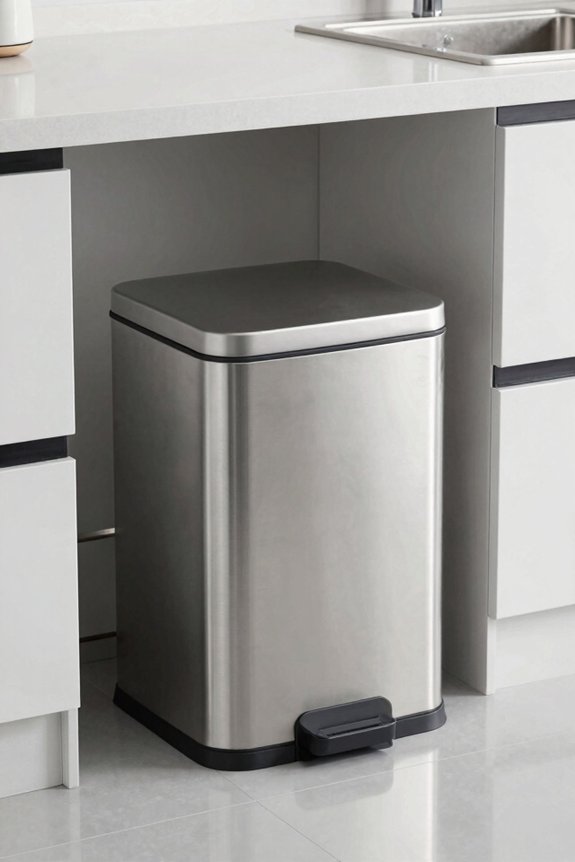
How much time do you spend thinking about kitchen smells? More than you’d like, probably. That’s where soft-close lids and sensor-operated designs come in. Motion-activated stainless steel trash cans minimize odor escape by closing automatically, keeping your kitchen fresher longer. You’re not just getting a bin; you’re investing in air quality.
Dual-compartment models take this further, letting you separate waste and recyclables at the source. Fewer mixed materials means reduced fermentation and odors. Cabinet or tilt-out designs hide everything from sight, which honestly changes how your kitchen feels.
The best part? These features work together flawlessly. A fingerprint-resistant stainless steel can with a soft-close lid delivers both aesthetic appeal and practical odor control. You’ll notice the difference immediately. That’s the upgrade your space deserves.
Aesthetics vs. Function: What Matters Most for Your Kitchen?
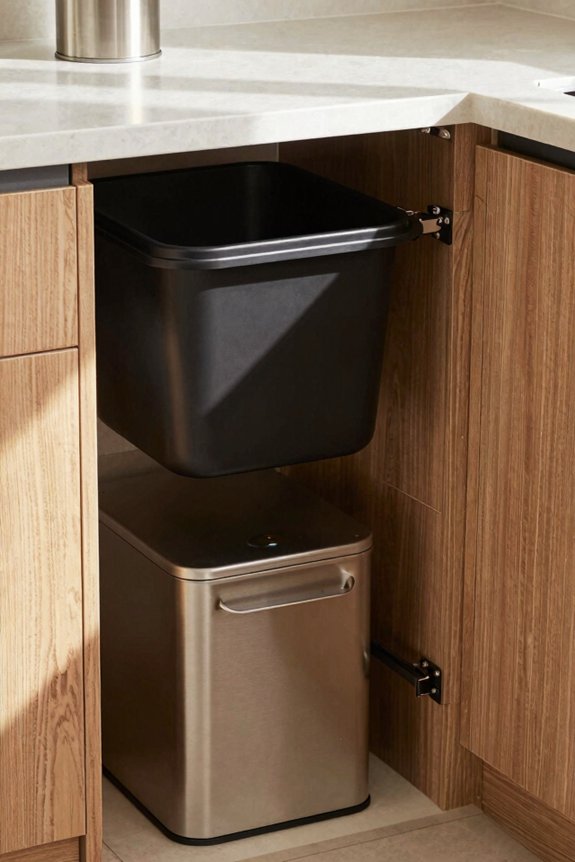
You’ve got the odor control handled, but here’s the real question: does your trash can look good doing it?
The truth is, you don’t have to choose between aesthetics and function. Here’s what actually matters:
- Stainless steel finishes improve your kitchen while resisting fingerprints and stains
- Soft-close lids combine visual sophistication with quiet, seamless operation
- Dual-compartment designs hide bins while keeping waste separation visible-free
- Cottagecore wicker exteriors with metal liners prove style and practicality coexist
- Slim profiles maximize space without compromising your kitchen’s design vision
I’ve learned that the best trash cans work hard and look intentional. Whether you’re drawn to bold Brabantia reds or understated minimalism, your choice should reflect how you actually live.
Hands-free operation matters alongside appearance. You’re not settling for less; you’re investing in something that earns its place in your kitchen daily.
Refurbish a Budget Trash Can to Match Your Kitchen
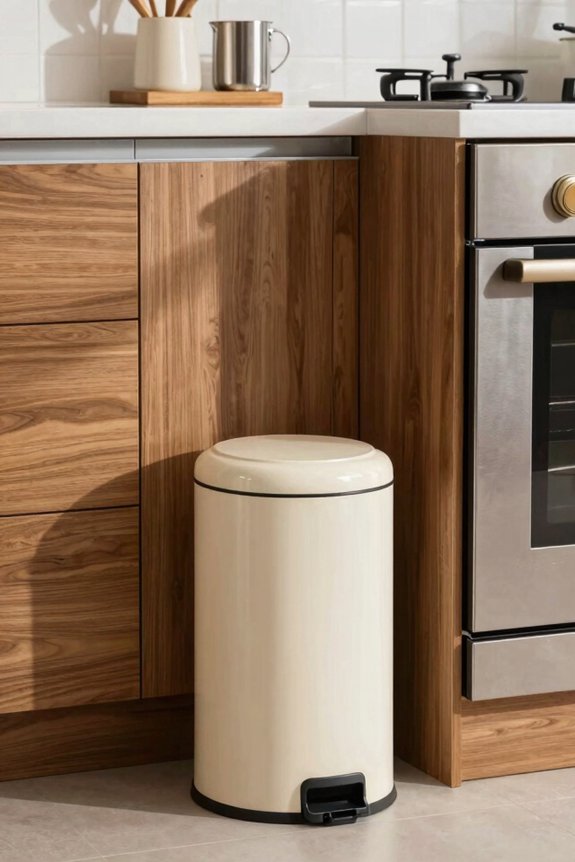
Don’t let a basic black plastic can undermine your kitchen’s design. A budget-friendly refinish creates something that actually belongs in your space. I’ve found that repainting the exterior with moisture-resistant coating works well with stainless steel kitchen trash fixtures or white cabinetry. Upgrading the liner and adding hardware like a soft-close lid dramatically improves usability without replacement costs.
Here’s what works: conceal your refurbished can beside an island or behind a cabinet front. This integration mimics high-end setups while keeping expenses down. When you pair quality coatings with a sturdy internal liner, you’re looking at durability spanning decades. The result is a trash can that feels purposeful, matches your style, and proves that thoughtful refinishing beats replacing altogether.
Your Space, Your Solution: Matching Bin Type to Kitchen Layout
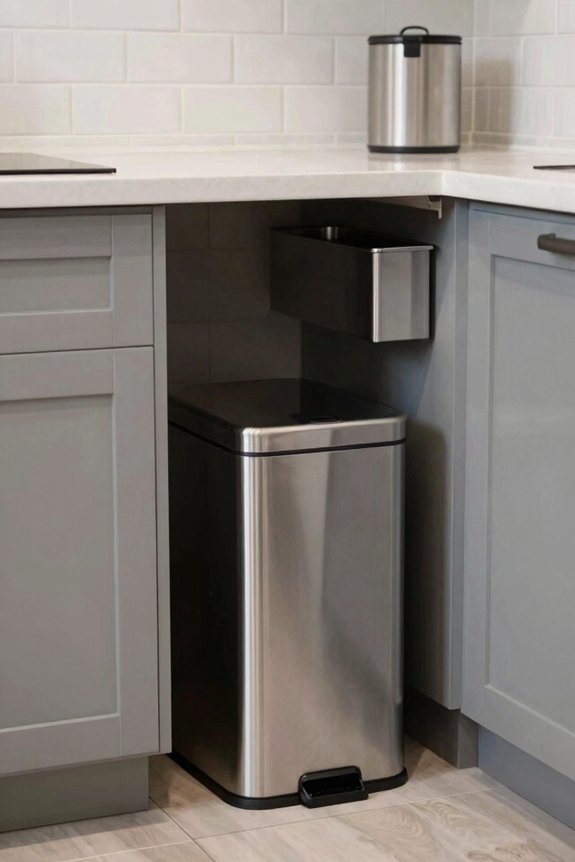
I’ve found that your kitchen’s layout, not just your style preferences, dictates which trash solution actually works best for your daily life. If you’re working with limited counter space, a tilt-out cabinet bin like the Louvixa keeps things hidden, while narrow galley kitchens benefit from slimline stand-alone models tucked under countertops.
The key is matching the bin’s footprint and accessibility to where you’ll realistically use it most, whether that’s beside your island or integrated into existing cabinetry.
Assessing Your Kitchen Layout
How much counter real estate can you actually spare? That’s your starting point for finding the perfect trash solution.
Before you invest in a bin, honestly assess your kitchen’s unique constraints:
- Kitchen cabinets: Evaluate existing storage for pull-out or tilt-out options
- Floor space: Measure available area near islands or breakfast bars
- Traffic flow: Consider where you naturally move during meal prep
- Visual priorities: Decide if you’re hiding trash or showcasing design
- Footprint limits: Account for tight spaces requiring slimline profiles
Small kitchens demand creative thinking. You’re not sacrificing function; you’re optimizing it. Whether you choose under-sink solutions, compact designs, or wall-mounted alternatives, matching your bin to your layout prevents wasted space and frustration.
Consider what will actually work in your daily routine based on your own understanding of your space and habits.
Matching Bins To Space
Your kitchen’s layout dictates which trash solution actually works, not magazine spreads or trendy designs. I’ve learned that cramped galley kitchens need cabinet-integrated bins or slim freestanding cans with wheels. These solutions keep counters clear while staying accessible during meal prep.
Got more breathing room? Dual-compartment setups work beautifully for trash and recycling without overwhelming your space. I recommend stainless steel or fingerprint-resistant finishes; they’re practical and look good in photos, honestly.
For renters or those avoiding cabinet modifications, stand-alone options offer flexibility. Place them strategically near work zones where you’ll actually use them.
The best results happen when your bin matches your kitchen’s personality and layout. A Brabantia red accent or wicker-style liner pairs beautifully with existing decor while solving your specific spatial challenge.