I’ve discovered that beadboard backsplashes are quietly changing small kitchens. They’re affordable, stylish, and genuinely practical; especially when you know which approach works best for your space. Whether you’re brightening a cramped galley or adding visual interest to minimal square footage, the right beadboard strategy can make a noticeable difference.
But here’s what most people get wrong when they install it.
White Beadboard Backsplash With Light Countertops
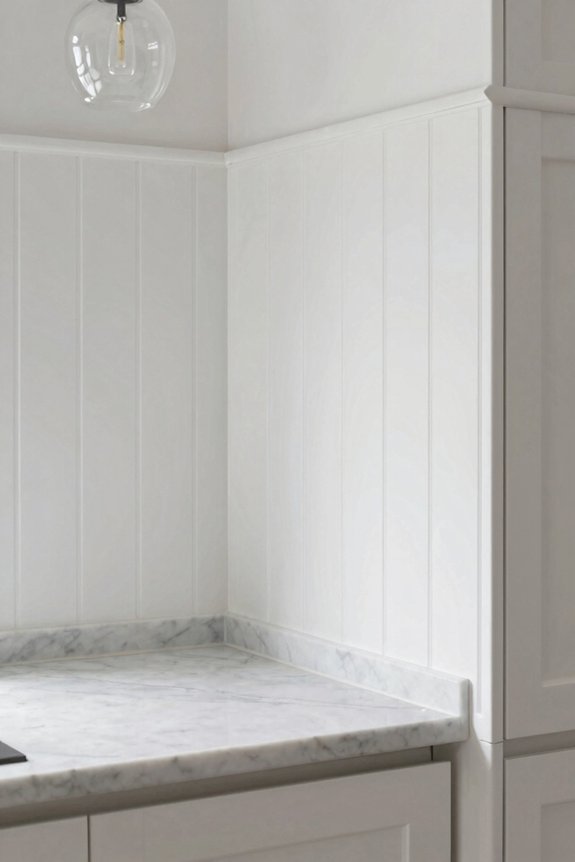
Why does white beadboard work so brilliantly in small kitchens? It brightens compact spaces while creating that inviting cottage style we’re all craving. I’ve found that pairing white beadboard backsplash with light countertops, think white quartz or ivory surfaces, creates a unified aesthetic that makes your kitchen feel larger.
The beauty of painted beadboard lies in its versatility. You can match it to two-tone cabinetry or keep it neutral for maximum visual expansion. Modern wall paneling comes in long sheets, making easy installation straightforward and budget-friendly compared to tile.
What I appreciate most is the semi-gloss finish, which delivers both durability and easy cleaning behind sinks and stoves. This practical approach, combined with brass hardware accents, makes tight layouts into welcoming gathering spaces that feel deliberately designed and put-together.
Painted Beadboard Backsplash Matched to Cabinets
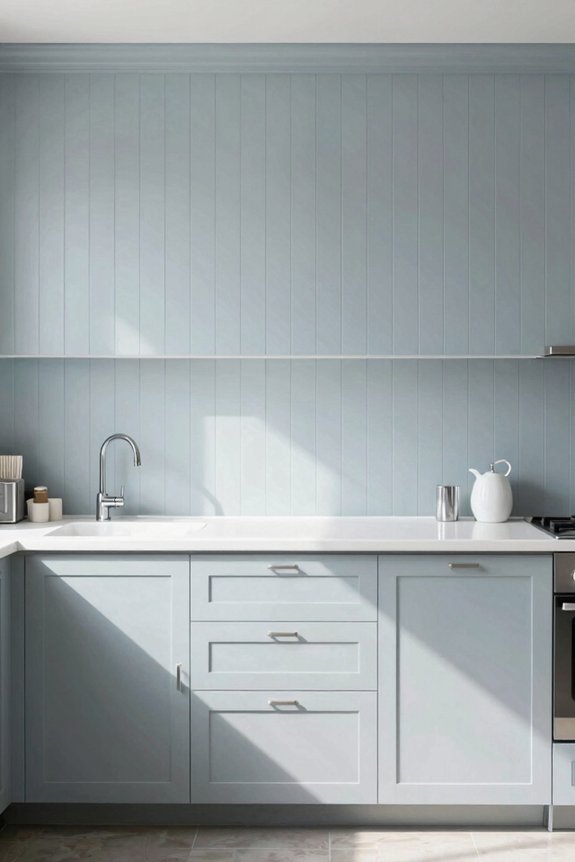
How do you create a kitchen that feels carefully planned rather than pieced together? I’ll tell you: paint your beadboard backsplash to match your cabinets.
Paint your beadboard backsplash to match your cabinets for a kitchen that feels carefully planned rather than pieced together.
This painted beadboard backsplash strategy delivers the unified appearance you’re after. Here’s why it works:
- Color harmony – Using BM Natural Cream behind ivory cabinetry creates visual continuity throughout your small kitchen
- Practical durability – Semi-gloss or satin finishes wipe clean effortlessly, handling daily moisture near your sink
- Budget-friendly DIY – You’ll skip expensive tile while achieving that timeless cottage aesthetic
Real homeowners report 15-year satisfaction with matched beadboard installations. The secret involves pairing your moisture-resistant finish with proper caulking around sink areas. White or near-white tones particularly benefit from this protection.
Your painted beadboard backsplash becomes a polished, deliberate design choice rather than an afterthought.
Extended Beadboard Backsplash for Added Height
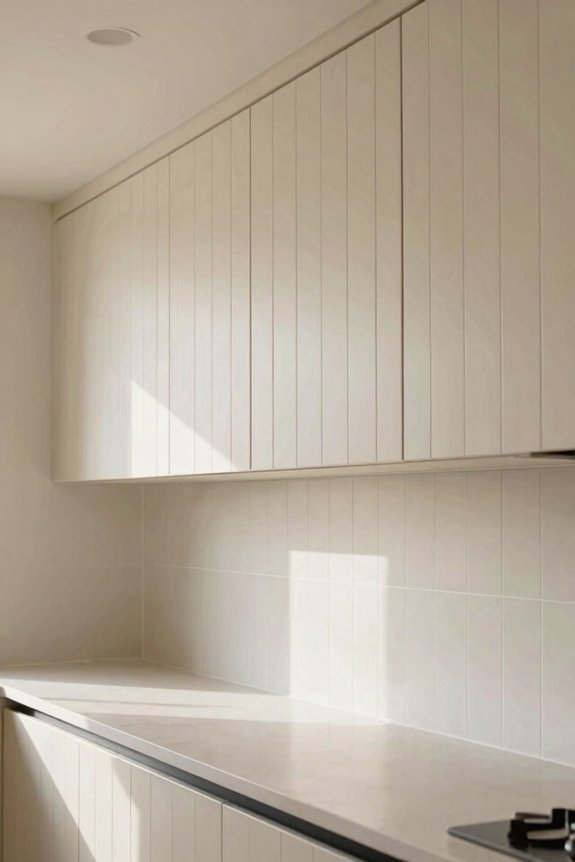
What if your small kitchen could feel considerably taller without renovating the ceiling? Extended beadboard creates visual height in compact spaces by drawing your eye upward. Continuing vertical beadboard beyond the standard backsplash creates noticeable raised height, especially in farmhouse kitchen designs. The slender grooves emphasize verticality, making walls feel taller than they actually are.
You’ll want proper moisture protection at edge transitions. Caulk and trim prevent water intrusion around sinks and stoves. Consider full-wall paneling or ceiling-extending treatments for maximum impact. Whether you match the vertical beadboard to cabinetry or paint it a contrasting shade, the continuous texture delivers impressive results in small kitchen design.
This approach proves that smart wall paneling strategies work harder than any ceiling height ever could.
Horizontal Beadboard Backsplash for Wider Kitchens
If you’ve admired traditional beadboard but felt it pulled your eye upward in ways that didn’t suit your space, horizontal grooves offer a practical alternative.
I’ve found that horizontal beadboard backsplash creates visual breadth that makes wider kitchens feel more spacious and welcoming. The horizontal lines draw your eye across the wall rather than up, emphasizing the room’s generous proportions. Here’s what makes this approach work:
- Pairs beautifully with white cabinetry and quartz countertops for an airy, cohesive aesthetic
- Combines with V-groove variants to achieve contemporary farmhouse style while maintaining authentic texture
- Requires moisture-resistant finishes: semi-gloss paint or PVC panels, sealed at joints to protect against water damage
Consider running panels ceiling-to-wall for maximum impact. This kitchen design choice celebrates your space’s width while delivering durability and timeless appeal that belongs in modern homes.
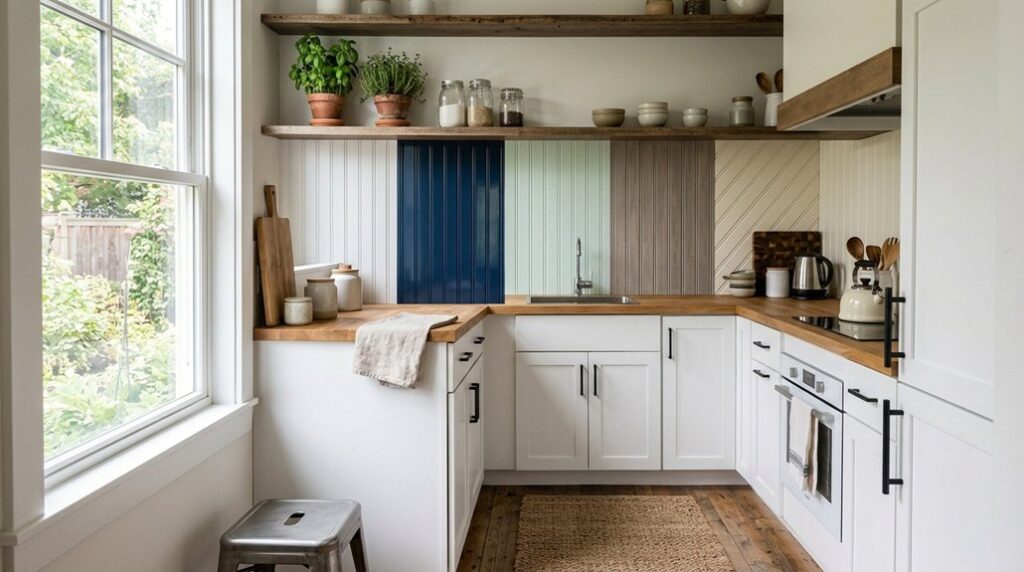
Two-Tone Beadboard With Bold Paint Colors
Why settle for monochromatic walls when you can layer depth and personality into your kitchen with two-tone beadboard? I’m talking about pairing white beadboard with bold paint colors on adjacent walls or cabinets; it’s a practical approach for small kitchen makeovers.
This cabinet-wall contrast changes how your space feels. Imagine creamy beadboard against sage green cabinetry or white beadboard with navy-painted walls. The vertical architectural texture becomes your focal point while contrasting tones define separate planes, making ceilings feel higher.
Here’s what I love: painted beadboard is genuinely DIY-friendly. Use a moisture-resistant finish in semi-gloss or satin, apply consistent color across all pieces, and you’ve achieved that cohesive, era-inspired look designers charge thousands for. It’s an affordable visual depth upgrade that beats plain drywall every time.